
How Kun Khmer Builds Discipline and Focus
Kun Khmer builds discipline and focus the way most structured martial arts do: through repetition, coach feedback, and a training format that rewards paying attention. It's not automatic or instant, but consistent training gives your mind a routine to lock into, the same way it conditions your body. The effect tends to build gradually rather than appearing after one class — it's the accumulation of showing up, following instruction, and repeating technique that does the work. This isn't a Kun Khmer-specific claim so much as a pattern seen across structured martial arts generally, and Kun Khmer's training format follows that same well-established structure.
A tradition built on discipline
Kun Khmer, also known as Pradal Serey, has roots that trace back centuries in Cambodia, with depictions of hand-to-hand combat found in Angkor-era bas-reliefs. The sport was banned outright under the Khmer Rouge in the 1970s and had to be rebuilt from former fighters teaching a new generation in the decades after — a history that runs through the discipline and respect for the art many coaches carry into how they teach today. That lineage matters for how the sport is generally taught: technique is passed down deliberately, with attention to form and respect for the training partner, rather than treated as pure aggression. A typical class reflects that discipline structurally: warm-up, technique, pads, conditioning, cool-down, each phase asking for a different kind of attention. That structure matters — predictable, repeated sequences reduce the mental load of "what's next," freeing up attention to focus on execution, form, timing, and breathing, rather than on figuring out the routine itself.
What the research says
A 2021 study comparing children who practiced martial arts, team sports, and no sport found the martial arts group scored higher on measures of executive function — inhibitory control, cognitive flexibility, working memory — than the other two groups. That's evidence specific to children and one style comparison, not a guarantee of the same effect for every adult beginner, but it lines up with the broader, well-established finding that regular physical activity supports cognitive function and stress regulation at any age. Separately, Harvard Health has documented how exercise reduces stress hormones like cortisol while stimulating endorphin production — a mechanism that helps explain why a hard training session often leaves people feeling mentally clearer, not just physically tired.
How it carries into daily life, and how to build the habit
- Showing up consistently builds the habit-forming muscle that discipline actually runs on
- Following a coach's correction in real time trains focused listening under mild stress
- Pushing through a hard round builds tolerance for discomfort that transfers to other goals
- A fixed training schedule creates external structure that can anchor the rest of your week
- Start with a realistic frequency — two classes a week is more sustainable than five you'll quit
- Treat the warm-up and cool-down as part of training, not something to rush through
- Notice small technical improvements rather than only judging progress by intensity
- Give it a fair trial period — a month of regular attendance is a more honest test than a single class
FAQ
Does Kun Khmer really improve focus, or is that just marketing?
There's real evidence linking martial arts training to better executive function in children, and broader evidence that regular exercise supports cognitive function generally. Individual results vary and it's not an instant effect.
How long before I notice a difference?
This varies by person and isn't something we can promise on a timeline — consistency over weeks and months matters more than any single session, which is exactly why regular attendance matters more than intensity.
Is the discipline aspect only relevant for competitive fighters?
No — the routine, focus, and consistency benefits apply to anyone training regularly, whether or not competition is a goal.
Is there cultural significance to the discipline side of Kun Khmer specifically?
Yes — Kun Khmer's history includes being banned entirely under the Khmer Rouge and rebuilt afterward by former fighters teaching a new generation, a lineage that shapes the respect for the art many coaches bring to how they teach. That history is part of why many practitioners treat the discipline aspect as inseparable from the technique itself, rather than as an afterthought.
Written by the coaches
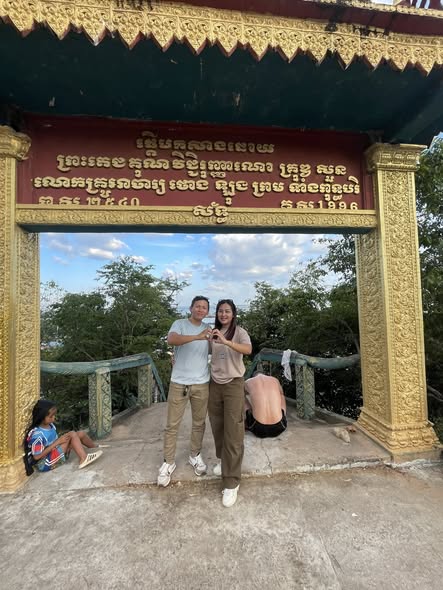
Kun Khmer Club — Coaches Kon Phanet & Ramon
Head coaches Kon Phanet and Ramon have a combined 50+ professional Kun Khmer fights in Cambodia. We coach beginners, travelers, expats, and fighters at our gym in Siem Reap.

Ready to train in Siem Reap?
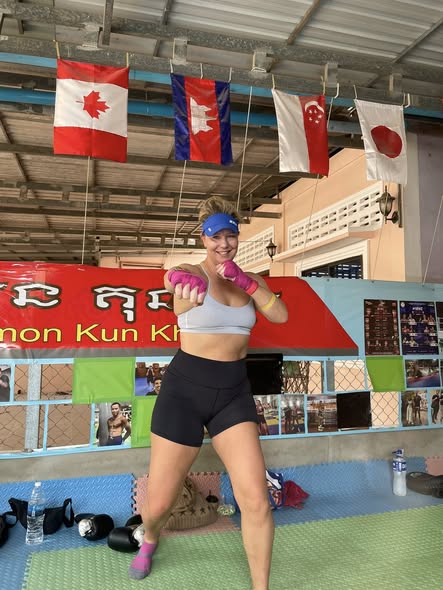
Drop in for a $9 day pass — the group class starts at 5:00 PM every day, and all gear is provided. Message us for today’s times.