
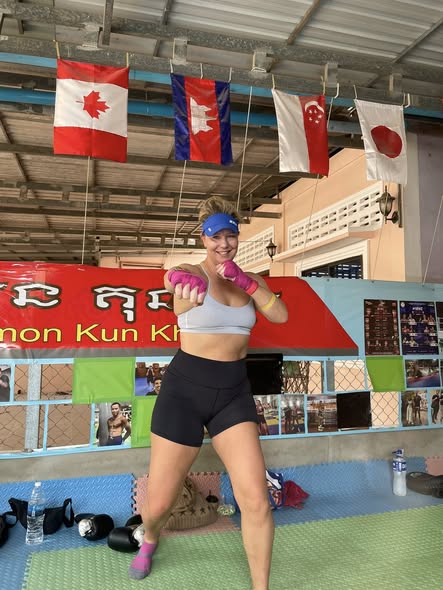
Can Older Beginners Try Kun Khmer?
Yes — age on its own isn't a barrier to starting Kun Khmer. What changes for beginners in their 40s, 50s, and beyond isn't whether they can train, it's how training should be paced: more warm-up, lower-impact options where needed, and closer attention to recovery between sessions. Plenty of people take up striking sports for the first time well into adulthood, and a beginner-paced class is designed with exactly that range of starting points in mind.
Why the approach changes, not the possibility
The CDC recommends adults 65 and older get at least 150 minutes of moderate-intensity aerobic activity a week, plus muscle-strengthening activity on two or more days and activities that improve balance — all three of which show up naturally in a striking class through footwork, pad rounds, and stance work. Balance training matters specifically because it helps reduce fall risk, and striking is built on balance: shifting weight, checking a kick, recovering stance after a strike. Combined with the strength component of throwing punches and kicks with proper structure, a beginner-paced class touches several fitness categories that matter for healthy aging. The main difference for an older beginner is pacing — joints and connective tissue generally need more warm-up time, and recovery between sessions may take longer than it did at 25. None of that makes training off-limits; it just means the coach's job of pacing a session matters more, and a good beginner class is already built to accommodate a wide range of starting fitness levels rather than assuming everyone in the room is the same age and ability.
Low-impact ways to start
- Technical drilling and shadow work at your own pace, without a partner or bag
- Pad work at whatever intensity feels sustainable — it's coach-led, not fixed
- Shorter rounds with more rest between them while you build a base
- Skipping sparring entirely for as long as you want — it's never mandatory for beginners
- Focusing on form and control over speed and power, which reduces joint strain while you build technique
Listen-to-your-body guidance
- Sharp or joint pain is a stop signal — soreness the next day generally isn't
- Hydrate well before class, especially given Siem Reap's heat and humidity
- It's reasonable to sit out a drill or round and rejoin when ready
- If you're new to exercise, returning after a long break, or managing a health condition, get medical clearance before starting a contact sport
Getting started
A single day pass is a low-commitment way to see how a class feels before deciding on anything longer. Let the coach know it's your first time and your goals — pacing a class to a new student, at any age, is a normal part of how beginner training works. It's also reasonable to ask, before your first session, how the coach typically adjusts pace or contact level for older or returning beginners — a straight answer to that question tells you a lot about whether a gym is a good fit.
FAQ
Is there an age limit to start?
There's no upper age limit for trying a beginner class — training scales to the individual rather than requiring a certain fitness level to walk in.
Will I have to spar?
No. Sparring isn't required for beginners of any age, and pad work or technical drilling can be the entire focus for as long as you want.
What if I have joint issues or an old injury?
Mention it to your coach before class so pace and drills can be adjusted, and check with a doctor first if you're unsure whether contact training is appropriate for your situation. Most coaches would rather know upfront than find out mid-session.
How often should an older beginner train to see benefits?
The CDC's general benchmark for adults is about 150 minutes of moderate activity a week — for many beginners that's roughly two to three classes, built up gradually.
Will training help with balance and fall prevention?
Balance work is a natural part of striking training — stance, weight shifts, and recovering after a kick all draw on it — and the CDC specifically names balance activities as a recommended component of exercise for older adults, alongside aerobic and muscle-strengthening work.
Written by the coaches
Kun Khmer Club — Coaches Kon Phanet & Ramon
Head coaches Kon Phanet and Ramon have a combined 50+ professional Kun Khmer fights in Cambodia. We coach beginners, travelers, expats, and fighters at our gym in Siem Reap.


Ready to train in Siem Reap?
Drop in for a $9 day pass — the group class starts at 5:00 PM every day, and all gear is provided. Message us for today’s times.