
History of Kun Khmer in Cambodia
Kun Khmer (កុនខ្មែរ) is Cambodia's national striking art and combat sport. Its roots run through martial techniques carved into Angkor-era temple walls nearly a thousand years ago, its modern rules were set by French colonial administrators in the early 20th century, its lineage was almost severed during the Khmer Rouge period, and it has spent the last three decades rebuilding into the sport practiced in Cambodian rings — and gyms like ours in Siem Reap — today.
From Angkor Carvings to French Codification
The clearest historical record of Khmer combat sport isn't a manuscript — it's stone. Bas-reliefs at Angkor Wat and the Bayon, dated to the 9th–12th centuries, depict fighters striking with elbows and knees. A 12th-century carving at Ta Prohm shows two men in a clinch with one delivering a knee strike, a posture any Kun Khmer student would recognize on the pads today. Cambodian martial artists and historians commonly trace the art's deeper roots back to Bokator, an older Khmer combat system, though the exact continuity between the Angkor-era carvings and the codified sport practiced now is passed down mostly through oral tradition rather than an unbroken written record. That informal era lasted well into the 20th century: fighters wrapped their hands in rope rather than gloves, and bouts were fought in dirt pits with few restrictions, producing serious injuries. During the French colonial period in the early 1900s, the local administration stepped in and introduced boxing gloves, fixed time limits, rest periods between rounds, and a list of banned techniques — the same shift that, around the same time, pushed Thailand's Muay Thai from folk fighting toward a regulated combat sport with a ring, rounds, and judges.
The Khmer Rouge Rupture and a Slow Rebuild
The Khmer Rouge regime (1975–1979) targeted Cambodia's traditional culture broadly, and martial arts did not escape it. Many boxers and trainers were killed or worked to death alongside artists, monks, and other tradition-bearers, and the chain of teacher-to-student transmission that had carried the sport for generations was badly broken. It's a sobering fact that sits behind every modern Kun Khmer gym: a huge amount of what's taught today had to be actively rebuilt, not simply inherited. From the 1980s onward, surviving fighters and trainers began teaching again, slowly restoring the art. Growth accelerated through the 1990s and 2000s as televised bouts brought the sport back into Cambodian homes, and a new generation of fighters — trained by the survivors of the previous one — pushed it back into the national spotlight. Today the sport carries two names used somewhat interchangeably: Pradal Serey ("free boxing"), the older colonial-era name, and Kun Khmer ("Khmer martial art"), the name now favored in government and tourism promotion. Its full formal designation is Kbach Kun Pradal Khmer.
A Modern Identity Fight
Cambodia's push to establish Kun Khmer as its own internationally recognized art — distinct from, but closely related to, Muay Thai — is not new. In 1995, Cambodia proposed unifying Southeast Asia's related boxing styles under a shared regional name, "Sovannaphum boxing," which Thailand declined to adopt. The dispute resurfaced publicly at the 2023 Southeast Asian Games, hosted in Phnom Penh, when organizers listed the competition as Kun Khmer rather than Muay Thai — prompting Thailand's Muay Thai team to boycott that event at the Games. It's a small diplomatic episode, but it says a lot about how central this sport is to Cambodian national identity today. That history is part of why we teach the way we do at Kun Khmer Club in Siem Reap: stance, pad work, and conditioning come first for every beginner — tourist, expat, or local — because that's how the art has always been passed on, one trained person showing the next.
Kun Khmer Timeline
| Period | What Happened |
|---|---|
| 9th–12th century | Angkor-era bas-reliefs at Angkor Wat, the Bayon, and Ta Prohm depict elbow strikes, knee strikes, and clinch fighting. |
| Early 20th century | French colonial administration codifies the sport: gloves, timed rounds, rest periods, banned techniques. |
| 1975–1979 | Khmer Rouge era; many fighters and trainers killed or worked to death, transmission of the art badly disrupted. |
| 1980s–1990s | Surviving fighters and trainers rebuild the sport; a new generation begins training. |
| 2000s | Televised bouts drive a popularity resurgence across Cambodia. |
| 1995 | Cambodia proposes a unified regional "Sovannaphum boxing" name; Thailand declines. |
| 2023 | SEA Games in Phnom Penh list the sport as Kun Khmer; Thailand's Muay Thai team boycotts the event. |
FAQ
Is Kun Khmer the same as Muay Thai?
They are closely related regional striking arts that developed along parallel lines in Cambodia and Thailand, sharing punches, kicks, knees, and elbows. Cambodia considers Kun Khmer its own national art with a separate lineage — see our full comparison for the details.
What does "Kun Khmer" mean?
Roughly "Khmer martial art" or "Khmer boxing." Its older name, Pradal Serey, means "free boxing." Its full formal name is Kbach Kun Pradal Khmer.
How old is Kun Khmer?
Combat scenes carved into Angkor temples date to the 9th–12th centuries, but the modern, ruled sport was codified in the early 20th century under French colonial administration.
Did the Khmer Rouge affect Kun Khmer?
Yes. Many fighters and trainers were killed or worked to death during the 1975–1979 Khmer Rouge period, severely disrupting the sport's transmission. It has been rebuilt since the 1980s.
Sources & further reading
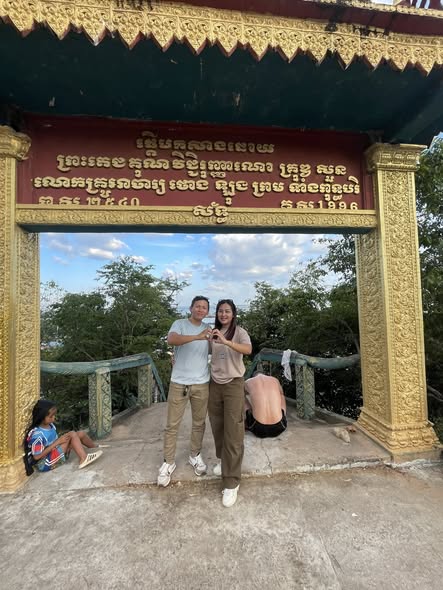
Written by the coaches
Kun Khmer Club — Coaches Kon Phanet & Ramon
Head coaches Kon Phanet and Ramon have a combined 50+ professional Kun Khmer fights in Cambodia. We coach beginners, travelers, expats, and fighters at our gym in Siem Reap.
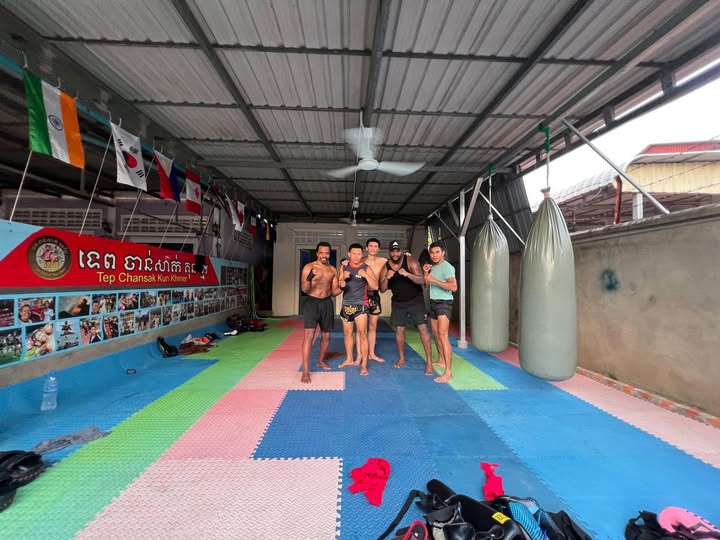


Ready to train in Siem Reap?
Drop in for a $9 day pass — the group class starts at 5:00 PM every day, and all gear is provided. Message us for today’s times.