Where Do You Train Kickboxing in Siem Reap?
Kickboxing in Siem Reap is Kun Khmer — Cambodia's own striking art with punches, kicks, knees, elbows, and clinch — taught daily at 5:00 PM as a beginner-friendly class: $9 drop-in, all gear provided.
On this page
- What Is Kickboxing in Siem Reap, Exactly?
- How Is It Different From the Kickboxing You Know at Home?
- Can Total Beginners Join the Class?
- What Happens in a Typical Class?
- How Much Does Kickboxing Cost in Siem Reap?
- Do You Need to Bring Your Own Gear?
- How Does the Class Keep First-Timers Safe?
- Is One Class Actually a Real Workout?
- What If One Class Isn't Enough?
- How Does Training Fit Around Temple Days?
- How Do You Book a Class as a Traveler?
- Nervous About Your First Striking Class?
Kickboxing in Siem Reap means Kun Khmer Club: a daily 5:00 PM group class where a $9 day pass covers the full session, with gloves, hand wraps, and pads provided for total beginners and experienced students alike. What you actually train is Kun Khmer — Cambodia's own striking art, with punches, kicks, knees, elbows, and clinch — led by coaches Kon Phanet and Ramon, who have more than 50 professional fights between them. No experience, no gear, and no contract are required to start.
What Is Kickboxing in Siem Reap, Exactly?
In Siem Reap, "kickboxing" almost always means Kun Khmer — Cambodia's own stand-up striking sport, also known internationally as Pradal Serey or Khmer boxing. Kickboxing itself is an umbrella term for combat sports built on punching and kicking, and Kun Khmer sits inside that family while adding its own weapons: punches, kicks, knees, and elbow strikes, plus clinch fighting. The sport was codified by the French colonial administration in the early 20th century, and it is the striking art taught at Kun Khmer Club daily at 5:00 PM.
- What you train — Kun Khmer, Cambodia's own striking art (our guide to what Kun Khmer is covers the full picture)
- Whether it counts as kickboxing — yes, with more weapons; where Kun Khmer and kickboxing overlap and differ is sorted out in detail
- Who teaches it — coaches Kon Phanet and Ramon, with 50+ professional fights in Cambodia between them
- When — one group class daily at 5:00 PM; other times by arrangement with the coaches
How Is It Different From the Kickboxing You Know at Home?
The difference is knees, elbows, and clinch — weapons most Western kickboxing rules leave out. American full-contact rules limit strikes to punches and kicks above the waist, while K-1-style rules add knees; Kun Khmer uses four types of strikes — punches, kicks, elbows, and knees — and is especially known for its elbows. Its closest cousin, Muay Thai, gets its "art of eight limbs" name from fists, elbows, knees, and shins, and the two sports share that toolkit. That fuller arsenal is why travelers who cross-shop Muay Thai will recognize the class — see our Muay Thai in Siem Reap guide or the Kun Khmer vs Muay Thai comparison.
Kun Khmer vs. the kickboxing you know at home
| Element | Kun Khmer | Typical Western kickboxing |
|---|---|---|
| Punches | Core technique | Core technique |
| Kicks | Core technique | Core technique |
| Knee strikes | Core, thrown from the clinch too | Allowed in K-1-style rules, not full contact |
| Elbow strikes | Core — the sport is especially known for its elbows | Not in full-contact rules |
| Clinch | A scored phase of the sport | Usually broken quickly or not permitted |
Can Total Beginners Join the Class?
Yes — the 5:00 PM group class is mixed-level, built so a complete beginner can walk in with no experience and train the full session. Coaches scale the pace and their corrections to each person rather than running one fixed drill, and there is no sparring requirement for newcomers. Travelers are the core audience — visitors regularly train a single evening or a full week, and whether tourists can train Kun Khmer in Siem Reap answers the logistics in detail. If your worry is safety rather than skill, how safe Kun Khmer is for beginners covers that honestly.
- Message ahead on WhatsApp or Telegram — or simply arrive before 5:00 PM
- A coach fits your hand wraps and gloves; all gear is provided
- Warm-up first, then stance, guard, and basic strikes taught from zero
- Pad rounds at your pace — you hit pads, not people
- A conditioning finisher closes the session, about an hour or slightly more in total
What Happens in a Typical Class?
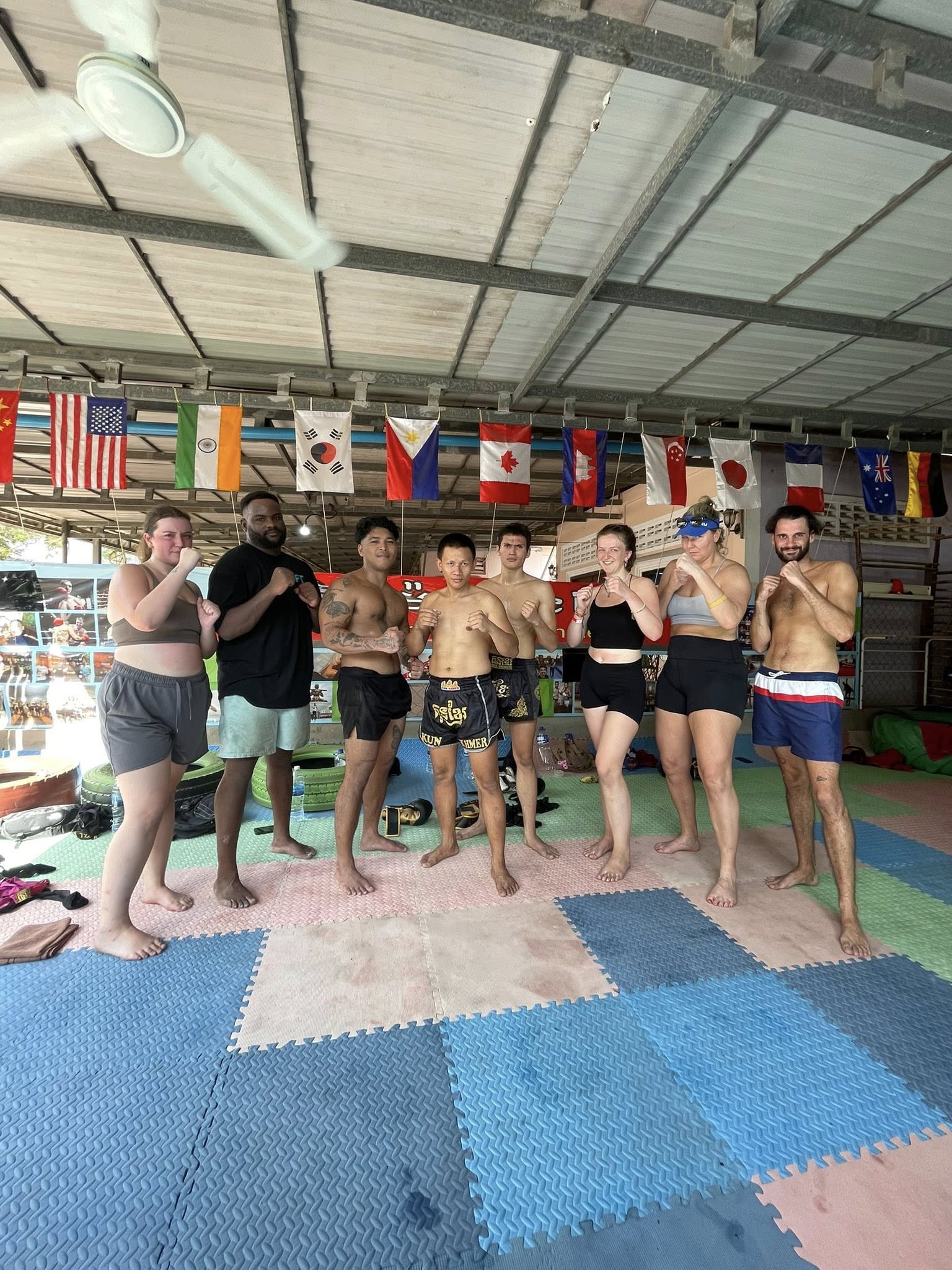
A typical class runs warm-up, technique breakdown, pad rounds, and a conditioning finisher, in that order, lasting a little over an hour. The pad rounds are the heart of it — you apply what you just drilled against pads held by a coach, in short rounds with rest between them. The structure is the same every day at 5:00 PM, so you can drop a session into any evening of a Siem Reap itinerary. What you are joining is part of the broader Siem Reap martial arts scene — small, local, and far less commercialized than the big Thai gym towns.
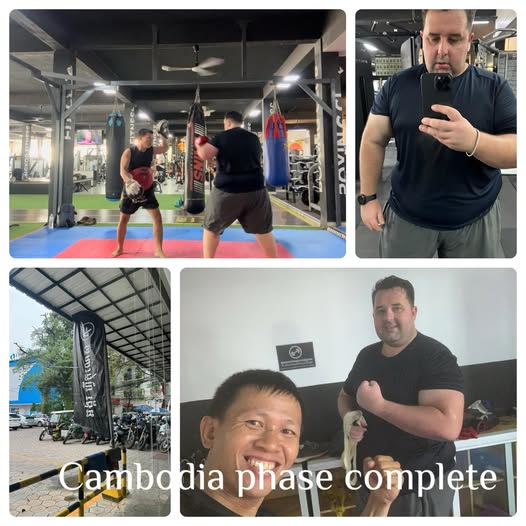
We took the trial boxing class with My Phanith, it was great! He explained all the basic techniques for our first class, it was awesome!
How Much Does Kickboxing Cost in Siem Reap?
A single kickboxing-style class in Siem Reap costs $9 at Kun Khmer Club — the day pass covers the full 5:00 PM session with gear included. Travelers staying about a week usually switch to the $69 weekly pass; residents and long-stayers use the $129 monthly. Private sessions cost $25 per hour per person, and the 6-week fight camp is $299. For the full breakdown of every pass and when each one makes sense, see what a Kun Khmer class costs in Siem Reap.
Prices at a glance — all gear provided, training barefoot on mats
| Option | Price | What it covers |
|---|---|---|
| Day pass | $9 | One group class at 5:00 PM |
| Weekly pass | $69 | Unlimited classes for about a week |
| Monthly | $129 | Longer stays and residents |
| Private 1-on-1 | $25 / hour / person | Flexible timing, arranged with a coach |
| 6-week fight camp | $299 | A structured training block |
Do You Need to Bring Your Own Gear?
No — gloves, hand wraps, and pads are provided at the gym, and you train barefoot on mats. Workout clothes and water are the only things to pack; there is nothing to buy before your first class. That also removes the usual beginner trap of buying the wrong gloves — you learn on the gym's equipment first and buy your own only if you keep training. If you are still weighing which discipline to pick up as a newcomer at all, the best martial arts for beginners compares the main options.
- Provided — boxing gloves, hand wraps, and pads, fitted by a coach before you start
- You bring — sports clothes, water, and a towel; feet stay bare on the mats
- Not needed — shoes, a uniform, a belt system, or any prior kit purchase
How Does the Class Keep First-Timers Safe?
Safety comes from structure: beginners learn stance, guard, and strikes slowly on pads before anything faster happens, and sparring is not part of a newcomer's session. Pad work means your strikes land on equipment, not people, with a coach watching every exchange to correct form before power comes into it. Mixed-level classes are also matched by the coaches, so newcomers are never paired against experienced fighters for hard exchanges. The same basics — drill before intensity, technique before volume — run through these martial arts training tips.
- Tell the coach it is your first class — they scale the session to you
- Wraps and gloves go on before any striking starts
- Technique is drilled slowly before pad rounds add speed
- No sparring is required or expected from beginners
- Flag any injury or medical condition before the warm-up — coaches adjust around it
Is One Class Actually a Real Workout?
Yes — between the warm-up, repeated pad rounds, and the conditioning finisher, a single class works legs, core, and shoulders hard enough that most people feel it the next morning. It also stacks well with a travel week: the WHO recommends adults get at least 150 minutes of moderate-intensity physical activity per week and notes that inactive people carry a 20% to 30% increased risk of death compared with active ones. An hour-plus striking class is a compact way to bank a real share of that while sightseeing. If fitness is your main reason for training, where to train martial arts in Siem Reap sets the class in context.
Great coach! Explains everything very well and really takes the time for you! The classes are also a good combination of cardio, strength, and technique, where you learn a lot right from lesson 1! Highly recommended!
What If One Class Isn't Enough?
Three paths scale up from the day pass: the $69 weekly or $129 monthly passes for regular training, private 1-on-1 sessions at $25 per hour per person for targeted work, and the $299 6-week fight camp for a committed block. Privates let you zero in on one skill — clinch entries, elbow timing, sharper pad work — at whatever hour suits your itinerary. Longer passes start making sense around day three of a stay, when drop-in pricing stops being the cheapest route. Before committing to a camp, it is worth reading what private Kun Khmer lessons in Siem Reap cover and how to tell if a martial arts gym is good.
Training options beyond the single drop-in
| Option | What it is | Best for |
|---|---|---|
| Group class | Daily 5:00 PM mixed-level session | First evenings and short stays |
| Weekly / monthly pass | Same class, unlimited, $69 / $129 | Stays of a week or more |
| Private 1-on-1 | One coach, your time and focus ($25 / hour / person) | Fast progress on a schedule |
| 6-week fight camp | Structured block with the coaches ($299) | Serious students with a goal |
| Dedicated group time | Arranged sessions for women's or kids' groups | Families and private groups |
How Does Training Fit Around Temple Days?
Easily — the single daily class starts at 5:00 PM, after a standard Angkor sunrise-and-temples day is done. If 5:00 PM clashes with a tour or a flight, the coaches arrange other times on request, including private slots. The striking tradition you train in the evening is old enough to appear in the bas-reliefs carved on Angkor's temple walls, which makes for a neat loop on a trip built around those sites. Our guide to martial arts in Cambodia connects that history to what is trained today.
- Sunrise at Angkor, train at 5:00 PM — the class lands after the standard temple day
- Private sessions move — arrange a morning or an alternate time by message
- Weekly pass — $69 covers unlimited sessions across a temple-plus-training week
- One evening is enough — a $9 day pass carries no commitment beyond that visit
How Do You Book a Class as a Traveler?
Message on WhatsApp or Telegram, call +855 96 228 8585, or simply arrive before the 5:00 PM class — walk-ins are normal. Same-day booking is fine for the group class; only dedicated group sessions and private slots need arranging ahead. Payment is per visit or per pass, with no contract or membership form to sign. Whether you need to book a Kun Khmer class in advance answers the edge cases — holidays, big groups, private times.
- Message on WhatsApp or Telegram, or call +855 96 228 8585 — or just walk in before 5:00 PM
- Say it is your first class, so a coach fits your wraps and gloves
- Bring workout clothes and water; everything else is provided
- Train the full session — no contract, no membership form
- Staying the week? The $69 weekly pass is available any time
Nervous About Your First Striking Class?
Almost every traveler in the room started exactly where you are — several of the gym's own reviews are from people whose first-ever martial arts class happened here. The answer for nervous first-timers is always the same: the coach teaches from zero, and nobody is thrown into contact. You will not be the only beginner in the room — the class is mixed-level by design. If choosing a gym is the part making you hesitate, what makes the best Kun Khmer club in Siem Reap gives you a checklist that works on any gym in town, including this one.
Had a great lesson and experience with Kun Phaneth. Was the first time in my life to do any type of boxing or martial arts - will definetely do it again
FAQ
Can beginners join a class?
Yes. The daily 5:00 PM group class is mixed-level and beginner-friendly: coaches teach stance, guard, and basic strikes from zero, scale the pace to each person, and there is no sparring requirement for newcomers. Most first-timers have never trained any martial art before.
Do you need to bring your own gear?
No. Gloves, hand wraps, and pads are provided, and training is barefoot on mats. Bring only workout clothes and water.
What is a typical class like?
Warm-up first, then a technique breakdown — stance, guard, punches, kicks — then pad rounds with a coach, and a conditioning finisher to close. The session runs a little over an hour and starts at 5:00 PM daily.
Is sparring required?
No. Beginners train technique and pad work only. Sparring is not part of a newcomer's session and never a requirement to keep training.
Is there risk of injury?
Kickboxing is a contact sport, so risk is not zero. Beginners here hit pads rather than people, drill techniques slowly before adding speed, and are supervised by a coach throughout — and no sparring is required at beginner level.
Can I drop in for a class?
Yes. A $9 day pass covers one full session with no membership and no advance booking — message on WhatsApp to confirm today's 5:00 PM class, or just show up.
I don't want to get hit. Is this a contact workout?
In a beginner class you hit pads, bags, and the air — not people. Contact with another person only enters if and when you choose sparring later, which is never required.
How much does a gym day pass cost in Siem Reap?
Prices vary by gym, but a Kun Khmer class day pass at Kun Khmer Club is $9 and covers the full 5:00 PM group class with gear included. A weekly pass is $69 and a monthly is $129 if you stay longer.
Key takeaways
- Kickboxing in Siem Reap is Kun Khmer — punches, kicks, knees, elbows, and clinch — taught as one daily 5:00 PM group class.
- A $9 day pass covers a full session; the weekly pass is $69, monthly $129, privates $25 per hour per person, and the 6-week camp $299.
- Total beginners are the norm: gear is provided, training is barefoot on mats, and there is no sparring requirement.
- Kun Khmer differs from Western kickboxing — knees, elbows, and clinch are core techniques, not optional extras.
- Book by WhatsApp, Telegram, or +855 96 228 8585, or walk in before 5:00 PM — one evening is enough to try it.
Sources & further reading
- Kickboxing — Wikipedia — Kickboxing as an umbrella term for punching-and-kicking combat sports; the term's 1960s Japanese origin; full-contact rules limited to punches and kicks above the waist while K-1-style rules permit knees. — source
- Kun Khmer — Wikipedia — The four strikes (punches, kicks, elbows, knees) plus clinch; elbows as the sport's signature technique; codification by the French colonial administration in the early 20th century; bas-reliefs on Angkor temple walls. — source
- Muay Thai — Wikipedia — The "Art of Eight Limbs" name from combined use of fists, elbows, knees, and shins, and clinch usage. — source
- WHO — Physical activity fact sheet — Adults should reach at least 150 minutes of moderate-intensity physical activity per week; inactive people face a 20% to 30% increased risk of death versus active people. — source
- Kun Khmer Club — Google reviews — The quoted first-class reviews (Margaux, Sanne Van den brink, Manuel Jungwirth) from the gym's 5.0-rated Google listing (8 reviews, pulled 2026-10-25, docs/seo-evidence/google-reviews.md). — source
Reviewed 2026-10-26
Written by the coaches
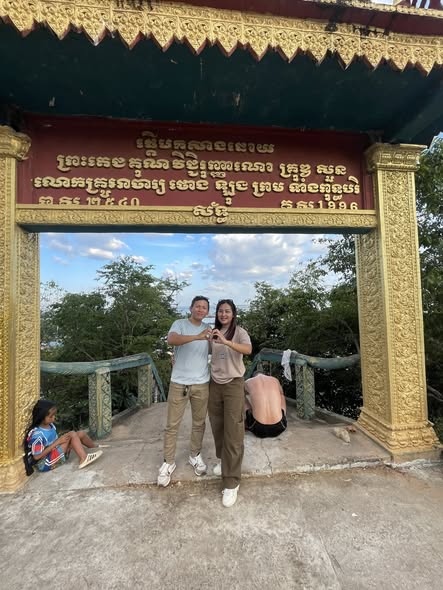
Kun Khmer Club — Coaches Kon Phanet & Ramon
Head coaches Kon Phanet and Ramon have a combined 50+ professional Kun Khmer fights in Cambodia. We coach beginners, travelers, expats, and fighters at our gym in Siem Reap.
Ready to train in Siem Reap?
Drop in for a $9 day pass — the group class starts at 5:00 PM every day, and all gear is provided. Message us for today’s times.