Is Kun Khmer the Same as Kickboxing?
No — Kun Khmer is not the same as kickboxing. Kickboxing is an umbrella term for punches-and-kicks sports; Kun Khmer is Cambodia's own striking art, adding scored knee and elbow strikes and clinch fighting.
On this page
- What Actually Separates Kun Khmer From Kickboxing?
- Why Is Kun Khmer Called "Cambodian Kickboxing"?
- Why Don't People Call Kun Khmer "Muay Thai" in Cambodia?
- Does Kun Khmer Use Elbows and Knees Like Muay Thai?
- How Do the Rules Differ Inside the Ring?
- Is Kun Khmer Older Than Kickboxing?
- What Does a Kun Khmer Class Cover That Kickboxing Doesn't?
- Is Kun Khmer Harder to Learn Than Kickboxing?
- Which Is a Better Workout, Kun Khmer or Kickboxing?
- Do Kun Khmer Fighters Perform a Ritual Before a Fight?
- Is Kun Khmer Better for Self-Defense Than Kickboxing?
- Can You Train Kun Khmer-Style Kickboxing in Siem Reap?
- How Do You Choose Between Kun Khmer and Kickboxing?
No — Kun Khmer is not the same as kickboxing. Kun Khmer is Cambodia's own striking art: punches and kicks plus scored knee strikes, elbow strikes, and clinch fighting, while "kickboxing" is an umbrella term for several punches-and-kicks combat sports. If you want to train the real thing in Siem Reap, a $9 day pass gets you into the daily 5:00 PM group class with all gear provided.
What Actually Separates Kun Khmer From Kickboxing?
Kun Khmer and kickboxing share punches and kicks, but Kun Khmer adds two scored weapons — knees and elbows — plus clinch fighting that the punches-and-kicks formats do not feature. Kickboxing is an umbrella term for combat sports based on punching and kicking, a family Kun Khmer sits inside as Cambodia's member of it. Kun Khmer itself consists of four types of strikes — punches, kicks, elbows, and knee strikes — fought as stand-up striking and clinch fighting. Where a punches-and-kicks match ends its scoring vocabulary, Kun Khmer is only getting started: the close-range tools are among the sport's highest-value techniques. The same four-weapon logic drives Muay Thai — our Kun Khmer vs Muay Thai comparison breaks that pair down — and it is exactly what you train in the kickboxing-style classes travelers book in Siem Reap.
Kun Khmer vs. punches-and-kicks kickboxing
| Element | Kun Khmer | Punches-and-kicks kickboxing |
|---|---|---|
| Punches | Core strike | Core technique |
| Kicks | Core strike | Core technique |
| Knee strikes | Core strike, used from the clinch | Outside the base toolkit |
| Elbow strikes | Core strike | Outside the base toolkit |
| Clinch fighting | Formally part of the sport | Outside the base toolkit |
| Identity | Cambodia's own ring sport | Umbrella over many styles |
Why Is Kun Khmer Called "Cambodian Kickboxing"?
It isn't, officially — "Cambodian kickboxing" is an English shorthand, while the sport's own names are Kun Khmer and its older name Pradal Serey. The official name in Khmer is Kbach Kun Pradal Khmer, and the sport is also known as Pradal Serey, literally "free fighting". Travel writers and gyms abroad reach for "kickboxing" because it is the term international visitors already know, the same way Muay Thai gets glossed as "Thai kickboxing." The shorthand is understandable, but it papers over the one thing that makes the sport itself: it is Cambodia's own, under its own name. Our guide to what Kun Khmer is covers the naming in full.
- Kun Khmer — "Khmer martial art"; the name used in promotion today
- Pradal Serey — "free fighting"; the older name you will still hear in gyms
- Khmer boxing / Cambodian boxing — English shorthand used in travel writing
- Kbach Kun Pradal Khmer — the official full name in Khmer
- "Cambodian kickboxing" — a convenience translation, not an official name
Why Don't People Call Kun Khmer "Muay Thai" in Cambodia?
Because in Cambodia the sport has its own name, and locals will correct you — the difference is national identity, not pedantry. It is a recurring correction in traveler communities: ask for Muay Thai in Cambodia and the answer comes back that the sport here is called Pradal Serey or Kun Khmer. For a visitor this is not about getting a term perfect — it is about giving the sport the same national standing Cambodia gives it. The martial arts of Cambodia covers how the two countries' arts split apart historically.
Don't call it Muay Thai in Cambodia. It's called Pradal Serey or Kun Khmer here.
Does Kun Khmer Use Elbows and Knees Like Muay Thai?
Yes — knees and elbows are core scored weapons in Kun Khmer, the same four-weapon logic that gives Muay Thai its name. Muay Thai is "sometimes referred to as Thai boxing, the Art of Eight Limbs," referring to the combined use of fists, elbows, knees and shins, and Kun Khmer builds the same way: four types of strikes — punches, kicks, elbows, and knee strikes. Travelers who have trained both describe the two as very similar, with Kun Khmer the more elbow-oriented of the pair. The eight limbs, counted out, look like this — and you can drill all of them in the Muay Thai-style striking classes in Siem Reap.
- Two fists — Western-style boxing hands
- Two shins — the kicking weapons
- Two knees — straight knees and clinch knees
- Two elbows — the signature close-range weapons
- Plus the clinch — the tied-up phase where knees and elbows score most
How Do the Rules Differ Inside the Ring?
The stakes are different at close range: in Kun Khmer the clinch is a scored phase and elbow strikes count, so the tied-up moments are where fights get decided rather than reset. Kun Khmer fights as stand-up striking and clinch fighting, inside a ring shell the French-era codification built out with gloves, time limits, and rest periods. A punches-and-kicks format, by definition, scores the long-range weapons and stops there — there is no clinch battle to win. That changes the texture of a fight for spectators, and it changes what beginners need to learn — our guide covers how beginners train safely under these rules.
Rule areas that set Kun Khmer apart
| Rule area | How Kun Khmer treats it |
|---|---|
| Clinch | A scored phase of the sport, not a reset |
| Elbow strikes | Legal and scored — among the fight-ending weapons |
| Knee strikes | Legal and scored, especially from the clinch |
| Ring format | Gloves, time limits, and rest periods from the French-era codification |
Is Kun Khmer Older Than Kickboxing?
Yes — by any measure: Khmer martial arts are documented from the 1st century AD, while the word "kickboxing" was coined in 1960s Japan. Martial arts in Cambodia date back to the 1st century AD and are depicted in Angkor-era bas-reliefs, including a 12th-century Ta Prohm carving of two men clinch fighting with a knee strike. The modern kickboxing label is recent — the term was introduced in the 1960s by Japanese boxing promoter Osamu Noguchi — and Kun Khmer's own ring rules were codified by the French administration in the early 20th century. The battlefield art in its ancestry is even separately recognized: our guide to Bokator, the ancient art in Kun Khmer's ancestry explains the connection.
- 1st century AD — the documented dating of martial arts in Cambodia (Wikipedia — Kun Khmer)
- 9th–12th centuries — Angkor-era bas-reliefs record combat, including the 12th-century Ta Prohm clinch-and-knee carving
- Early 20th century — the French colonial administration codifies the modern ring sport with gloves, time limits, and rest periods
- 1960s — Japan coins the word "kickboxing" (Wikipedia — Kickboxing)
- 2022 — UNESCO inscribes Kun Lbokator, the battlefield art in Kun Khmer's ancestry, on its Intangible Cultural Heritage list (UNESCO)
What Does a Kun Khmer Class Cover That Kickboxing Doesn't?
Clinch work, elbow drilling, and knee timing — the close-range curriculum a punches-and-kicks class never schedules. A beginner class here still starts where every striking class starts, with stance, guard, punches, and kicks on pads, because those are the foundations everything else depends on. As fundamentals settle, coaches Kon Phanet and Ramon — a combined 50+ professional fights in Cambodia between them — layer in clinch control, knee entries, and elbow technique as core skills rather than advanced extras. If you are comparing options in town, see what boxing-style classes in Siem Reap cover, or how private Kun Khmer lessons target the close-range skills faster.
- Clinch fighting — gripping, off-balancing, and striking from the tie-up
- Knee strikes — thrown at range and from inside the clinch
- Elbow strikes — introduced once control is safe
- Close-range pad rounds — knees and elbows on the pads, not just punches and kicks
- The full ruleset — what actually scores in a Kun Khmer bout
Is Kun Khmer Harder to Learn Than Kickboxing?
It has more to learn, not a harder entry — day one looks like any beginner striking class, and the extra weapons arrive gradually. Nobody throws elbows in their first hour: you build stance, guard, punches, and kicks first, and knees, elbows, and clinch work come once those hold up. There is no sparring requirement for newcomers, and mixed-level classes let the coaches scale each person individually. If you are choosing a first art at all, our guide to the best martial arts for beginners compares the entry points, and these martial arts training tips apply to either sport.
- Stance and guard — the base everything else stands on
- Punches — jab, cross, hooks, uppercuts
- Kicks — shin-led roundhouses to body and legs
- Knee strikes — straight knees first, then clinch knees
- Elbow strikes — from controlled, coached entries
- Clinch fighting — control, off-balancing, striking from the tie-up
Which Is a Better Workout, Kun Khmer or Kickboxing?
As workouts the two are equivalent in kind — both are sustained, full-body striking sessions — so the better workout is the one you will actually keep attending. What matters for health is the total: the WHO recommends adults do at least 150 minutes of moderate-intensity aerobic activity per week, and how much activity any one person needs varies with age. Both arts deliver the same training kind — coached pad rounds, bag work, and conditioning in one session — and how vigorous any single class is depends on the effort you put into it. The practical difference in Siem Reap is scheduling, not physiology: a daily 5:00 PM class is easy to stack into a routine, and if you want hands-only fitness instead, a boxing gym in Siem Reap style session is covered by the same class.
- The baseline — WHO: at least 150 minutes of moderate aerobic activity weekly for adults
- Same kind of work — both arts are coached, whole-body striking sessions
- Effort is the variable — intensity follows your output, not the sport's name
- Consistency wins — the daily 5:00 PM class makes a routine easy to keep
Do Kun Khmer Fighters Perform a Ritual Before a Fight?
Yes — the kun kru, a pre-fight praying ritual honoring the fighter's spirit trainer, performed while traditional Khmer music plays. At the beginning of each match the boxers practice the praying ritual known as the kun kru, and traditional Cambodian music — sampho drum, sralai oboe, and chhing cymbals — is played during the match. Muay Thai has its counterpart in the wai kru, so the ritual frame is a family trait rather than a Kun Khmer exclusive. If you watch a fight night in Cambodia, the ritual is part of the show — how the two arts' pre-fight rituals compare is covered in our comparison guide.
At the beginning of each match the boxers practice the praying rituals known as the kun kru or thvayobangkoum krou.
Is Kun Khmer Better for Self-Defense Than Kickboxing?
Neither name decides it — both are pressure-tested striking sports, and what makes either one work for self-defense is how it is trained, not what it is called. Live resistance against a partner who is actually fighting back beats choreography in every art, and Kun Khmer trains that way: pad rounds with real-time corrections, and controlled contact for those who want it. Where Kun Khmer adds something is at close range — clinch control and elbow strikes cover the grabbing distance that punches-and-kicks sparring largely ignores. If self-defense is the actual goal, the best self-defense martial arts guide ranks the pressure-tested options and where Kun Khmer sits among them.
- Pressure over pedigree — training method beats the style name
- Shared base — punches and kicks transfer from any striking sport
- Close-range extras — clinch control and elbows cover grabbing distance
- One condition — any art works only as well as its live training
Can You Train Kun Khmer-Style Kickboxing in Siem Reap?
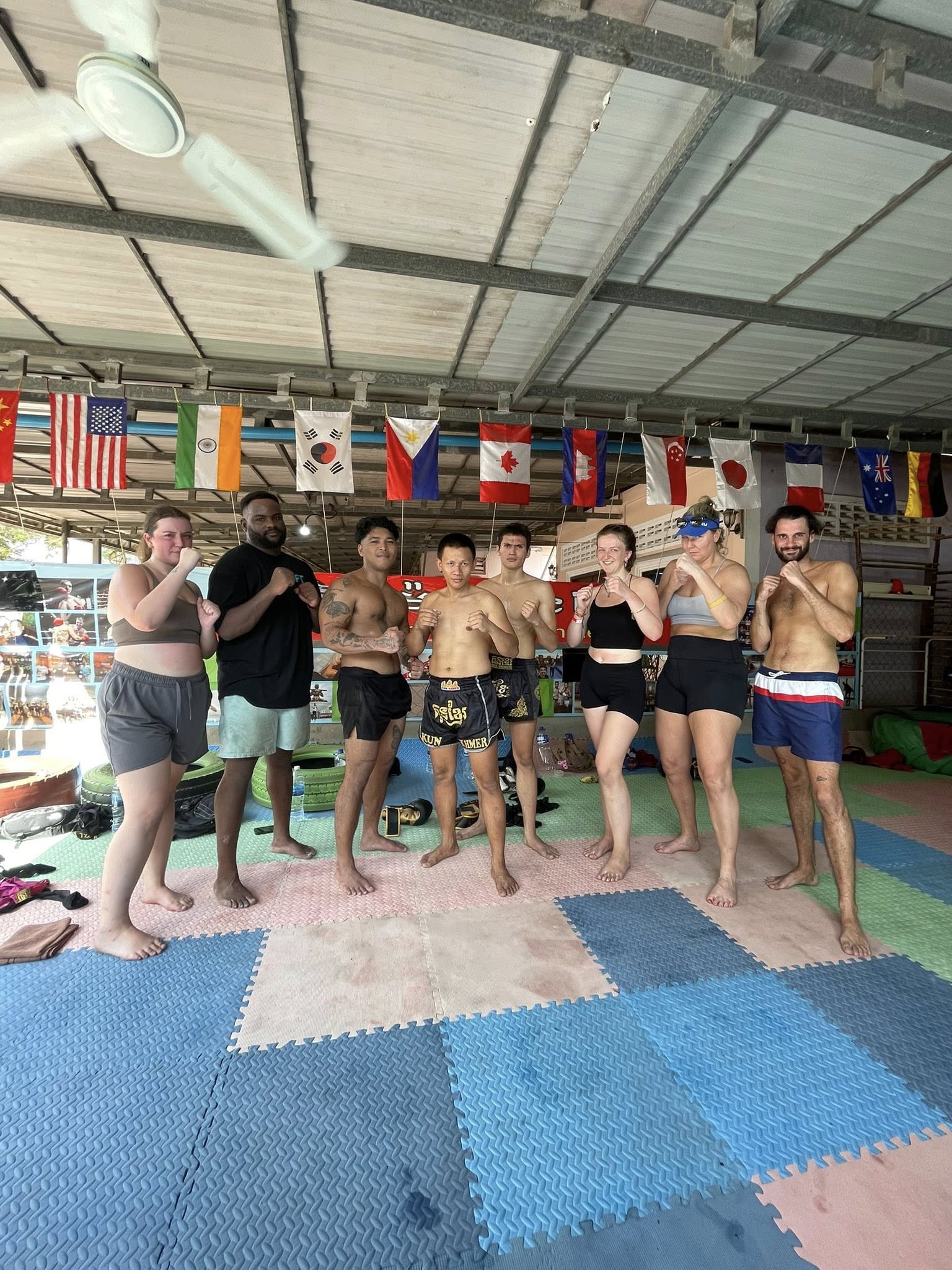
Yes, daily: Kun Khmer Club runs a group class at 5:00 PM every day, a $9 day pass covers the session with all gear provided, and no experience is needed. The class is mixed-level and beginner-friendly, and coaches Kon Phanet and Ramon lead every session personally. If you are comparing the town's options first, what a class costs in Siem Reap and whether tourists can walk in and train cover the logistics, and how to judge any Kun Khmer club in Siem Reap gives you four verifiable criteria.
Training options at Kun Khmer Club, Siem Reap
| Option | Price | Notes |
|---|---|---|
| Day pass | $9 | One group class, 5:00 PM daily — all gear included |
| Weekly pass | $69 | A typical week-long stay |
| Monthly | $129 | Longer stays and residents |
| Private 1-on-1 | $25 / hour / person | Any time by arrangement with a coach |
| 6-week fight camp | $299 | A structured block for serious students |
How Do You Choose Between Kun Khmer and Kickboxing?
If you are in Siem Reap, the choice is mostly made for you: the real local striking sport is Kun Khmer, and its toolkit covers everything a punches-and-kicks class would drill plus knees, elbows, and clinch on top. Chasing a specific "kickboxing" label will send you in circles in a city whose mats teach Cambodia's art — so decide on three things instead: how many days you have, whether you want technique depth or just a hard session, and whether the cultural layer matters to you. Then book: where to train martial arts in Siem Reap compares every gym in town, and how to book a Kun Khmer class explains that a WhatsApp message is enough — walk-ins work too.
- Count your days — one evening fits a $9 day pass; a full week fits the $69 weekly pass
- Set your goal — a hard fitness session or the full art, knees and elbows included
- Pick the format — the 5:00 PM group class or a private session arranged with a coach
- Book the same day — a WhatsApp message or a walk-in before the 5:00 PM class
FAQ
Is Kun Khmer the same as Muay Thai?
No — they are close cousins, not the same sport. Both are Southeast Asian ring sports using punches, kicks, knees, elbows, and the clinch, but Kun Khmer is Cambodia's own art with its own name, rules tradition, and fight scene.
What is the difference between Kun Khmer and Muay Thai?
Both arts share the same eight-weapon toolkit, so the differences are national identity and emphasis: Kun Khmer is Cambodia's sport, often described by people who have trained both as the more elbow-oriented of the pair, while Muay Thai is Thailand's. Our comparison guide covers the details.
What is the difference between Muay Thai & Kickboxing?
"Kickboxing" is an umbrella term for combat sports based on punching and kicking. Muay Thai goes beyond that base, adding knee strikes, elbow strikes, and clinch fighting as core, scored techniques.
What is the difference between Muay Thai and Pradal Serey?
Pradal Serey is the older name for Kun Khmer, Cambodia's own sport — so the difference is the country. Muay Thai is Thailand's ring sport; Pradal Serey, now promoted as Kun Khmer, is Cambodia's.
What are the distinctive characteristics of Kun Khmer and Muay Thai?
Both use four weapons — punches, kicks, knees, elbows — plus the clinch, and both open with a pre-fight ritual performed to traditional music: Kun Khmer's kun kru and Muay Thai's wai kru. People who have trained both commonly point to Kun Khmer's elbow emphasis as the sharpest difference.
What are Muay Thai and Kun Khmer?
They are the national ring sports of two neighboring countries: Muay Thai is Thailand's, and Kun Khmer (also called Pradal Serey) is Cambodia's. Both are stand-up striking sports built on punches, kicks, knees, elbows, and clinch work.
Muay Thai vs Pradal Serey?
That comparison is really Thailand versus Cambodia: Pradal Serey is the old name for Kun Khmer. Travelers who have trained both describe them as very similar, with Kun Khmer the more elbow-oriented of the two.
Key takeaways
- No — Kun Khmer is not the same as kickboxing: it adds scored knee strikes, elbow strikes, and clinch fighting to the punches-and-kicks base.
- "Cambodian kickboxing" is a translation shorthand; the sport's own names are Kun Khmer and its older name, Pradal Serey.
- Its closest cousin is Muay Thai — same family, separate national arts, and locals will correct you if you mix the names.
- The history gap is wide: Khmer martial arts are documented from the 1st century AD, while the word "kickboxing" was coined in 1960s Japan.
- You can train the real thing in Siem Reap from a $9 day pass — 5:00 PM daily group class, all gear included.
Sources & further reading
- Wikipedia — Kun Khmer — Names (Pradal Serey, Kbach Kun Pradal Khmer), four strike types plus clinch fighting, French-era codification with gloves and time limits, 1st-century AD dating, Angkor bas-reliefs and the Ta Prohm carving, the kun kru ritual and match music — source
- Wikipedia — Kickboxing — Kickboxing as an umbrella term for punching-and-kicking combat sports; the term coined in 1960s Japan by Osamu Noguchi — source
- Wikipedia — Muay Thai — Muay Thai as "the Art of Eight Limbs" (fists, elbows, knees, shins); the wai kru ritual — source
- UNESCO — Kun Lbokator — Bokator inscribed on the Intangible Cultural Heritage list in 2022 — source
- WHO — Physical activity fact sheet — WHO recommendation of at least 150 minutes of moderate-intensity physical activity per week for adults — source
- CDC — Physical Activity Basics — The amount of physical activity you need depends mostly on your age — source
- r/cambodia — gym recommendation thread — Traveler-community correction: the sport is called Pradal Serey or Kun Khmer in Cambodia, not Muay Thai — source
- r/MuayThai — Muay Thai vs Pradal Serey thread — Firsthand description of Kun Khmer as very similar to Muay Thai but more elbow-oriented — source
Reviewed 2026-10-26
Written by the coaches
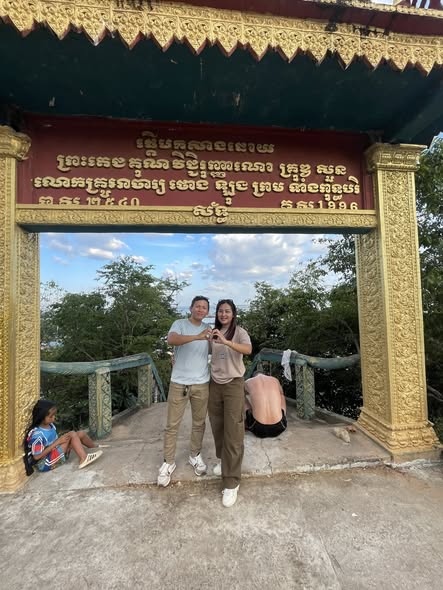
Kun Khmer Club — Coaches Kon Phanet & Ramon
Head coaches Kon Phanet and Ramon have a combined 50+ professional Kun Khmer fights in Cambodia. We coach beginners, travelers, expats, and fighters at our gym in Siem Reap.
Ready to train in Siem Reap?
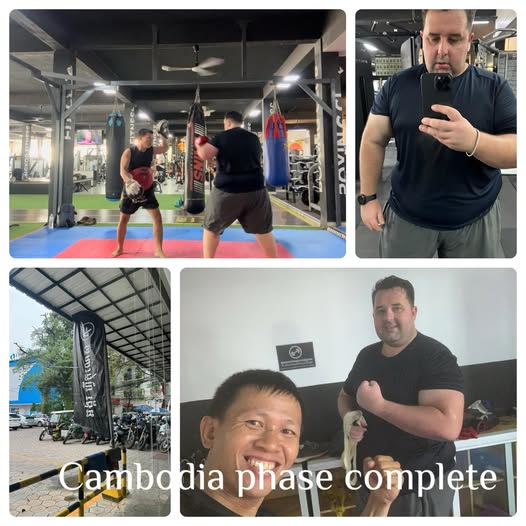
Drop in for a $9 day pass — the group class starts at 5:00 PM every day, and all gear is provided. Message us for today’s times.