
What Are the Martial Arts of Cambodia? 2026 Guide
Cambodia's two living martial arts are Kun Khmer (Pradal Serey), the national ring sport built on punches, kicks, knees, and elbows, and Bokator, an older battlefield system that UNESCO inscribed on its Intangible Cultural Heritage list in 2022. For travelers the practical choice is Kun Khmer: gyms in Siem Reap and Phnom Penh run beginner-friendly classes, while Bokator instruction stays rare and concentrated with a small community of masters.
On this page
- What Martial Arts Come From Cambodia?
- How Old Is Cambodia's Martial Arts Heritage?
- What Is Kun Khmer?
- How Is Kun Khmer Different From Muay Thai?
- What Is Bokator?
- How Do Kun Khmer and Bokator Differ?
- What Happened to Cambodian Martial Arts During the Khmer Rouge Era?
- What Is the Kun Kru Ceremony?
- Where Can Travelers Train Cambodian Martial Arts?
- Can Beginners Train Kun Khmer in Cambodia?
- Is Watching Kun Khmer Fights Part of the Experience?
- Which Cambodian Martial Art Should You Try First?
Cambodia's two living martial arts are Kun Khmer (Pradal Serey), the national ring sport built on punches, kicks, knees, and elbows, and Bokator, an older battlefield system that UNESCO inscribed on its Intangible Cultural Heritage list in 2022. For travelers the practical choice is Kun Khmer: gyms in Siem Reap and Phnom Penh run beginner-friendly classes, while Bokator instruction stays rare and concentrated with a small community of masters.
What Martial Arts Come From Cambodia?
Cambodia has two principal living martial arts, and they serve very different purposes. Kun Khmer is the competitive ring sport, fought five three-minute rounds at a time with four striking weapons and clinch work; Bokator is a heritage combat system spanning striking, grappling, ground fighting, and traditional weapons. Both trace their roots to the same Khmer warrior past, but only one of them is something a visitor can realistically walk in and train this week — our guide to what Kun Khmer is and Bokator's full profile cover each in depth.
- Kun Khmer (Pradal Serey) — Cambodia's national striking art, a regulated ring sport with five three-minute rounds, punches, kicks, knees, elbows, and clinch fighting
- Bokator (Kun Lbokator) — an ancient battlefield system covering strikes, locks, ground fighting, and weapons such as staff, sword, and spear, inscribed by UNESCO in 2022
How Old Is Cambodia's Martial Arts Heritage?
Cambodia's martial heritage reaches back close to two thousand years by UNESCO's account, and the clearest surviving evidence is carved into Angkor-era temples. The inscription file for Kun Lbokator describes a martial art dating back to the first century, while Angkor temples carry bas-reliefs of combat — arm, hand, and neck locks on the Bayon walls and a 12th-century clinch knee-strike scene at Angkor Wat. The ring sport visitors see today is younger: its codified, gloved, timed-rounds form took shape in the 20th century, a history our Kun Khmer history guide unpacks honestly.
An embodiment of the country's social, cultural and religious values, Kun Lbokator is widely practiced among Cambodians, regardless of their age, gender and educational backgrounds or status.
What Is Kun Khmer?
Kun Khmer is Cambodia's national striking art — a ring sport fought with four weapons and an aggressive, elbow-forward style. It is also known by the older name Pradal Serey, literally "free fighting" — our Pradal Serey naming guide explains why the name changed — and bouts run five three-minute rounds in a 6.1-meter ring with a break of roughly two minutes between rounds. The clinch is a signature phase: fighters battle for position to land short-range knees and elbows, and the art's reputation rewards relentless forward pressure.
- Punches — jabs, crosses, hooks, and uppercuts
- Kicks — chiefly shin-based roundhouse kicks
- Knees — straight and clinch knees, scored heavily from inside the tie-up
- Elbows — horizontal, upward, and slashing elbows, the art's most feared weapon
How Is Kun Khmer Different From Muay Thai?
The two sports are close cousins that share the same toolbox — punches, kicks, knees, elbows, and clinch work — with different house rules, rituals, and cultural framing. Kun Khmer is the Cambodian version of the Southeast Asian ring tradition, with its own fight scene, its own pre-fight kun kru ritual, and a scoring culture that historically prizes elbow damage. For a side-by-side breakdown, see our full Kun Khmer vs Muay Thai comparison.
Kun Khmer vs Muay Thai at a glance
| Aspect | Kun Khmer | Muay Thai |
|---|---|---|
| Weapons | Punches, kicks, knees, elbows, clinch | Punches, kicks, knees, elbows, clinch |
| Round format | Five 3-minute rounds | Five 3-minute rounds |
| Signature emphasis | Elbow strikes, forward pressure | Technical kicking and scoring precision |
| Pre-fight ritual | Kun kru with traditional Khmer music | Wai khru ram muay |
| Home country | Cambodia | Thailand |
What Is Bokator?
Bokator is an ancient Cambodian battlefield system — striking, grappling, ground fighting, and weaponry in one curriculum — and its name is believed to come from "bok tao", to pound the lion, from an origin story in which a warrior kills a lion with a single knee strike. In 2022 UNESCO inscribed the art as "Kun Lbokator, traditional martial arts in Cambodia" on its Representative List. It is studied as much as heritage as a fighting method, with techniques traditionally organized into graded sets and animal-based styles.
- Unarmed work — elbow and knee strikes, shin kicks, locks, submissions, and ground fighting
- Weapons — long and short bamboo staffs, sword, spear, short sticks, and the krama scarf
- Animal-based styles named for the lion, elephant, duck, crab, dragon, and the deity Hanuman
- Ritual and philosophy — respect for masters, self-discipline, and a stated ethic of non-violence
How Do Kun Khmer and Bokator Differ?
One is a modern ring sport you can start tomorrow; the other is a heritage system where formal instruction is limited. Kun Khmer is contested under uniform rules in gyms and stadiums across the country, while Bokator's revival is younger, its curriculum far broader, and its teaching concentrated with senior masters and community schools. The table below is the practical summary.
Kun Khmer vs Bokator
| Aspect | Kun Khmer | Bokator |
|---|---|---|
| Format | Ring sport, five 3-minute rounds | Battlefield system, graded curriculum |
| Focus | Four weapons plus clinch, sport competition | Strikes, grappling, ground fighting, weapons |
| Traveler access | Widely available, beginner-friendly gyms | Limited; centered on senior masters |
| UNESCO status | Not inscribed | Representative List, 2022 |
| Best for | Training now, fitness, competition | Heritage study, long-term students |
What Happened to Cambodian Martial Arts During the Khmer Rouge Era?
Both arts were nearly destroyed between 1975 and 1979, and everything practiced today descends from a deliberate revival. The Khmer Rouge regime (1975–1979) banned traditional arts, and many boxers were executed, worked to death, or fled, nearly destroying Kun Khmer; Bokator's practitioners were likewise killed, fled, or hid their practice. The rebuilding came person by person — most famously master San Kim Sean, who returned from the United States in the 1990s, tracked down surviving elderly masters in Phnom Penh, and staged the first national Bokator competition in 2006 (Wikipedia — Bokator).
- 1975–1979 — Khmer Rouge rule; martial arts banned, masters and fighters killed or exiled
- 1979 — regime overthrown; surviving fighters slowly begin teaching again
- 1990s — San Kim Sean returns to Cambodia and begins locating surviving Bokator masters
- 2006 — first national Bokator competition held with roughly 300 participants
- 2022 — UNESCO inscribes Kun Lbokator on the Representative List of Intangible Cultural Heritage
What Is the Kun Kru Ceremony?
The kun kru is the pre-fight ritual that opens every bout — a slow, dance-like sequence performed before the fighting starts, and traditional music played on the sampho drum, sralai oboe, and chhing cymbals runs through the match itself, speeding up as the rounds heat up (Wikipedia — Kun Khmer). If you train with us, expect the cultural context to come alongside the technique: the ritual is part of what makes this Cambodia's art rather than a generic striking class.
Fighters perform the praying ritual called kun kru, which honors the fighter's spirit trainer and has 17 variations, many based on Reamker characters.
Where Can Travelers Train Cambodian Martial Arts?
Siem Reap is the practical base for travelers: Kun Khmer gyms there run tourist-friendly, beginner-ready classes, while most formal Bokator instruction sits with masters in Phnom Penh and a network of community schools. Bokator is practiced across thirteen Cambodian provinces with roughly 7,000 practitioners, but that footprint rarely translates into short-course access for visitors. For the full local picture, our Siem Reap martial arts guide and where-to-train breakdown compare the options.
Where to train, by city
| City | What you'll find | Suits |
|---|---|---|
| Siem Reap | Kun Khmer gyms with tourist-friendly drop-in classes; Kun Khmer Club runs a daily 5:00 PM group class, $9 day pass, all gear provided | Short-stay travelers and first-timers |
| Phnom Penh | Many Kun Khmer gyms with a competitive edge; the main center for Bokator masters | Longer stays and serious students |
| Other provinces | Local Khmer boxing gyms; Bokator community schools across thirteen provinces | Off-the-beaten-path stays |
Can Beginners Train Kun Khmer in Cambodia?
Yes — no experience is required, and a first session is structured so beginners work at their own pace next to regulars. Coaches fit your wraps and gloves, walk you through stance, guard, and the basic strikes, then build you up to pad rounds as your control allows; tourists can drop in and train the same day on a $9 day pass with all gear provided. Nothing about starting requires prior martial arts experience — the progression below is a typical first class at our gym.
- Message ahead or walk in before the 5:00 PM group class; your $9 day pass covers the session
- A coach fits your hand wraps and gloves — bring only sports clothes and water
- Warm-up, then stance, guard, and footwork drills with correction
- Basic strikes on the bag, then pad rounds scaled to your level
- Cool down and stretch; book your next session before you leave
Is Watching Kun Khmer Fights Part of the Experience?
Yes — fight nights are a living piece of the culture, and cards run regularly in Siem Reap as well as the capital. Watching one books the lessons of this guide in fast: the kun kru ritual opens each bout and the elbow-heavy exchanges show exactly why the weapons list matters. Ask your gym about the current schedule rather than relying on listings — cards move around, and the coaches know which nights are worth a ticket.
Music plays in a slow rubato first section for the teachers, then faster, metered fight music that accelerates with each round.
Which Cambodian Martial Art Should You Try First?
For almost every traveler the answer is Kun Khmer — accessible, structured, and unmistakably Cambodian — with Bokator as the heritage deep-dive if your stay is long enough to find a master. Kun Khmer classes fit a trip of any length, while Bokator's graded curriculum rewards months of commitment rather than days. Match the art to your goal below, and if Muay Thai is also on your shortlist, our comparison of the two sports settles the choice.
Matching the art to your trip
| Your goal | Start with | Why |
|---|---|---|
| Try something new on a short stay | Kun Khmer group class | Drop-in friendly, gear provided, beginner-paced |
| Build fitness on the road | Kun Khmer group class | Full-body cardio and strength work in one session |
| Study heritage seriously | Bokator with a master | Graded curriculum, weapons, ritual — needs months |
| Understand Khmer culture | Both | Kun Khmer shows the living sport; Bokator the rooted tradition |
FAQ
Is Kun Khmer the same as Muay Thai?
No, though they are close cousins. Both are Southeast Asian ring sports using punches, kicks, knees, elbows, and clinch work, but Kun Khmer is Cambodia's own version of the sport with its own rules tradition, pre-fight kun kru ritual, and fight scene.
What is Bokator?
Bokator is an ancient Cambodian battlefield martial art covering striking, grappling, ground fighting, and weapons such as staff and sword. UNESCO inscribed it as "Kun Lbokator, traditional martial arts in Cambodia" on its Representative List in 2022.
How legitimate is the Cambodian fighting style Bokator?
As a cultural art it is formally recognized — UNESCO inscribed it in 2022 and it is practiced across thirteen Cambodian provinces. As a competitive ring sport, the tested discipline in Cambodia is Kun Khmer; Bokator's value today is heritage and self-development more than professional fighting.
What is the difference between Muay Thai and Pradal Serey?
Pradal Serey is the older name for Kun Khmer, Cambodia's ring sport — the same art now promoted as Kun Khmer. The difference from Muay Thai is national tradition and emphasis, not the basic toolkit: both use punches, kicks, knees, elbows, and the clinch.
Where can I watch Kun Khmer fights in Siem Reap?
Fight cards run regularly in Siem Reap as well as Phnom Penh, but schedules move around, so the reliable approach is to ask a local gym for the current nights and venues — coaches know which cards are worth attending.
Where can I learn Bokator in Siem Reap?
Bokator instruction is rare in Siem Reap; most formal teaching sits with masters in Phnom Penh and community schools across the provinces, and the graded curriculum suits longer commitments. For a short stay, a Kun Khmer class is the realistic way to train a Cambodian martial art.
Can beginners join a class?
Yes. No experience is needed — coaches teach stance, guard, and basic strikes first, scale the intensity to your level, and all gear is provided. At Kun Khmer Club the group class runs at 5:00 PM daily and a $9 day pass covers a drop-in.
Key takeaways
- Cambodia's two living martial arts are Kun Khmer (the national ring sport) and Bokator (the ancient battlefield system).
- UNESCO inscribed Kun Lbokator on its Intangible Cultural Heritage Representative List in 2022.
- The Khmer Rouge era (1975–1979) nearly destroyed both arts; today's scene is a deliberate, ongoing revival.
- Kun Khmer is the art travelers can actually train — beginner-friendly gyms in Siem Reap and Phnom Penh, day passes from $9.
- Bokator instruction remains rare and suited to long-term students; Kun Khmer fits any trip length.
Sources & further reading
- UNESCO — Kun Lbokator, traditional martial arts in Cambodia — 2022 inscription on the Representative List; the art "dating back to the first century"; its social and cultural role — source
- Wikipedia — Kun Khmer — Pradal Serey ("free fighting") alternate name; four strike types plus clinch; five 3-minute rounds in a 6.1 m ring; kun kru ritual and sampho/sralai/chhing music; near-destruction under the Khmer Rouge — source
- Wikipedia — Bokator — "bok tao" name origin; Angkor-era bas-reliefs at the Bayon and Angkor Wat; weapons and animal-based styles; San Kim Sean's revival and the 2006 first national competition; thirteen provinces of practice — source
- Wikipedia — Khmer Rouge — 1975–1979 regime dates — source
- Wikipedia — Pradal Serey — Pradal Serey as the older name of Cambodia's ring sport — source
Reviewed 2026-10-26
Written by the coaches
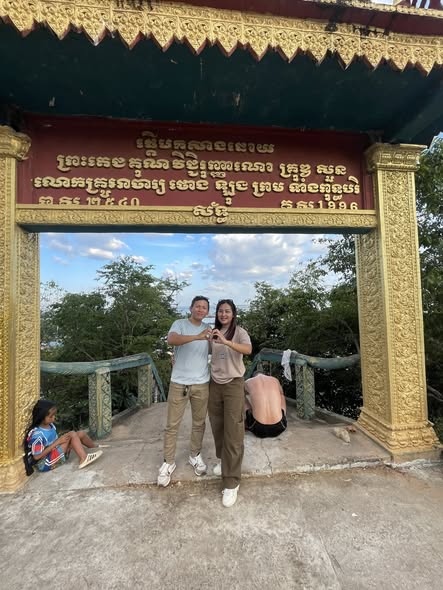
Kun Khmer Club — Coaches Kon Phanet & Ramon
Head coaches Kon Phanet and Ramon have a combined 50+ professional Kun Khmer fights in Cambodia. We coach beginners, travelers, expats, and fighters at our gym in Siem Reap.

Ready to train in Siem Reap?
Drop in for a $9 day pass — the group class starts at 5:00 PM every day, and all gear is provided. Message us for today’s times.