Is Kun Khmer Safe for Beginners?
Yes — Kun Khmer is safe for beginners when it's taught the way it should be: technique and pad work first, protective gear where it matters, and no hard sparring on day one. The real risk in any striking sport isn't the sport itself, it's skipping the basics or pushing past what your body is ready for. Beginners, tourists, expats, and locals all train side by side, and coaches expect a range of fitness levels walking through the door — that's the norm, not the exception.
What "safe" actually means here
Kun Khmer (also called Pradal Serey) is Cambodia's traditional striking art, built around punches, kicks, elbows, and knees. Like any contact sport it carries some inherent risk, but a well-run beginner class manages that deliberately: new students typically spend early sessions on stance, footwork, and pad work with a coach or bag, not trading strikes with a partner. Sparring, when it's introduced at all for beginners, comes gradually and under supervision, not in week one. Most first "injuries" are actually delayed-onset muscle soreness — tight hips, sore shins from checking pads, a stiff core from holding stance — a normal adaptation that eases within days, not a sign something's wrong. What actually raises risk is different: training dehydrated, ignoring sharp or joint-level pain, skipping warm-up, or trying to match a more experienced partner's pace before your technique catches up. None of that is unique to Kun Khmer — it's the same list of risk factors that applies to boxing, kickboxing, or any other contact-based training, and it's largely within your control as a student.
How a beginner class manages risk
None of this happens by accident — a class that's genuinely safe for beginners is built that way on purpose, through the sequencing of the session and the coach's judgment about when a student is ready for more.
- Warm-up and mobility work before any striking begins
- Technique and pad work before contact-based drilling
- Coaches watching form and correcting stance in real time
- Intensity that scales to the room — beginners aren't matched against advanced fighters
- Conditioning built in gradually rather than all at once
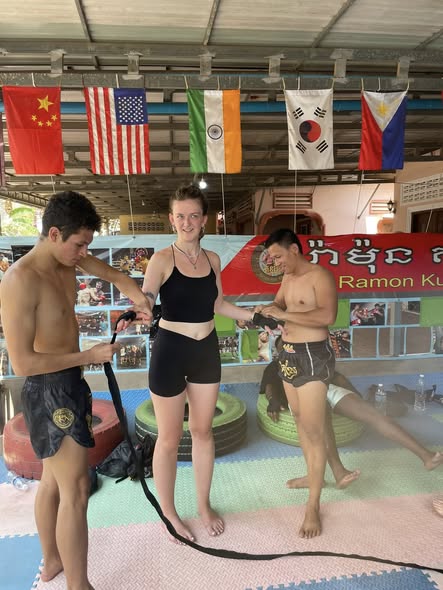
- Protective gear such as hand wraps, gloves, and pads used for contact-based drilling
- A structured warm-up and cool-down bookending every session, not just the striking portion
How a beginner-focused session generally progresses (our group class starts at 5:00 PM daily; exact structure varies by session)
| Phase | Focus |
|---|---|
| Warm-up | Mobility, light cardio, joint prep |
| Technique | Stance, guard, basic strikes and footwork |
| Pad / bag work | Applying technique at a controlled pace |
| Conditioning | Core, footwork drills, endurance |
| Cool-down | Stretching and recovery |
Tips for your first session
- Tell your coach up front that you're new — it changes how they pace you
- Hydrate before class, especially in Siem Reap's heat and humidity
- Speak up early if something feels sharp or wrong, rather than pushing through it
- Focus on technique over power for the first several sessions
- If you have an existing injury or health condition, check with a doctor before starting — this article is general guidance, not medical clearance
- Ask your coach what a realistic first-month progression looks like, so you know what to expect before you're in it
FAQ
Will I have to spar on my first day?
No. Beginner sessions are generally built around technique, pads, and conditioning. Sparring, if and when it's introduced, comes later and is supervised.
Is Kun Khmer more dangerous than boxing or Muay Thai?
It's a comparable contact striking sport with kicks, knees, and elbows added to punches. Risk in any of these comes down mostly to how training is structured and paced, not the style itself.
What if I'm out of shape?
That's normal for a first striking class. Coaches scale pace and intensity to the student, and conditioning builds up over repeated sessions.
Do I need protective gear on day one?
Hand wraps and gloves are standard for pad work. Ask ahead about what's provided versus what you should bring.
How is soreness different from an actual injury?
General muscle soreness (DOMS) usually shows up a day or two after training, affects muscles broadly, and eases with light movement. Sharp, localized, or joint-level pain that doesn't ease is different and worth mentioning to your coach or a doctor.
Written by the coaches
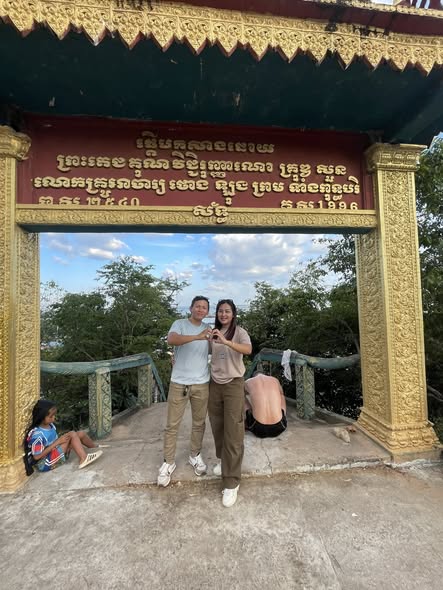
Kun Khmer Club — Coaches Kon Phanet & Ramon
Head coaches Kon Phanet and Ramon have a combined 50+ professional Kun Khmer fights in Cambodia. We coach beginners, travelers, expats, and fighters at our gym in Siem Reap.


Ready to train in Siem Reap?
Drop in for a $9 day pass — the group class starts at 5:00 PM every day, and all gear is provided. Message us for today’s times.