
Is a One Day Kun Khmer Class Worth It?
Yes — a one-day Kun Khmer class in Siem Reap is worth it: the $9 day pass buys the full daily 5:00 PM class — stance, four strikes, pad work, conditioning — with no experience, no gear, and no booking needed.
On this page
- Can You Really Learn Kun Khmer in Just One Class?
- What Happens in a One-Day Class, Step by Step?
- How Much Does a One-Day Kun Khmer Class Cost?
- Should You Train Before or After Visiting Angkor Wat?
- Do You Need to Book in Advance, or Can You Just Walk In?
- What Should You Wear and Bring for a Single Class?
- Is One Class Too Hard If You're Not Fit?
- Is a One-Day Class Safe for a Total Beginner?
- Can It Work If You Only Have One Night in Siem Reap?
- How Does One Kun Khmer Class Compare With a Muay Thai Trial?
- Can You Watch Real Kun Khmer Fights After Your Class?
- What Happens After a One-Day Class?
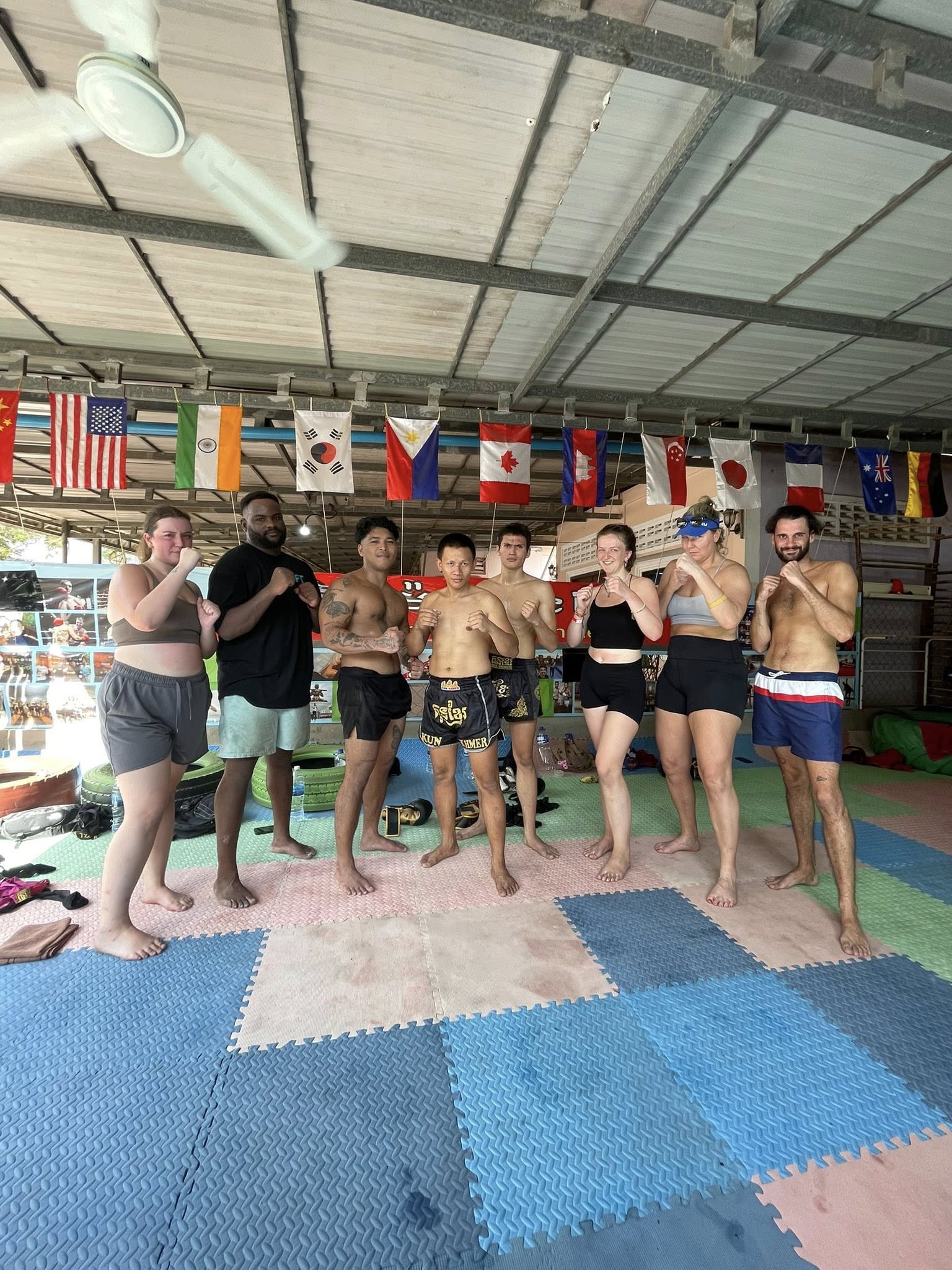
Yes — a one-day Kun Khmer class in Siem Reap is worth it: your $9 day pass buys the same full session regulars train, not a shortened tourist demo, taught by coaches with 50+ professional fights between them. One evening covers stance, the sport's four strikes, pad work with a coach, and a conditioning block. No experience, no gear, and no advance booking are needed — the group class runs daily at 5:00 PM and walk-ins are welcome.
Can You Really Learn Kun Khmer in Just One Class?
Yes — one class teaches you real Kun Khmer technique, because the session tourists drop into is the same daily class locals and regulars take. In a single evening you drill stance and guard, work the sport's four types of strikes — punches, kicks, elbows, and knee strikes on pads held by a coach, and finish a conditioning block. You leave with working fundamentals you could recognize in any ring, not a souvenir photo and a wristband. What a single session cannot do is make you a fighter — but it was never meant to; it is a complete, honest first lesson.
What one class puts in your hands
| Skill you leave with | How the class taught it |
|---|---|
| Stance and guard you can reproduce on your own the next day | Broken down slowly with hands-on correction before speed came in |
| The four core strikes — punches, kicks, knees, elbows | Drilled on pads held by a coach who has fought professionally |
| Pad-work experience on both sides: striking and holding | You call combinations and you hold pads for a partner |
| A felt sense of the conditioning the sport demands | A scaled block at the end of the session, matched to the room |
If you are weighing whether a total beginner can walk in at all, trying Kun Khmer with no experience answers that directly, and what happens in beginner classes shows the same session in more depth.
What Happens in a One-Day Class, Step by Step?
A one-day class follows the same fixed shape every evening: wrap up, warm up, learn technique, hit pads, condition, cool down. Nothing in the sequence is skipped for drop-ins, and the whole session runs about 60–90 minutes — long enough to be a real workout, short enough to fit before dinner.
- Arrive for the 5:00 PM group class and check in — walk-ins are normal, or message the coaches on WhatsApp so someone expects you
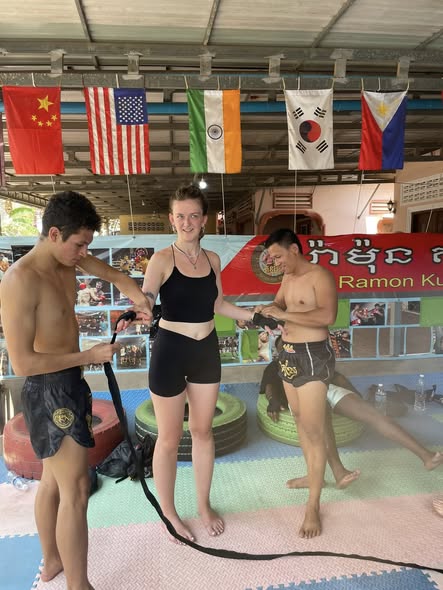
- Get your hands wrapped — a coach fits them or shows you how, because wraps protect your wrists and knuckles once pad work starts
- Join the group warm-up — footwork, mobility, and light cardio, moving at the group's pace
- Learn technique — stance, guard, and the core strikes, broken down slowly with hands-on correction
- Do pad work — call combinations and strike pads held by the coach, the part most one-day visitors enjoy most
- Finish with a conditioning block scaled to the room, then a short cooldown and stretch
None of those stages needs preparation beyond showing up, but what to wear to a Kun Khmer class settles the packing question completely, and how booking works covers messaging ahead versus walking in.
How Much Does a One-Day Kun Khmer Class Cost?
A one-day class costs $9 — the day pass — and that single price includes the full class, your gloves, wraps, and pads, and the coach. There is no joining fee, no gear rental, and no separate charge for anything in the session. If one class turns into several days of training, every longer option simply lowers the per-class price.
Kun Khmer Club pricing — from one class to a 6-week camp
| Option | Price | What it covers |
|---|---|---|
| Day pass | $9 | One group class — the one-day option, gear included |
| Weekly pass | $69 | Every class for a week — good for short trips |
| Monthly pass | $129 | Best value for stays of several weeks |
| Private lesson | $25 per hour, per person | 1-on-1 session arranged with the coaches |
| 6-week fight camp | $299 | Structured camp: technique, pads, conditioning |
The crossover math between tiers is broken down in the full class cost guide, and affordable martial arts training in Siem Reap compares what the same money buys across town.
Should You Train Before or After Visiting Angkor Wat?
After — for almost everyone, temples in the cooler morning and training at 5:00 PM once the heat has eased makes the better day. Angkor Wat is the largest religious complex in the world, and the wider Angkor archaeological site it anchors is one of the most important archaeological sites of Southeast Asia, extending over roughly 400 square kilometres — so a temple day here means an early start, hours of walking, and real sun. By the time you are back in town you will want a shower and a rest, not another outdoor commitment in peak heat. The 5:00 PM class sits on the other side of that: the day's hottest hours are behind you, there is still daylight, and dinner comes right after training, when you have actually earned it. A morning class would compete directly with the one itinerary item most people flew here for; the evening slot adds a second act to the day instead of fighting the first.
For the rest of the evening-after-the-temples picture, things to do in Siem Reap besides Angkor Wat has the wider list, and the best time of day to train explains why the 5:00 PM slot works.
Do You Need to Book in Advance, or Can You Just Walk In?
You can walk in — no booking is required, and the $9 day pass is paid at the gym on arrival. Walk-ins are genuinely normal here, and a one-day visitor deciding on the day is a standard arrival. The one case for messaging ahead is a tight schedule: if your Siem Reap evening has no slack in it, a quick message lets the coaches confirm today's class is running as usual.
- WhatsApp — the fastest way to confirm today's 5:00 PM class
- Telegram — same number, +855 96 228 8585
- A phone call to +855 96 228 8585, answered by the coaches
- In person — just show up before 5:00 PM and check in
The full answer on access is in whether tourists can train Kun Khmer in Siem Reap, and the best time to visit Siem Reap for training covers season-level planning if your dates are not fixed yet.
What Should You Wear and Bring for a Single Class?
Bring almost nothing: light sports clothes, water, and a small towel — every piece of striking gear is provided at the gym. The one rule that surprises visitors is footwear: training is barefoot on mats, so shoes come off at the door. There is no uniform and nothing to buy, rent, or pack beyond what you would wear for any hot-weather workout.
One-day class checklist
| You bring | The gym provides | Leave at your hotel |
|---|---|---|
| Light workout clothes you don't mind sweating through | Gloves, hand wraps, and pads | Shoes — training is barefoot on mats |
| Water and a small towel | Mats and everything else on the floor | Your own gloves for a single class |
| Clothes you can kick and stretch in | A coach who fits your wraps on arrival | Any uniform or special kit |
For the wider striking scene the class sits in, Muay Thai-style training in Siem Reap compares the options in town, and Khmer boxing for beginners covers the same kit question under Kun Khmer's other name.
Is One Class Too Hard If You're Not Fit?
No — the class scales to whoever is in the room, and first-timers who train once a year routinely finish it. Coaches adjust the conditioning volume to the individual rather than expecting a drop-in to match a regular, and the technique and pad-work stages are themselves a solid workout before conditioning even starts. For scale: the WHO recommends adults get at least 150 minutes of moderate-intensity physical activity per week, linked with reduced risk of cardiovascular disease and type-2 diabetes — one class lands you a meaningful share of that week in a single evening. And the one-day visitors who leave the happiest reviews tend to describe the workout as fun rather than punishing:
We did a great class here today! We were shown all the techniques for kun khmer, and had a great laugh with our instructor. Could not recommend this class enough
If general fitness rather than fighting is the goal, fitness classes in Siem Reap compares the options in town, and how many calories a Kun Khmer class burns gives the honest math behind the workout.
Is a One-Day Class Safe for a Total Beginner?
Yes — a first class is technique drills and pad work, and the pads are what take the strikes, not you. Nobody is asked to spar on day one, and sparring only ever comes later for the people who ask for it. The coaches walk beginners through each strike slowly before any speed comes in, which is the same learning-first structure any reputable striking gym runs.
What a first class never includes
No sparring, no one hitting you, and no test to pass: the pads take every strike, wraps protect your wrists and knuckles from the first round, instruction is hands-on before intensity ever rises, and training is barefoot on mats with no borrowed equipment hazards.
For the honest full risk picture rather than reassurance, whether Kun Khmer is safe for beginners covers it without spin, and the rules beginners compete under explains the sport's format for the day you are curious.
Can It Work If You Only Have One Night in Siem Reap?
Yes — one night is enough: temples or the old town in the day, the 5:00 PM class, dinner after. The class needs no lead time, so a single-evening itinerary absorbs it without rearranging anything else. Here is how a one-night plan fits it in:
- Morning or afternoon: Angkor Wat, the temples, or the old town while you have daylight
- Late afternoon: rest, shower, and a light meal an hour or two before class
- 5:00 PM: arrive at the gym, check in, and train the full class
- Evening: dinner in town — most one-night visitors train, eat, and still make an early night before moving on
If the trip might stretch rather than stop, how to plan a Kun Khmer training trip to Siem Reap covers longer itineraries, and the vocabulary you'll hear called out in class helps the Khmer terms land faster.
How Does One Kun Khmer Class Compare With a Muay Thai Trial?
The two sports are close cousins, and one class of either leaves you with the same fundamentals — the difference is the sport you sample. Kun Khmer (also called Pradal Serey or Khmer boxing) and Muay Thai are both Southeast Asian ring sports using punches, kicks, knees, elbows, and clinch work. A single class is exactly the right sample size for comparing them, and travelers who have trained both report a real difference in emphasis:
I've trained Pradal Serey/Kun Khmer in Siem Reap for a month… very similar but Kun Khmer is more elbow oriented.
In one class here you will feel that for yourself: elbows get careful, deliberate treatment, and the clinch — part of the sport's toolkit alongside the four strikes — is trained rather than skipped. The full comparison is in Kun Khmer vs Muay Thai, and where to train Muay Thai in Siem Reap covers the alternative if you want to sample both sports in one trip.
Can You Watch Real Kun Khmer Fights After Your Class?
Yes — watching fights is a popular same-trip follow-up, and where to do it is one of the most common questions in Siem Reap travel threads, from where to watch kickboxing to where to watch Khun Khmer in Siem Reap (community-reported). A watch night pairs naturally with a class: you arrive already recognizing the stance, the strikes, and the clinch you just drilled.
- CTN Angkor Arena — a kickboxing stadium with weekly Kun Khmer fight nights, community-reported at around $15 entry for foreign visitors
- Your class doubles as the best possible preview of a fight night — same weapons, same clinch, on pads instead of opponents
- Ask the coaches after class — fight schedules change weekly, and they know which nights are running
For the names worth spotting on a fight card, the famous Kun Khmer fighters beginners should know is a short primer.
What Happens After a One-Day Class?
Nothing is locked in after a one-day class — you owe nothing further, and three normal paths open up depending on how long you stay. The most common outcome is simply this: one class, a great evening, and a story worth telling. For visitors whose plans stretch, the options below slot in without any pressure from the first session.
Where one class leads
| Option | What it is | Price |
|---|---|---|
| More day passes | Drop into the 5:00 PM class on any day you like | $9 each |
| Weekly pass | Every class for a week — the natural upgrade on a multi-day trip | $69 |
| Private lesson | 1-on-1 correction at your pace, arranged with the coaches | $25 per hour, per person |
| 6-week fight camp | A structured camp for a longer stay | $299 |
One-on-one work is covered in private Kun Khmer lessons in Siem Reap, the camp path in whether beginners can join a fight camp, and the training tips that speed up any striking sport help whatever you train next.
FAQ
Can beginners join a class?
Yes — the one-day class is built for beginners: no experience is needed, coaches teach the basics first, and intensity is scaled to you. Most visitors who train with us have never done any martial art before.
Can I drop in for a class?
Yes — walk-ins are welcome, and the $9 day pass covers one full group class with gear included. No booking is required, though a quick WhatsApp message confirms today's 5:00 PM session if your schedule is tight.
What Should I Bring to Class?
Light sports clothes, water, and a small towel — nothing else. Gloves, wraps, and pads are provided, and training is barefoot on mats, so shoes stay at your accommodation.
Is Sparring Required?
No. First classes are technique drills and pad work, and sparring only comes later for people who ask for it once fundamentals are solid. You can train a one-day class — or train for years — without sparring at all.
I don't want to get hit. Is this a contact workout?
No — you strike pads, not people, and nobody strikes you. The workout is the striking, movement, and conditioning; contact with another person is not part of a beginner class.
Can I bring a friend?
Yes — a friend can join the same class on their own $9 day pass, and beginners regularly train in pairs. Message ahead if you are bringing a group so the coaches can plan pad work around you.
What to expect for first class?
A 60–90 minute session: hand wraps, a group warm-up, technique drills on stance and strikes, pad work with a coach, and a conditioning block scaled to you. You will leave tired, not wrecked — and you will have trained real technique, not watched a demo.
Where to watch Khun Khmer in Siem Reap?
CTN Angkor Arena runs weekly Kun Khmer fight nights — community-reported at around $15 entry for foreign visitors. Ask the coaches after your class; schedules change weekly and they know which nights are running.
Key takeaways
- A one-day Kun Khmer class costs $9 as a day pass — the full daily 5:00 PM class, gear included, with no booking and no experience needed.
- One session covers stance, the four strikes (punches, kicks, knees, elbows), pad work with a coach, and conditioning in about 60–90 minutes.
- Train after the temples: Angkor Wat suits the cooler morning, and the 5:00 PM class sits after the day's peak heat and before dinner.
- Bring only light sports clothes, water, and a towel — gloves, wraps, and pads are provided, and training is barefoot on mats.
- Classes are led by Kon Phanet and Ramon, who between them have 50+ professional Kun Khmer fights in Cambodia.
Sources & further reading
- Wikipedia — Kun Khmer — Kun Khmer as a traditional Cambodian combat sport with four strike types (punches, kicks, elbows, knee strikes) plus clinch fighting, also known as Pradal Serey / Khmer boxing (fetch-verified 2026-10-26) — source
- Wikipedia — Angkor Wat — Angkor Wat in Siem Reap, Cambodia as the largest religious complex in the world (fetch-verified 2026-10-26) — source
- UNESCO World Heritage Centre — Angkor — Angkor in Siem Reap province as one of the most important archaeological sites of Southeast Asia, extending over approximately 400 square kilometres (fetch-verified 2026-10-26) — source
- WHO — Physical activity fact sheet — WHO recommendation of at least 150 minutes of moderate-intensity physical activity per week for adults, linked with reduced risk of cardiovascular disease and type-2 diabetes (fetch-verified 2026-10-26) — source
- Google Maps — Kun Khmer Club reviews — Real review base of 8 reviews at 5.0 and the verbatim Ciara Owens one-class review quote — source
- Reddit — r/MuayThai, "Muay Thai vs Pradal Serey?" — Community-reported account that Kun Khmer is more elbow-oriented than Muay Thai (docs/seo-evidence/phase1-community.md:20) — source
- Reddit — r/siemreap, "Recommendations on where to watch kickboxing" — Community-reported recurring question about where to watch fights in Siem Reap (docs/seo-evidence/phase1-community.md:25) — source
- Reddit — r/cambodia, "Where to watch Khun Khmer in Siem Reap?" — Community-reported recurring question about watching Kun Khmer during a short visit (docs/seo-evidence/phase1-paa.md:15) — source
- Tripadvisor — CTN Angkor Arena reviews — Community-reported kickboxing stadium with weekly Kun Khmer fights at around $15 entry for foreign visitors (docs/seo-evidence/phase1-community.md:29) — source
Reviewed 2026-10-26
Written by the coaches
Kun Khmer Club — Coaches Kon Phanet & Ramon
Head coaches Kon Phanet and Ramon have a combined 50+ professional Kun Khmer fights in Cambodia. We coach beginners, travelers, expats, and fighters at our gym in Siem Reap.
Ready to train in Siem Reap?
Drop in for a $9 day pass — the group class starts at 5:00 PM every day, and all gear is provided. Message us for today’s times.