Kun Khmer Techniques: Punches, Kicks, Knees, Elbows
Kun Khmer is built around the same four core weapons as other Southeast Asian striking arts — punches, kicks, knees, and elbows — but Cambodian scoring rewards elbow work more than any other strike, which is why elbows function as Kun Khmer's signature technique rather than just one tool among four.
Punches and Kicks: The Range Weapons
Punches form the entry technique in most exchanges: jabs to measure distance, straight rear-hand punches to close it, and hooks and uppercuts used at closer range, often to set up a knee or elbow. Punching mechanics are closer to Western boxing than to the wider circular strikes seen in some regional styles, which is one reason boxing fundamentals transfer well into a Kun Khmer gym. Kicks, by contrast, are primarily shin kicks rather than kicks landed with the foot or instep, aimed at the legs, body, and head. The shin kick is a power technique meant to be thrown in combination and absorbed on the opponent's own shin or arm — conditioning the shins to both throw and check kicks is a standard part of training in this style, as it is in Muay Thai. Together, punches and kicks are the tools that control distance and set the pace before a fight moves closer.
Knees and Elbows: The Signature Close-Range Weapons
Elbows are what Kun Khmer is best known for. Judges weight them heavily, and historically more fights are won by elbow technique than by any other strike in the sport. Elbows are thrown horizontally, diagonally, upward, and downward, both at range and in the clinch, and are prized for the cuts and stoppages they can produce. The tradition also preserves named technique combinations passed down through generations of trainers — kla krab ("tiger lying down") and krapeu ha ("crocodile opening its mouth") are two examples still referenced by Cambodian coaches today, a reminder that this is a codified craft with its own vocabulary, not just improvised striking. Knee strikes are thrown both at range — stepping knees used to intercept an advancing opponent — and, more commonly, from the clinch, where a fighter controls the head or neck and drives knees into the body or head at close range. Because so much Kun Khmer scoring happens in exchanges at close quarters, knee work and clinch control are taught together rather than as separate skills.
How the Clinch Ties the Four Weapons Together
None of these four weapons is trained in total isolation for long, because real fights rarely stay at one range. The clinch — where fighters control each other's head, neck, or arms at close distance — is where elbows and knees do their most decisive work, and where a fighter's overall technique either holds together or falls apart under pressure. A fighter with sharp punches and kicks but a weak clinch will still struggle in Kun Khmer, because so much scoring lives in that close-range phase. If you want the deep dive on clinch mechanics specifically, we cover it in its own techniques guide.
How Beginners Learn All Four at Kun Khmer Club
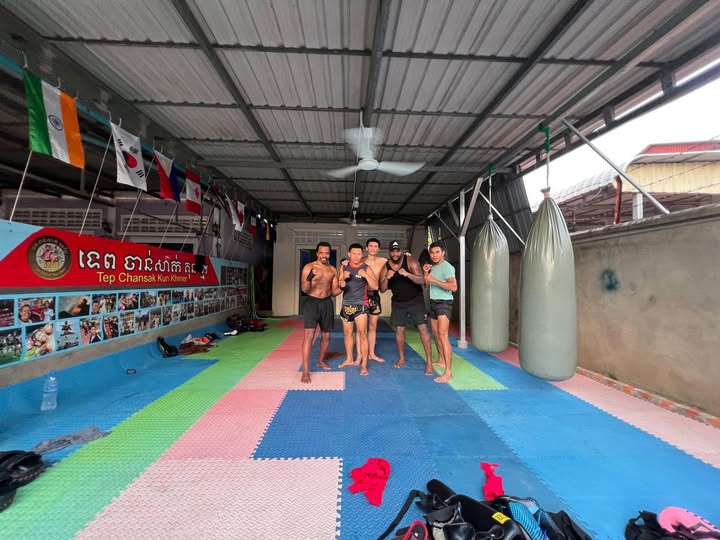
New students at our gym in Siem Reap don't learn all four weapons at once. Classes start with stance and basic punches on pads, add kicks and knees once footwork is solid, and introduce elbows — carefully, given how much power they carry — once a student can control distance and timing. Conditioning is built into every session, since shin kicks and elbow defense both depend on it, and clinch fundamentals are layered in once striking basics are comfortable. Our head coaches, Kon Phanet and Ramon, teach this progression from real ring experience — together they have a combined 50+ professional Kun Khmer fights in Cambodia.
FAQ
What are the four weapons of Kun Khmer?
Punches, kicks, knees, and elbows — the same four core striking tools used across Southeast Asian kickboxing styles.
Why are elbows so important in Kun Khmer specifically?
Kun Khmer judging traditionally rewards elbow strikes more than other techniques, and elbows have historically produced more fight-ending or fight-winning moments than any other single strike in the sport.
Do Kun Khmer kicks use the foot or the shin?
Primarily the shin, similar to Muay Thai, rather than a foot-based kick. This requires shin conditioning over time.
Is the clinch part of "techniques" or something separate?
It's central to how knees and elbows actually connect in a live fight, so it's usually taught as an extension of technique training rather than a separate topic.
Sources & further reading
Written by the coaches
Kun Khmer Club — Coaches Kon Phanet & Ramon
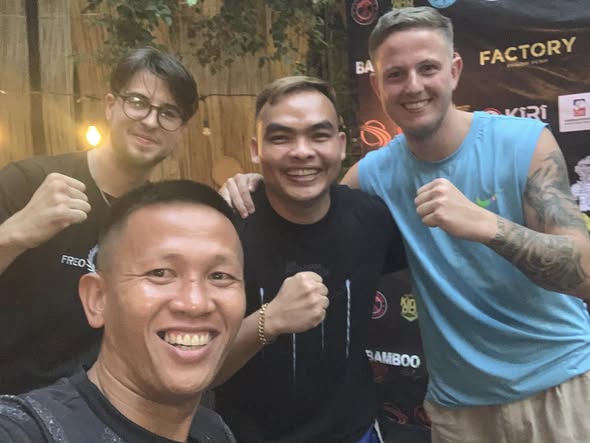
Head coaches Kon Phanet and Ramon have a combined 50+ professional Kun Khmer fights in Cambodia. We coach beginners, travelers, expats, and fighters at our gym in Siem Reap.
Ready to train in Siem Reap?
Drop in for a $9 day pass — the group class starts at 5:00 PM every day, and all gear is provided. Message us for today’s times.