
Bokator vs Muay Thai: Ancient Art vs Ring Sport
Bokator vs Muay Thai comes down to what each art is for: Bokator is Cambodia's ancient, complete battlefield art — strikes, locks, weapons, UNESCO-listed in 2022 — while Muay Thai is the modern ring sport of eight limbs. This guide compares their history, techniques, training systems, and what a traveler can actually book in Siem Reap.
On this page
- What Is Bokator?
- What Is Muay Thai?
- What Is the Real Difference Between Bokator and Muay Thai?
- Which Art Is Older — and What Does the Evidence Actually Show?
- How Do Bokator and Muay Thai Techniques Compare?
- How Do Training and Grading Systems Differ?
- What Does Bokator's UNESCO Listing Actually Mean?
- How Do the Pre-Fight Rituals Compare: Kun Kru vs Wai Khru?
- Did Bokator Nearly Disappear? The Khmer Rouge Years and the Revival
- Can a Traveler Actually Train Each Art in Siem Reap?
- What Does Training Cost at Kun Khmer Club?
- Which Art Should You Choose?
- Is Bokator Effective Compared to a Ring Sport Like Muay Thai?
Bokator vs Muay Thai comes down to what each art is for: Bokator is Cambodia's ancient, complete battlefield art — strikes, locks, and weapons, inscribed by UNESCO as Kun Lbokator in 2022 — while Muay Thai is the modern ring sport, a Thai full-contact combat code of fists, elbows, knees, and shins fought for points and knockouts. Choose Bokator (or its ring descendant Kun Khmer) for living heritage and the deepest curriculum; choose Muay Thai for competition and ring skills you can develop anywhere gyms exist. This page compares their history, techniques, training systems, and what a traveler can actually book in Siem Reap.
What Is Bokator?
Bokator is Cambodia's ancient fighting system — a complete art of hand-to-hand combat "along with heavy use of weapons," in Wikipedia's summary — built for real combat rather than sport. Its name is believed to derive from bok tao, "to pound the lion", and UNESCO inscribed it on the Intangible Cultural Heritage Representative List in 2022 under the name Kun Lbokator, describing an art of "self-defence techniques and a philosophy of non-violence". It is not a ring discipline: there are no rounds, no judges, and no weight classes — there is a graded curriculum, community schools, and a cultural mandate. Our full Bokator profile covers the system in depth, and what Kun Khmer is explains the ring sport that descends from it.
- Origin: Cambodia — a battlefield system for ancient armies, per oral tradition (the hedge Wikipedia itself uses)
- Scope: hand-to-hand combat plus heavy use of weapons — strikes, locks, and weapon sets across every range
- Structure: graded krama levels over a curriculum counted at more than 10,000 moves
- Recognition: UNESCO Representative List, 2022, as "Kun Lbokator, traditional martial arts in Cambodia"
What Is Muay Thai?
Muay Thai is Thailand's martial art and full-contact combat sport, called Thai boxing or "the Art of Eight Limbs" — the name referring to the combined use of fists, elbows, knees, and shins. It uses stand-up striking, sweeps, and various clinching techniques, and its clinch is live in a way Western boxing's is not: the fighters are not separated, and it is often in the clinch that knee and elbow techniques land (Wikipedia — Muay Thai). Where Bokator is a curriculum you progress through, Muay Thai is a sport you prepare for — rounds, opponents, and a result on the scorecards or the canvas. The closest Cambodian counterpart is Kun Khmer, which is why our Kun Khmer vs Muay Thai comparison and the Pradal Serey naming guide matter for this question too.
Muay Thai … sometimes referred to as Thai boxing, the Art of Eight Limbs … is a Thai martial art and full-contact combat sport that uses stand-up striking, sweeps, and various clinching techniques. The name "Art of Eight Limbs" refers to the combined use of fists, elbows, knees and shins.
What Is the Real Difference Between Bokator and Muay Thai?
The real difference is category, not quality: Bokator is a heritage fighting system spanning every range of combat, while Muay Thai is a codified ring sport optimized for one-on-one competition under rules. One is preserved as culture and taught as a graded curriculum; the other is trained in gyms toward bouts decided by knockout or points. The dimension table below keeps the comparison fair — and if you want the ring-vs-ring version, how Kun Khmer's rules work and Cambodian boxing today cover the sport side of Cambodia's scene.
Bokator vs Muay Thai at a glance
| Dimension | Bokator | Muay Thai |
|---|---|---|
| What it is | Ancient Cambodian fighting system — complete art, not a sport | Thai martial art and full-contact combat sport |
| Home and era | Cambodia; UNESCO's file dates it to the first century | Thailand; practiced today as a living ring discipline |
| Toolkit | Strikes, hand-locks and neck-locks, heavy use of weapons | Fists, elbows, knees, shins, sweeps, live clinch |
| Stated aim (per sources) | Self-defence, mental and physical discipline, philosophy of non-violence (UNESCO) | Full-contact competition |
| Training shape | Graded krama curriculum through community schools | Ring-focused sport training |
Which Art Is Older — and What Does the Evidence Actually Show?
Bokator's age has specific, checkable anchors: UNESCO's own inscription file describes Kun Lbokator as "a martial art dating back to the first century", Wikipedia records Cambodian martial arts dating to the 1st century AD and depicted in Angkor-period bas-reliefs (Kun Khmer — Wikipedia), and the physical record includes a 12th-century Angkor Wat bas-relief of a clinch knee strike. The honest caveat — kept here because the sources themselves keep it — is that the claim that Bokator was the close-quarter combat system of Cambodia's ancient armies rests on oral tradition. Muay Thai's deep history is likewise carried by tradition rather than a dated record; what the comparison can say firmly is that one art carries a first-century cultural inscription and temple-carved evidence, while the other's verified identity is as the region's dominant ring sport. Our history of Kun Khmer in Cambodia tells that arc in full, and the kbach kun boran guide maps the older family of Khmer martial arts Bokator sits in.
- 1st century — the age UNESCO's inscription file assigns to Kun Lbokator
- 9th–12th centuries — Angkor-period bas-reliefs depicting Cambodian martial arts (Wikipedia — Kun Khmer)
- 12th century — Angkor Wat bas-relief of a clinch knee strike; Bayon temple carvings of hand-locks and neck-locks (Wikipedia — Bokator)
- Early 20th century — the ring descendant is codified: gloves, time limits, rest periods, prohibited techniques (Wikipedia — Kun Khmer)
- 2022 — UNESCO inscribes Kun Lbokator on the Representative List of the Intangible Cultural Heritage of Humanity
How Do Bokator and Muay Thai Techniques Compare?
Bokator's curriculum spans every range — our Bokator profile describes a complete system of striking, grappling, ground fighting, and weapons — while Muay Thai concentrates eight weapons into one devastating ring craft. Neither covers the other's ground: there is no weapons set in a ring sport's rulebook, and there is no scoring system inside a battlefield curriculum. Physically documented Bokator technique includes hand-locks and neck-locks depicted on the walls of the Bayon temple; Muay Thai's documented specialty is the live clinch, where fighters are not separated and knee and elbow techniques land. For the Cambodian ring side of the toolkit, our Kun Khmer techniques breakdown and the clinch explained go weapon by weapon.
Technique dimensions: complete system vs eight-limb ring craft
| Range or element | Bokator | Muay Thai |
|---|---|---|
| Striking | Strikes across all ranges, in graded sets | Stand-up striking with fists, elbows, knees, shins |
| Locks | Hand-locks and neck-locks, carved on Bayon's walls | Not part of the sport's rulebook |
| Clinch | Wrestling and control sequences inside the curriculum | Live clinch — no separation; knees and elbows land there |
| Ground | Ground fighting included in the curriculum | Not contested — the fight stands up |
| Weapons | Heavy use of weapons: staffs, blades, the krama as a tool | None — ring competition is unarmed by rule |
| Signature skill | Completeness across ranges | Sweeps and clinch work |
How Do Training and Grading Systems Differ?
Bokator grades progress with colored krama — the traditional Khmer scarf — over a curriculum Wikipedia counts at over 10,000 moves: beginners start with a white krama and advance through green, blue, red, and brown before ten degrees of black. Muay Thai has no such ladder: progress is measured in skill, rounds, and bouts, not belt colors. That makes Bokator a decades-deep study and Muay Thai a sport you can be functionally training within your first class — which is exactly why travelers usually meet Cambodia's tradition through its ring descendant instead. Nobody grades you on day one here: how a drop-in martial arts class works shows what a single session asks of you.
- Bokator krama ladder: white → green → blue → red → brown → ten degrees of black (Wikipedia — Bokator)
- Curriculum size: over 10,000 moves, organized into graded technique sets
- Muay Thai: no belt or sash system — progression is ring skill, rounding out through pads, bags, and bouts
- Kun Khmer, the ring descendant: five three-minute rounds in a 6.1-meter square ring (Wikipedia — Kun Khmer)
What Does Bokator's UNESCO Listing Actually Mean?
It means formal international recognition of Bokator as living culture: UNESCO inscribed "Kun Lbokator, traditional martial arts in Cambodia" on the Representative List of the Intangible Cultural Heritage of Humanity in 2022, its committee's 17th session. The inscription describes an art that aims to develop "the mental and physical strength and discipline of its practitioners through self-defence techniques and a philosophy of non-violence", and one embodied in the country's social, cultural and religious values, widely practiced among Cambodians regardless of age, gender, or status. It is a heritage designation, not a sporting sanction — it says the art matters as culture, not that it out-scores another art in a ring. Our guide to Cambodia's martial arts sets Bokator's listing inside the country's wider fight landscape.
Kun Lbokator is a martial art dating back to the first century. It aims to develop the mental and physical strength and discipline of its practitioners through self-defence techniques and a philosophy of non-violence.
How Do the Pre-Fight Rituals Compare: Kun Kru vs Wai Khru?
Both arts carry a pre-fight ritual, and the pair shows how the two cultures treat the same instinct. In Kun Khmer — Bokator's ring descendant — boxers open each match with the kun kru praying ritual, which pays homage to the fighter's spirit trainer, in seventeen variations most of which draw on the characters of the Reamker story, accompanied by traditional music on the sampho drum, sralai klang khek oboe, and chhing. In Muay Thai the equivalent is the wai khru ram muay, translated as "war-dance saluting the teacher". The rituals differ in name and choreography, but both publicly tie a ring fight to something older than the ring — how Pradal Serey and Muay Thai relate covers the sibling naming question.
Pre-fight rituals side by side
| Ritual element | Kun Khmer — kun kru | Muay Thai — wai khru ram muay |
|---|---|---|
| What it is | The praying ritual practiced at the start of each match | The saluting dance performed before competition |
| Who it honors | The fighter's spirit trainer | The teacher — wai (greeting) + khru (teacher) |
| Variety | 17 variations, most drawn from Reamker characters | Danced in Thai classical style ("ram") |
Did Bokator Nearly Disappear? The Khmer Rouge Years and the Revival
It very nearly did: under the Khmer Rouge, traditional arts including martial arts were banned, many boxers were executed or worked to death or fled, and the suppression — four years, until 1979 — nearly caused the demise of Cambodia's fighting traditions. Bokator's revival has a named architect: San Kim Sean, often called the father of modern Bokator, decided in 1995 to return to Cambodia to reintroduce the art and moved back to Phnom Penh in 2001 to begin teaching local youth. The comeback is measurable — the first national Bokator competition was held at Phnom Penh's Olympic Stadium in 2006 with 300 participants, and today community schools operate across thirteen Cambodian provinces with around 7,000 practitioners in Cambodia and abroad. The fighters who carry the ring tradition now are a different story — Cambodia's famous Kun Khmer fighters profiles them.
- 1975–1979 — Khmer Rouge ban: martial arts suppressed, boxers executed or driven out (Wikipedia — Kun Khmer)
- 1995 — San Kim Sean decides to return to Cambodia to reintroduce Bokator
- 2001 — he resumes teaching in Phnom Penh; the search for surviving masters begins
- 2006 — first national Bokator competition, Olympic Stadium, Phnom Penh: 300 participants
- 2022 — UNESCO inscription formalizes the art's cultural status
Can a Traveler Actually Train Each Art in Siem Reap?
Here is the practical truth this comparison exists for: the heritage art is hard to book and the ring sport is easy — so travelers meet Cambodian tradition through Kun Khmer, and that is not a compromise. Wikipedia counts Bokator's footprint as community schools across thirteen provinces and roughly 7,000 practitioners, centered on Phnom Penh rather than visitor itineraries — authentic Bokator study takes arrangement and time, and demand exists (travelers have been asking after "Khmer/Cambodian boxing (Bokator) lessons" in Siem Reap for years). Muay Thai, meanwhile, is not what our gym teaches — what we teach is Kun Khmer, Cambodia's own ring sport, open to tourists any day of the week. To choose between venues, where to train martial arts in Siem Reap and the Siem Reap martial arts guide compare the realistic options.
- Bokator: real but rare — community schools, mostly Phnom Penh; by arrangement, not walk-in
- Muay Thai: Thailand's sport — you would train it in Thai gyms, not as Cambodia's tradition
- Kun Khmer: Cambodia's ring sport — bookable in Siem Reap today, daily at 5:00 PM at our gym
- Same lineage: training Kun Khmer puts you inside the tradition Bokator started
What Does Training Cost at Kun Khmer Club?
Our price list is short and public: a day pass costs $9, a weekly pass $69, a month of training $129, private sessions $25 per hour per person, and the 6-week fight camp is $299. The group class runs at 5:00 PM every day, private sessions and off-schedule times are available by arrangement with the coaches, and head coaches Kon Phanet and Ramon bring a combined 50+ professional Kun Khmer fights in Cambodia (all per our published prices and schedule). What a Kun Khmer class costs in Siem Reap breaks the numbers down further, what a gym day pass includes covers the single-visit option, and the live price list always has the current figures.
Kun Khmer Club prices, Siem Reap (per lib/business.ts, October 2026)
| Option | Price |
|---|---|
| Day pass | $9 |
| Weekly pass | $69 |
| Monthly training | $129 |
| Private session (per hour, per person) | $25 |
| 6-week fight camp | $299 |
Which Art Should You Choose?
Choose by goal, not by scoreboard. If you want living heritage, the deepest curriculum, and a practice that UNESCO has recognized as world culture, Bokator is the profound choice — knowing its rarity, bokator vs kun khmer explains why most travelers settle on the ring descendant. If you want competition, the fastest route to functional ring skills, and a sport you can continue in gyms anywhere, Muay Thai is the practical pick. And if you are in Siem Reap this week, the answer is already made: beginner Kun Khmer classes put Cambodia's own tradition in your hands daily at 5:00 PM — everything cultural sits in the Kun Khmer culture hub.
- Heritage and depth: Bokator — complete curriculum, cultural recognition, decades of study
- Competition and access: Muay Thai — ring craft you can develop and test anywhere gyms exist
- In Siem Reap now: Kun Khmer — the same lineage, bookable today, $9 to start
- Not a ranking: they answer different questions, and the honest comparison says so
Is Bokator Effective Compared to a Ring Sport Like Muay Thai?
As a designed system, Bokator is the more complete art — strikes, locks, ground work, and weapons across every range, which is what a battlefield curriculum had to cover, and what UNESCO summarizes as self-defence plus discipline. But effectiveness in a real encounter comes from trained, pressure-tested practice, and that is the ring sports' home turf: rounds, resisting opponents, and consequences built the tested skill sets — which is why is Kun Khmer effective and our self-defense comparison answer the practical question honestly rather than by heritage. The fair verdict: Bokator wins on completeness and cultural depth; the ring sports win on tested, sport-forged effectiveness.
The honest caveat
Real fighting capability comes from trained, pressure-tested practice — heritage status and curriculum size do not substitute for rounds against resistance. Travelers who want functional skills this week should train the ring sport; travelers who want the deep art should study Bokator on its own terms.
FAQ
What Is Bokator?
Bokator is Cambodia's ancient fighting system — hand-to-hand combat with heavy use of weapons, taught as a graded curriculum of more than 10,000 moves. UNESCO inscribed it as "Kun Lbokator, traditional martial arts in Cambodia" on the Intangible Cultural Heritage Representative List in 2022, describing a martial art dating back to the first century, built on self-defence techniques and a philosophy of non-violence.
How legitimate is the Cambodian fighting style Bokator?
As a cultural art it is formally legitimate: UNESCO listed it in 2022, its techniques appear in Angkor-era temple carvings — hand-locks and neck-locks on the Bayon walls, a clinch knee strike at Angkor Wat — and community schools operate across thirteen Cambodian provinces with around 7,000 practitioners. As a competitive ring sport it is not contested; Cambodia's tested ring discipline is Kun Khmer.
Is Kun Khmer the same as Muay Thai?
No — they are close cousins, not the same sport. Both are full-contact eight-limb striking sports with a live clinch, but Kun Khmer is Cambodia's art, derived from Bokator and codified under the French colonial administration in the early 20th century, while Muay Thai is Thailand's Art of Eight Limbs. Kun Khmer fighters are known for a more elbow-heavy game.
What is the difference between Kun Khmer and Muay Thai?
The differences are of nation, name, ritual, and emphasis rather than basic toolkit: both fight with fists, elbows, knees, shins, and a clinch. Kun Khmer opens matches with the kun kru ritual honoring the fighter's spirit trainer and is played over five three-minute rounds in a 6.1-meter ring; Muay Thai's ritual is the wai khru ram muay, the "war-dance saluting the teacher."
What is the difference between Muay Thai and Pradal Serey?
Nothing but the name's nationality: Pradal Serey is the older, French-era name for Kun Khmer itself — Cambodia's ring sport — not a third art. Wikipedia's own article on the sport is titled Kun Khmer and lists Pradal Serey among its alternate names, so the Muay Thai comparison on this page covers both labels.
What are the distinctive characteristics of Kun Khmer and Muay Thai?
Both use the eight limbs and a live clinch. Kun Khmer's reputation is forward pressure and elbow strikes — Cambodian fighters tend to utilize more elbow strikes than other regional arts — wrapped in Cambodian ritual, music, and naming. Muay Thai is known for technical kicking and clinch work, and for being the region's globally established ring sport.
Khmer/Cambodian boxing (Bokator) lessons — Siem Reap
Authentic Bokator instruction is rare and mostly arranged rather than walk-in: the art survives through community schools across thirteen provinces, centered on Phnom Penh. In Siem Reap the practical way into the same tradition is Kun Khmer — our gym runs beginner-friendly classes daily at 5:00 PM, from a $9 day pass, teaching the ring sport that descends from Bokator.
Key takeaways
- Bokator is the ancient complete battlefield art — strikes, locks, and weapons, dated to the first century by UNESCO's own file and inscribed on the Intangible Cultural Heritage Representative List in 2022 as Kun Lbokator.
- Muay Thai is the modern ring sport — a Thai full-contact combat sport of fists, elbows, knees, shins, sweeps, and a live clinch where fighters are not separated.
- The battlefield-army lineage is honestly hedged: the sources themselves say "oral tradition indicates" — the physically documented record is Angkor-era, 12th-century temple carvings.
- Cambodia's fighting tradition nearly died under the 1975–1979 Khmer Rouge ban; San Kim Sean's revival and the 2006 national competition (300 participants) rebuilt Bokator to ~7,000 practitioners across thirteen provinces.
- Traveler reality: authentic Bokator is rare and by arrangement, while Kun Khmer — its ring descendant — is bookable today at our gym: $9 day pass, daily 5:00 PM class, coaches with 50+ combined professional fights.
Sources & further reading
- UNESCO — Kun Lbokator, traditional martial arts in Cambodia (Representative List 01868) — "Kun Lbokator is a martial art dating back to the first century. It aims to develop the mental and physical strength and discipline of its practitioners through self-defence techniques and a philosophy of non-violence"; "An embodiment of the country's social, cultural and religious values, Kun Lbokator is widely practiced among Cambodians, regardless of their age, gender and educational backgrounds or status"; "Inscribed in 2022 (17.COM) on the Representative List of the Intangible Cultural Heritage of Humanity". Fetched curl-200 with quotable content 2026-10-26 (docs/seo-evidence/phase3b1-citations.md:37). — source
- Wikipedia — Bokator — Term from bok tao "to pound the lion"; hand-locks and neck-locks depicted on Bayon temple walls; bas-relief of clinch knee strike at Angkor Wat (12th century); "Oral tradition indicates" the battlefield-system claim (hedge preserved); San Kim Sean "father of modern Bokator", 1995 return decision, 2001 Phnom Penh teaching; first national competition 2006, Olympic Stadium, 300 participants; community schools across thirteen provinces; ~7,000 practitioners in Cambodia and abroad; over 10,000 moves with white→green→blue→red→brown→ten degrees of black krama; "characterized by hand-to-hand combat along with heavy use of weapons". Fetched curl-200 2026-10-26 (docs/seo-evidence/phase3b1-citations.md:16). — source
- Wikipedia — Kun Khmer — "Codified by the French colonial administration in the early 20th century, and was derived from centuries-old traditions, namely Bokator, the close-quarter combat system used during the Khmer empire"; codified sport "mandated that all participants wear gloves, imposed time limits on matches, instituted rest periods, and prohibited certain techniques"; Khmer Rouge ban of traditional arts with boxers executed, worked to death, or fled — four years until 1979; five three-minute rounds in a 6.1 m square ring; kun kru praying ritual honoring the fighter's spirit trainer, 17 variations from the Reamker; music on sampho, sralai klang khek, chhing; "Cambodian fighters tend to utilize more elbow strikes than that of other martial arts in the region"; martial arts in Cambodia dating to the 1st century AD, depicted in Angkor-period bas-reliefs. Fetched curl-200 2026-10-26 (docs/seo-evidence/phase3b1-citations.md:15, phase3b2-citations.md:17). — source
- Wikipedia — Muay Thai — "Sometimes referred to as Thai boxing, the Art of Eight Limbs … is a Thai martial art and full-contact combat sport that uses stand-up striking, sweeps, and various clinching techniques"; the name refers to the combined use of fists, elbows, knees and shins; "In Western boxing, the two fighters are separated when they clinch; in muay Thai, however, they are not. It is often in the clinch that knee and elbow techniques are used." Fetched curl-200 2026-10-26 (docs/seo-evidence/phase3b1-citations.md:17, phase3b3-citations.md:20). — source
- Wikipedia — Wai khru ram muay — The full term "can therefore be translated as 'war-dance saluting the teacher'" — wai (Thai greeting, palms together), khru (teacher, from guru), ram (dancing in classical style), muay (boxing). Fetched curl-200 2026-10-26 (docs/seo-evidence/phase3b1-citations.md:22). — source
- Tripadvisor Siem Reap forum — "Khmer/Cambodian boxing (Bokator) lessons — Siem Reap" — The traveler-demand phrasing for Bokator lessons in Siem Reap is a real forum thread title, recorded verbatim at docs/seo-evidence/phase1-community.md:16. Caveat stated in that doc: Reddit/Tripadvisor thread bodies were not fetchable from the research environment, so the thread title rests on the first-party research record, not the full thread. — source
- Kun Khmer Club — price list and schedule — $9 day pass, $69 weekly, $129 monthly, $25 per hour per person privates, $299 6-week fight camp; group class at 5:00 PM every day with privates and off-schedule times by arrangement; head coaches Kon Phanet and Ramon with a combined 50+ professional Kun Khmer fights in Cambodia (lib/business.ts:18-36). — source
Reviewed 2026-10-26
Written by the coaches
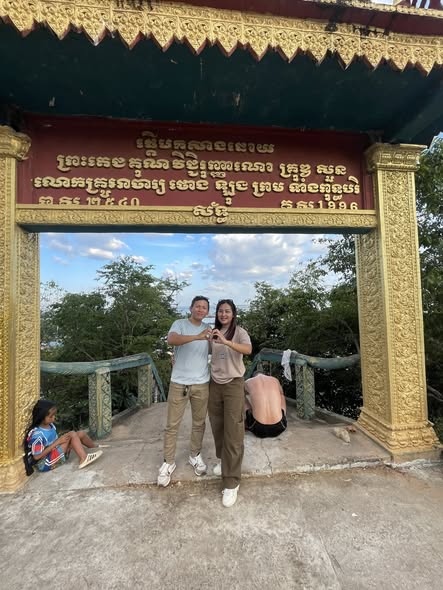
Kun Khmer Club — Coaches Kon Phanet & Ramon
Head coaches Kon Phanet and Ramon have a combined 50+ professional Kun Khmer fights in Cambodia. We coach beginners, travelers, expats, and fighters at our gym in Siem Reap.

Ready to train in Siem Reap?
Drop in for a $9 day pass — the group class starts at 5:00 PM every day, and all gear is provided. Message us for today’s times.