
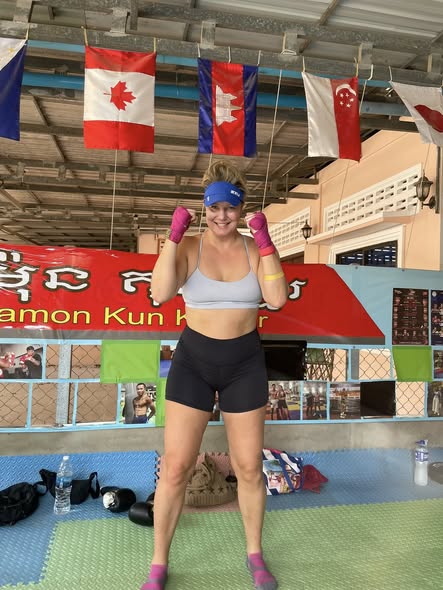
How Long Should a Training Camp Be? 1–6 Weeks
How long should a training camp be? One week is a taste, two weeks is the sweet spot, four weeks builds a real base, and six weeks is where progression compounds instead of restarting — the honest length ladder behind our $299, 6-week Kun Khmer fight camp in Siem Reap, plus the 30-day tourist-visa math that decides what longer camps require.
On this page
- What Do Different Camp Lengths Actually Deliver?
- Is a One-Week Camp Worth It?
- What Does Two Weeks Deliver?
- Is Four Weeks the Transformation Point?
- Why Six Weeks? The Logic Behind Our Camp Length
- How Does the 30-Day Visa Math Work for Longer Camps?
- What Can You Realistically Learn in Six Weeks?
- Does Longer Always Mean Better Progress?
- How Do You Pick the Right Length for Your Trip?
- What Does Training Daily for Weeks Actually Do to Your Body?
- What Does Each Camp Length Cost?
- When Is a Shorter Stay the Smarter Choice?
- How Do You Extend a Camp Once You're Here?
A training camp can be one week, four weeks, or six weeks — and each length delivers something different: one week is a taste and a habit-setter, four weeks builds a real technical and conditioning base, and six weeks is the length at which progression compounds instead of restarting, which is why our Kun Khmer fight camp in Siem Reap runs 6 weeks at $299. Mainstream camp guides land on the same ladder, from "one week: enough to get a taste" to "one month: transformative." The practical ceiling is paperwork, not fitness: Cambodia's tourist visa carries a US$30 fee and a maximum stay of 30 days, so a 4-week camp fits and a 6-week camp needs an extension.
What Do Different Camp Lengths Actually Deliver?
Each rung of the length ladder buys something real — the mistake is expecting one rung to do the next rung's job. A camp is a consistency machine: its value scales with the days you actually attend, not the days you book, so every length below assumes daily training and describes what that honestly produced on the same daily 5:00 PM class. The fight camp in Cambodia guide explains what makes a camp a camp at any length, and the fight camp and training trips hub collects every longer-stay guide — this page stays on what each length delivers.
The length ladder — what each stay honestly delivers (length guidance per the Supa Phat camp guide, fetched live 2026-10-27 per docs/seo-evidence/w3-how-long-camp-fresh-fetch.md §1; visa figures per docs/seo-evidence/phase3b5-citations.md:33)
| Camp length | What it realistically delivers | The honest ceiling |
|---|---|---|
| 1 week | A taste: heat adaptation begins, fundamentals get shown, the habit forms | Your body adapts in week one — so most of the adaptation arrives as you leave |
| 2 weeks | The guide-book sweet spot: adaptation lands and technique starts sticking | Still short of a full progression block |
| 4 weeks | A real base: technique plus conditioning built across a month of daily training | The longest stay that fits inside a 30-day tourist visa (28 days) |
| 6 weeks | One planned arc: progression compounds instead of restarting each week | 42 days — needs a visa extension beyond the 30-day maximum |
Is a One-Week Camp Worth It?
Yes — as a taste and a decision-maker, not as a transformation. A week of daily coached training is more volume than most people fit into a month at home, and the Thailand camp guide's verdict on the length is blunt: "One week: Enough to get a taste. You'll have just started adapting by the time you leave. Good for a first trip to test whether you want to commit to a longer stay" (Supa Phat). Here a week runs on the $69 weekly pass — seven daily classes — or a single $9 day pass if you want to test the water one session at a time (the Siem Reap gym day pass covers how drop-ins work). What one week cannot do is compound: the guide's own two-week framing exists because the first week is the settling-in week. The CDC's baseline applies at this rung: "Some physical activity is better than none" (CDC) — and seven days is a lot more than none.
One week, honestly
Seven daily classes at about 60 minutes on the mats is 420 minutes of training in a week — our arithmetic. That is a real block by any home standard, and the fitness case is real too: the camp guide's answer to "get fit?" is that "two sessions a day for even a week will do that" — its two-a-day norm. What a week won't give you is a changed technique base; buy it as a test, not a transformation.
What Does Two Weeks Deliver?
Two weeks is where adaptation finishes landing — the shortest block where technique starts sticking instead of just being shown. Fourteen daily classes is about 840 mats-minutes (our arithmetic), the week-one soreness has stopped being the story, and the drills you were shown in week one have been repeated enough to survive fatigue. Two weekly passes cover it — 2 × $69 = $138 (our arithmetic on lib/business.ts prices). If you are weighing Cambodia against Thailand for a stay of this length, the Muay Thai camp in Cambodia comparison does that side-by-side honestly — this page stays on the length question itself.
Two weeks: The sweet spot for most people. Your body adapts in the first week. The second week is where the real improvement happens. You'll come back noticeably better.
Is Four Weeks the Transformation Point?
A month is the classic camp unit — long enough to build a base that survives contact with fatigue, and the longest stay that fits inside a single 30-day tourist visa. Twenty-eight daily classes is about 1,680 mats-minutes (our arithmetic), and the Thailand guide's verdict on the length is the strongest on its ladder: "One month: Transformative… a month in Thailand will change your Muay Thai. You'll develop habits, build relationships with your trainers, and reach a level of conditioning you can't replicate at home" (Supa Phat). The demand is real on the community side too — month-long training stays are the standard unit across traveler threads: a 1-month bootcamp review at a Siem Reap gym, month-long solo camps, recurring "is a month enough" planning (community-reported, per docs/seo-evidence/phase1-community.md rows 11, 23, 44, with the trip-length pattern recurring across Cluster F at :82). Here the month runs on the $129 monthly pass, and the full class-cost breakdown for Siem Reap shows when the month beats day passes and weeklies (the best time to visit Siem Reap maps which month to pick).
- Delivers: fundamentals drilled daily until they hold under fatigue — stance, strikes, clinch entries
- Delivers: a conditioning base measured in weeks, not sessions
- Delivers: the habit itself — wrap, train, recover, repeat, for 28 straight days
- Doesn't deliver: a finished fighter — that takes years, and no honest camp claims a month does it
Why Six Weeks? The Logic Behind Our Camp Length
Six weeks is not the guide-book minimum — it is the length at which one planned arc replaces restarted weeks, and that is the entire design of our $299 camp. Our published description: the camp is "a sustained block of technique, pad work, and conditioning built for someone who wants real, visible progress… whether or not you're actually planning to compete," and "spread across six weeks of regular training, it comes out well below what the equivalent number of day passes or private lessons would cost, which makes it the strongest value we offer" (lib/blogContent/booking.ts:116). The value arithmetic: the same 42 days bought as $9 day passes would be 42 × $9 = $378, as $69 weekly passes 6 × $69 = $414, against the camp's $299 (our arithmetic on lib/business.ts prices). The body adapts week over week "instead of restarting each visit, which is the entire reason the camp format exists" (lib/blogContent/templated-fragments/can-beginners-join-a-fight-camp-in-cambodia.ts:164) — six weeks is where that compounding has room to happen for a beginner. What six weeks does not include is a printed syllabus — the weekly structure is arranged with the coaches, who tell enquirers to "message us on WhatsApp for the current weekly structure and what each week of the camp looks like" (lib/blogContent/authority.ts:420); what joining a camp as a beginner involves covers eligibility, and the beginner fight-camp guide walks the first week.
Stay lengths on our price ladder (prices per lib/business.ts:28-36; per-day figures are our arithmetic; visa maximum per docs/seo-evidence/phase3b5-citations.md:33)
| Stay | Straight pricing | Per day (our arithmetic) | Fits the 30-day visa maximum? |
|---|---|---|---|
| 1 week | $69 | $9.86 | Yes |
| 4 weeks | $129 | $4.30 | Yes — 28 days |
| 6 weeks | $299 | $7.12 | No — 42 days, extension needed |
How Does the 30-Day Visa Math Work for Longer Camps?
The visa, not fitness, is what caps camp length: Cambodia's tourist visa carries a US$30 fee and a "maximum stay of 30 days," with "Extensions are possible." (Wikipedia — Visa policy of Cambodia). The arithmetic is simple: a 4-week camp is 28 days and fits inside the 30-day maximum; a 6-week camp is 42 days, which is 12 days past it — so the 6-week plan needs an extension arranged as part of the trip, not an afterthought. The same source records the entry basics: a passport valid for "more than 6 months" with one blank page, and — since January 2025 — the Cambodia e-Arrival Card submitted "within seven days before their arrival," a pre-travel deadline. Cambodia's own immigration authority puts the same card in official terms: "All travelers can submit the Cambodia e-Arrival within 7 days before or on arrival. Submission is Free." (immigration.gov.kh). Rules vary by nationality and change, so verify your passport's options with official Cambodian sources before booking — we can't give immigration advice, and the step-by-step trip planner folds these steps into a full itinerary (whether to book a class in advance covers the arrival-day side).
- Check your nationality's visa options with official Cambodian sources before booking anything
- Passport valid "more than 6 months" beyond entry, with one blank page (Wikipedia — Visa policy of Cambodia)
- Tourist visa: US$30 fee, "maximum stay of 30 days" — covers a 4-week (28-day) camp outright
- Planning 6 weeks (42 days)? Budget the extension into the trip — the same source lists "Extensions are possible."
- Submit the free Cambodia e-Arrival within 7 days before (or on) arrival — official line per immigration.gov.kh
What Can You Realistically Learn in Six Weeks?
A working foundation — and the honest ceiling is our own published line: "nobody becomes a finished fighter in six weeks and the coaches won't pretend otherwise" (lib/blogContent/templated-fragments/can-beginners-join-a-fight-camp-in-cambodia.ts:164). The camp "assumes no fight experience, and paces drilling to where each student actually is" (:54), so the six weeks are spent where you actually are: movement and basic strikes first, then combinations, with intensity scaled round by round. Sparring arrives late and only by choice — matchmaking "only happens after they have seen weeks of your training, not before" (:186). How far any individual gets depends on attendance, starting point, and recovery, which is why this page describes the block and not your outcome; how Kun Khmer techniques build covers the skill tree, and whether Kun Khmer is effective gives the sport's honest verdict.
The no-guarantees clause
What any camp length can promise: coached sessions, a planned order, and a gym that sees you daily. What no length can promise — one week or six — is a specific result for your body and your schedule. Treat every camp's promise as the structure, and treat your attendance as the variable that decides the rest.
Does Longer Always Mean Better Progress?
No — consistency beats duration: six weeks attended daily beats two months attended half of, because the compounding only happens on the days that actually happen. A missed day doesn't bank; it just leaves the block shorter. The other half of progress is recovery, which is part of the training rather than time stolen from it: next-day soreness after new work is normal — delayed-onset muscle soreness "is a common side effect of challenging your muscles" and "should go away in a few days" (Cleveland Clinic) — and in this climate hydration is a rule, not a suggestion: "Drink more water than usual, and don't wait until you're thirsty to drink more" (CDC). If you are mapping your week-by-week cadence rather than your total stay, how often you should train covers the frequency and recovery math.
DOMS is a common side effect of challenging your muscles… DOMS should go away in a few days.
How Do You Pick the Right Length for Your Trip?
Pick from four inputs — calendar, visa, budget, goal — in that order: the days you can honestly train daily, checked against the 30-day visa maximum (any plan crossing it needs the extension decided pre-flight), priced straight on the $9 / $69 / $129 / $299 ladder (lib/business.ts:28-36), and finally the goal itself — a taste, a base, or one planned arc. The season rarely decides it for you: Siem Reap's "average high temperatures never falling below 30 °C or 86 °F in any month" (Wikipedia — Siem Reap) means the daily class runs year-round and every month is a training month. Two accelerators work inside any length: private Kun Khmer lessons at $25 per hour, per person, compress correction into fewer days, and how to know if a martial arts gym is good is worth reading before you commit weeks anywhere.
- Count your honest daily-training days — that number is your camp length ceiling
- Check it against the 30-day visa maximum; anything longer needs the extension decided pre-flight
- Price it on the ladder: $9 day, $69 week, $129 month, $299 six-week camp
- Match the goal: taste → 1 week; adaptation → 2 weeks; base → 4 weeks; one compounding arc → 6 weeks
What Does Training Daily for Weeks Actually Do to Your Body?
Arithmetic first, promises never: a camp week at our gym is 7 daily classes of about 60 minutes on the mats — 420 minutes, our arithmetic — which stands against the WHO's recommendation of "at least 150 minutes of moderate-intensity physical activity per week" (WHO fact sheet) at roughly 2.8× the weekly floor, every week of the block. For burn, Harvard Health's published table puts martial arts (judo, karate, kickboxing) at 300, 360, and 420 calories per 30 minutes and boxing sparring at 270, 324, and 378 for people weighing 125, 155, and 185 pounds (Harvard Health) — doubled to the hour, that is a published-rate band of 540–840 calories per training hour, which is our labeled scaling of their numbers, never a personal prediction. What that load feels like across weeks, not days, is the real difference between a camp and a class: the first week's soreness fades, the conditioning stacks, and the weeks stop feeling like events. How many calories a class burns does the per-weight math in full, and what Muay Thai training does for weight loss covers the fat-loss question without hype.
Camp load in mats-minutes (our arithmetic on a ~60-minute class — sessions vary; WHO floor wording per docs/seo-evidence/phase3b1-citations.md:34, page-supported form)
| Camp length | Daily classes | Total mats-minutes | Against the 150-min weekly floor |
|---|---|---|---|
| 1 week | 7 | 420 | ≈2.8× one week's floor |
| 4 weeks | 28 | 1,680 | ≈2.8× for each of 4 weeks |
| 6 weeks | 42 | 2,520 | ≈2.8× for each of 6 weeks |
What Does Each Camp Length Cost?
The same ladder covers every length — $9 a day, $69 a week, $129 a month, $299 for the full 6-week camp — and the per-day math favors the longer commitments (all prices exactly as published in lib/business.ts:28-36). Per day, our arithmetic: $9.00 on day passes, $9.86 on the weekly pass, $4.30 on the monthly pass, $7.12 on the camp. The camp's edge is against the same 42 days bought any other way — $378 as day passes, $414 as weeklies (our arithmetic) — which is the published "strongest value we offer" comparison quoted above. The full training-camp cost breakdown works every line item including the ones no gym price covers, and the live price list carries the current numbers.
- Day pass: $9 — one class, any day, zero commitment
- Weekly pass: $69 — the 1–2 week taste, unlimited daily classes that week
- Monthly pass: $129 — the 4-week block at the best per-day rate
- 6-week fight camp: $299 — one planned arc, arranged directly with the coaches
When Is a Shorter Stay the Smarter Choice?
When your calendar can't honor daily attendance: a camp you attend half of is just an expensive stretch of classes, and the shorter tiers exist for exactly that trip. If you will train three days a week or fewer, month-to-month passes or weeklies beat the camp on both price and fit — the camp's value is the arc, and the arc needs the days. Short stays still work as stays: a $9 drop-in martial arts class needs no booking, day passes win over the weekly pass through 7 days ($63 vs $69, our arithmetic), and the monthly pass wins from roughly 15 training days (15 × $9 = $135 vs $129, our arithmetic). For what fits inside even the shortest visit, how long classes are covers the one-hour block that every length above is built from.
The crossover points, on one line
Day passes win through 7 training days. The weekly pass wins from 8 days. The monthly pass wins from about 15 days. The camp wins when you will attend daily for the full six weeks — and only then. Every crossover is straight arithmetic on our published prices, so re-run it with your own calendar.
How Do You Extend a Camp Once You're Here?
Extending is two separate conversations: one with the coaches about more training, one on the visa side if your total stay crosses 30 days. The training side is the easy one — every tier on the ladder is "arranged directly with the coaches," by WhatsApp, Telegram, phone at +855 96 228 8585, or Google Maps (lib/blogContent/commercial.ts:54), so extending is a message, not a contract negotiation. The visa side is the one to plan early: the 30-day tourist visa maximum with "Extensions are possible." (Wikipedia — Visa policy of Cambodia) means a 6-week stay is standard practice, but the extension process and rules depend on nationality and change, so verify with official Cambodian immigration sources rather than forum threads. And the thing you are extending into is the same daily block: what a typical class is like is the minute-by-minute of the hour every length here is built on — and the 6-week camp itself is booked here.
- Decide by week 3–4 whether your dates will stretch, so the visa side has runway
- Message the coaches with your new end date — they confirm the pass or camp arrangement directly
- If your total stay crosses 30 days, plan the visa extension through official Cambodian immigration sources
FAQ
How long should you go for?
On the mainstream ladder: one week is "enough to get a taste," two weeks is "the sweet spot for most people," and a month is "transformative" — the Thailand camp guide's own length verdicts, which our tiers mirror. Here that maps to a $69 week, a $129 month, or the full 6-week camp at $299 for one planned arc.
How long should I stay?
Stay as long as you can honestly train daily — that number, checked against the 30-day tourist-visa maximum, is your answer. Two weeks is the shortest stay where technique starts sticking, four weeks builds a real base, and six weeks is where progression compounds instead of restarting.
Is it worth going to Thailand if I'm only there 2 weeks?
Yes — and the same answer holds in Cambodia, where the length logic matters more than the border: two weeks is the guide-book sweet spot, because "Your body adapts in the first week. The second week is where the real improvement happens" (Supa Phat camp guide). The thread behind this exact phrasing is a Thailand one (community-reported, per docs/seo-evidence/phase1-community.md row 52), and the same two-/three-week planning question recurs across training threads (Cluster F pattern at :82).
How Long Should Beginners Train?
Long enough to stop restarting: fundamentals get taught from zero, so even one week delivers a taste, but the honest beginner answer is 2–4 weeks for a base and six weeks for the compounding arc. The camp assumes no fight experience and paces drilling to where each student actually is — attendance is the entry requirement, not experience.
How long can I stay in Cambodia on a tourist visa?
The tourist visa costs US$30 and carries a "maximum stay of 30 days," with Extensions are possible. (Wikipedia — Visa policy of Cambodia). That fits a 4-week (28-day) camp outright; a 6-week camp at 42 days needs an extension. Your passport needs more than 6 months' validity and one blank page, and the free e-Arrival is submitted within 7 days before (or on) arrival per immigration.gov.kh.
Can I upgrade or extend my program?
Yes — the ladder runs $9 day, $69 week, $129 month, and the $299 six-week camp, all arranged directly with the coaches, so moving up or across is a message, not a contract negotiation. Private sessions at $25 per hour, per person, can be layered onto any tier.
Can I extend my package?
Yes, by arrangement with the coaches — ask in the same WhatsApp thread where you set your start date. Two things extend separately: your training package (a message) and your visa (a formal process if your total stay passes 30 days — "Extensions are possible." per the visa-policy source, with rules that vary by nationality, so verify with official immigration sources).
Key takeaways
- The length ladder, honestly: 1 week = a taste, 2 weeks = the sweet spot where adaptation lands, 4 weeks = a real base, 6 weeks = one compounding arc — the mainstream guide ladder and our tiers agree.
- Our camp is 6 weeks at $299 because progression compounds when weeks connect: $299 against $378 for the same 42 days as $9 passes and $414 as weeklies (our arithmetic) — the "strongest value we offer" by design.
- The visa math caps the plan, not fitness: US$30 tourist visa, 30-day maximum — a 4-week camp fits, a 6-week camp (42 days) needs an extension; free e-Arrival submitted within 7 days before (or on) arrival.
- Consistency beats duration: six weeks attended daily beats two months attended half of — crossover points are day passes through 7 days, weekly from 8, monthly from ~15, camp only when you'll attend daily.
- The honest ceiling: "nobody becomes a finished fighter in six weeks and the coaches won't pretend otherwise" — any length promises structure, your attendance decides the result.
Sources & further reading
- Supa Phat — Thailand training camp guide — The length ladder verbatim: "One week: Enough to get a taste. You'll have just started adapting by the time you leave."; "Two weeks: The sweet spot for most people. Your body adapts in the first week. The second week is where the real improvement happens."; "One month: Transformative."; "If it's your first trip, do two weeks."; "Get fit? Honestly, any half-decent camp will get you fit. Two sessions a day for even a week will do that."; "Training fees: 8,000-15,000 THB per week ($350-650 AUD) at most camps." Fetched live (curl 200, 227,468 bytes) 2026-10-27 per docs/seo-evidence/w3-how-long-camp-fresh-fetch.md §1; prior URL verification at docs/seo-evidence/phase4w1-citations.md row 31. — source
- General Department of Immigration, Cambodia — "All travelers can submit the Cambodia e-Arrival within 7 days before or on arrival. Submission is Free." Fetched live (curl 200, 390,289 bytes) 2026-10-27 per docs/seo-evidence/w3-how-long-camp-fresh-fetch.md §2. — source
- Wikipedia — Visa policy of Cambodia — Tourist visa "US$30", "maximum stay of 30 days", Extensions are possible.; passport "more than 6 months" validity plus one blank page; e-Arrival Card required "within seven days before their arrival" from January 2025. Verified 200 curl per docs/seo-evidence/phase3b5-citations.md:33 — that report's flags F2/F3 fix the "before arrival" direction, honored everywhere in this article. — source
- World Health Organization — Physical activity fact sheet — The recommendation of "at least 150 minutes of moderate-intensity physical activity per week" — page-supported wording only (the 150–300 range is not on the page, per docs/seo-evidence/phase3b1-citations.md:34 mismatch #2; re-verified 200 curl per docs/seo-evidence/phase4w2-citations.md:25). — source
- Harvard Health — Calories burned in 30 minutes — Table rows "Boxing: sparring 270 324 378" and "Martial Arts: judo, karate, kickbox 300 360 420", per 30 minutes at 125/155/185 lb. Fetched live (200 curl) per docs/seo-evidence/phase4w2-citations.md:24 and phase3b5-citations.md:39. The 540–840 hourly band in this article is our own doubling of those published rates, labeled as such — per docs/seo-evidence/phase3b3-citations.md:58, the 500–850 endpoints are not the cited figures. — source
- CDC — Adult physical activity guidelines — "Some physical activity is better than none." 403 curl → 200 via WebFetch per docs/seo-evidence/phase3b3-citations.md:33. — source
- CDC — Heat and Athletes — "Drink more water than usual, and don't wait until you're thirsty to drink more." 403 curl → recovered via Exa per docs/seo-evidence/phase4w1-citations.md:9. — source
- Cleveland Clinic — Delayed onset muscle soreness (DOMS) — "DOMS is a common side effect of challenging your muscles"; "DOMS should go away in a few days." Fetched live (200 curl) per docs/seo-evidence/phase3b2-citations.md:28. — source
- Wikipedia — Siem Reap — "The city is generally hot throughout the course of the year, with average high temperatures never falling below 30 °C or 86 °F in any month."; wet season May–October. Fetched live (200 curl) per docs/seo-evidence/phase3b2-citations.md:18 and phase4w1-citations.md row 7. — source
- Kun Khmer Club — first-party facts — Read this session: lib/business.ts:4-6 (camp for "tourists, expats, and locals"), :18-20 (daily 5:00 PM class, privates by arrangement), :28-36 (dayPass $9 / weekly $69 / monthly $129 / private $25 per hour per person / fightCamp $299 / 6-week). lib/blogContent/booking.ts:116 — camp is "a sustained block of technique, pad work, and conditioning… whether or not you're actually planning to compete"; "comes out well below what the equivalent number of day passes or private lessons would cost… the strongest value we offer"; arranged directly with the coaches. lib/blogContent/templated-fragments/can-beginners-join-a-fight-camp-in-cambodia.ts:54 ("assumes no fight experience, and paces drilling to where each student actually is"), :164 ("nobody becomes a finished fighter in six weeks and the coaches won't pretend otherwise"), :186 (matchmaking after weeks of observed training). lib/blogContent/authority.ts:420 (weekly structure arranged with the coaches via WhatsApp). lib/blogContent/commercial.ts:54 (WhatsApp / Telegram / +855 96 228 8585 / Maps / Facebook). Class length "about 60 minutes on the mats" per wave-mate new-fragments/how-long-are-classes.ts (read this session). — source
- Community and PAA records — FAQ phrasings harvested verbatim from docs/seo-evidence/phase1-paa.md rows 44 ("How long should you go for?"), 143 ("How long should I stay?"), 70 ("How Long Should Beginners Train?"), 138 ("How long can I stay in Cambodia on a tourist visa?"), 45 ("Can I upgrade or extend my program?"), 46 ("Can I extend my package?"). Community trip-length demand: docs/seo-evidence/phase1-community.md row 52 ("Is it worth going to Thailand if I'm only there 2 weeks?") and Cluster F trip-length pattern at :82 (2 weeks / 3 weeks / 1 month recurring), plus rows 11, 23, 44 (1-month camp stays). Thread bodies were unreachable to fetchers; statements are labeled community-reported in the text per the disclosed snippet basis (phase1-community.md:5, :97). — source
Reviewed 2026-10-27
Written by the coaches
Kun Khmer Club — Coaches Kon Phanet & Ramon
Head coaches Kon Phanet and Ramon have a combined 50+ professional Kun Khmer fights in Cambodia. We coach beginners, travelers, expats, and fighters at our gym in Siem Reap.

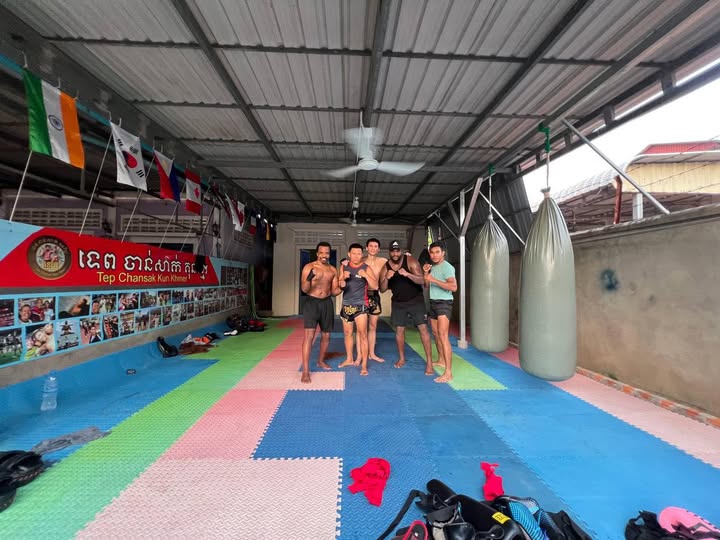
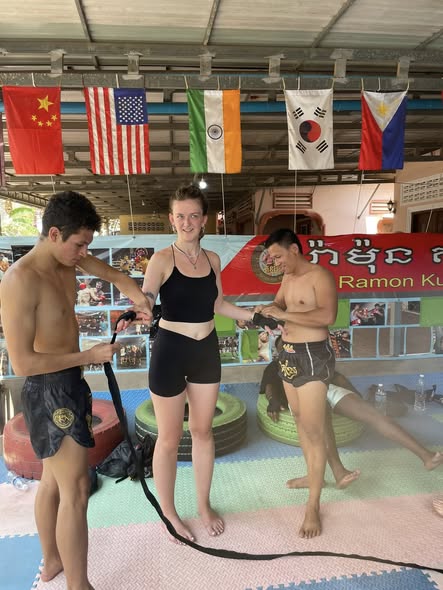
Ready to train in Siem Reap?
Drop in for a $9 day pass — the group class starts at 5:00 PM every day, and all gear is provided. Message us for today’s times.