Kun Khmer vs MMA: Which Should You Train?
Kun Khmer and MMA are different games, not rivals: pure striking and clinch versus striking plus grappling and ground fighting. Here is the honest side-by-side comparison — and who each sport actually fits.
On this page
- What Is the Difference Between Kun Khmer and MMA?
- How Do Kun Khmer and MMA Compare Side by Side?
- Where Does the Ground Game Change Everything?
- Which Skills Does Each Sport Build First?
- Who Is Kun Khmer the Right Choice For?
- Who Is MMA the Right Choice For?
- Can You Train Both Sports in One Trip?
- Which Sport Is Safer to Start With?
- Which One Is Better for Fitness?
- What Does Kun Khmer or MMA Training Cost in Siem Reap?
- How Do You Decide on a Single Visit?
- How Do You Book Your First Session?
Kun Khmer vs MMA is not one sport against a copy of itself — they are different games: Kun Khmer is pure stand-up striking plus clinch fighting, while MMA adds takedowns and ground grappling on top of the striking. Pick Kun Khmer if you want one deep striking sport coached by professional fighters; pick MMA only if you are ready to build two halves of a game, usually across two gyms. In Siem Reap either way starts at the daily 5:00 PM class.
What Is the Difference Between Kun Khmer and MMA?
The difference is scope: Kun Khmer is one complete striking sport, while MMA is a ruleset that combines striking with grappling and ground fighting. Kun Khmer — Cambodia's own full-contact combat sport, also known as Pradal Serey or Khmer boxing — is built on four strike types (punches, kicks, elbows, and knee strikes) plus a scored clinch. MMA is a full-contact combat sport based on striking and grappling, incorporating techniques from various combat sports; its common disciplines include Brazilian jiu-jitsu, wrestling, kickboxing, Muay Thai, and boxing.
- Kun Khmer: one national striking sport — punches, kicks, elbows, knees, and a clinch trained as its own department; nothing happens on the floor
- MMA: a hybrid game — the same standing weapons plus takedowns, ground control, and submissions
- The overlap: every Kun Khmer weapon is legal and useful in MMA — what Kun Khmer never gives you is the ground
- What this page does: compares the two honestly, side by side, and tells you who each one actually fits
If the naming side of this confuses you first, what Kun Khmer actually is settles the terminology, and the four weapons broken down technique by technique shows what "one complete striking sport" means in practice.
How Do Kun Khmer and MMA Compare Side by Side?
Side by side, the two games split on three axes: what skills the sport owns, what happens in the clinch, and whether a floor exists at all. A Kun Khmer match runs five three-minute rounds in a 6.1-meter square ring — entirely standing, with the clinch refereed as part of the fight. MMA owns everything that format leaves out: the takedown, the ground, and the submission.
Kun Khmer vs MMA — the honest dimension table
| Dimension | Kun Khmer | MMA |
|---|---|---|
| What it is | One full-contact striking sport; Cambodia's own, also called Pradal Serey / Khmer boxing | A hybrid ruleset blending striking and grappling from many martial arts |
| Standing weapons | Punches, kicks, elbows, knee strikes | The same strikes, drawn from boxing, kickboxing, and Muay Thai bases |
| The clinch | A scored department — rounds are won there with knees and short elbows | A transition — used to strike, break balance, or set up a takedown |
| Ground game | None — the action never goes to the floor | Central — Brazilian jiu-jitsu and wrestling decide fights there |
| Match format | Five three-minute rounds in a 6.1 m ring | One ruleset combining many arts; the exact shape depends on the promotion |
| Where you start | A gym that teaches one sport deeply | A gym that runs several disciplines under one roof |
Rules detail changes how each weapon gets used, which is why the full Kun Khmer rules breakdown pairs well with this page — and how the Kun Khmer clinch actually works explains the department most MMA gyms treat as an afterthought.
Where Does the Ground Game Change Everything?
The ground is the entire philosophical gap between the two sports: in Kun Khmer the fight simply never goes there, and in MMA it is often where fights are decided. The grappling half has its own deep pedigree — Brazilian jiu-jitsu was developed by the Gracie brothers around 1925, and wrestling was already an event at the ancient Olympic Games in 708 BC. Neither discipline exists in a Kun Khmer gym; both are why an MMA fighter cannot live on striking alone.
Punching, elbows, and knee strikes in the clinch, also sometimes referred to as 'dirty boxing', are an important aspect of Muay Thai, Bajiquan, Wing Chun, Lethwei and mixed martial arts.
The clinch is the honest bridge: it is where both sports meet before they diverge — MMA uses it to strike or to set up takedowns, while Kun Khmer scores inside it. If you are weighing this as a fighter rather than a beginner, what Kun Khmer gives an MMA fighter specifically covers the crossover value, and how striking and grappling training split across Siem Reap covers the logistics.
Which Skills Does Each Sport Build First?
Both sports start a beginner at the same place — stance, guard, and basic strikes — because the standing game is the foundation of each. From there the paths fork: a Kun Khmer curriculum keeps deepening the same four weapons and the clinch, while an MMA path adds a second, separate skill tree of takedowns and ground work on top. Starting here means the Kun Khmer fork: technique, pads, and clinch every session, in the same class the pros use.
- Session 1 (either sport): stance, guard, punch mechanics on pads — follow the coach, forget power
- Sessions 2–4: add kicks, then knees and elbows, plus your first clinch grips
- Week 2+: a Kun Khmer path refines timing, elbow setups, and clinch control; an MMA path would now split your time with takedown and ground classes
- Decision point: whether you want depth in one game or breadth across two
Zero experience is the normal starting point here — what beginner Kun Khmer classes actually cover lays out the syllabus, and trying Kun Khmer with no experience at all answers the nerves directly. A traveler who trained both sports put the stylistic difference in one line:
I've trained Pradal Serey/Kun Khmer in Siem Reap for a month… very similar but Kun Khmer is more elbow oriented.
Who Is Kun Khmer the Right Choice For?
Kun Khmer is the right choice if you want one sport learned properly, fast feedback from coaches who fought professionally, and a striking base that transfers anywhere — including into MMA later. It also carries the culture: the sport was derived from centuries-old traditions, namely the Bokator close-quarter combat system — an art UNESCO inscribed in 2022 on its Intangible Cultural Heritage list — and training it in Cambodia puts you inside that lineage rather than beside it.
Kun Khmer fits you if…
…you want one sport learned properly in one gym: travelers and beginners who want a single daily class with gear provided, strikers who want the deepest elbow and clinch work available, fitness-first visitors for whom pad rounds are the workout, and future MMA fighters building the striking half. It is not for you if your goals live on the ground — we teach no grappling of any kind, and we say so plainly.
Whether the sport actually holds up under pressure is its own question — does Kun Khmer work? answers it with evidence, and the sport's history in Cambodia explains how a striking art this old became the country's ring sport. The Kun Khmer culture hub collects the whole story in one place.
Who Is MMA the Right Choice For?
MMA is the right choice if your goal is the cage, or if you already know the ground game is what excites you — no striking-only sport will satisfy that itch, and pretending otherwise wastes your year. It is also the honest answer for completeness: if you want to handle a fight wherever it goes, you eventually need both halves. What MMA requires that Kun Khmer does not is logistics — a schedule that carries multiple disciplines, whether under one roof or split across gyms.
Who each sport honestly fits
| You want… | Better fit | Why |
|---|---|---|
| A pro or amateur cage career | MMA — striking block here, grappling where you live | You need both halves; Siem Reap's split makes that a two-gym plan |
| Ground-game curiosity (BJJ, wrestling) | The grappling gyms first | At least one Siem Reap gym — Ground Zero — lists BJJ, Kun Khmer, MMA, boxing, and yoga training |
| One sport, one gym, this trip | Kun Khmer at our 5:00 PM class | A complete striking education without chasing two schedules |
| Fitness plus a real skill | Either — striking first is the simplest start | A coached pad class builds the base either game needs |
To see the whole local picture before you commit, where to train martial arts in Siem Reap maps every option, and Cambodian kickboxing as its own subject covers the striking sport under its other name. The Ground Zero disciplines named above are quoted from its Tripadvisor listing, verified this session.
Can You Train Both Sports in One Trip?
Yes — and a short trip is actually the cleanest way to do it, because one daily class time makes a two-gym week simple to run. Take the 5:00 PM Kun Khmer class on your striking days, put grappling on the others wherever you train it, and let private sessions fill the specific gap your grappling exposes. Fighters who split the week this way usually book the striking block first, since it is the half with the fixed daily slot.
- Pick your grappling days first — they anchor the week and are the harder schedule to move
- Book the 5:00 PM Kun Khmer class on the remaining days; the $9 day pass covers a sampling visit
- Add one private session on your weakest weapon instead of a second membership
- Keep one full rest day — two sports in one town adds up faster than people plan for
The travel logistics are laid out in planning a Kun Khmer training trip, and the best time of day to train in Siem Reap explains why the single 5:00 PM evening slot makes the split work.
Which Sport Is Safer to Start With?
As taught to beginners, neither sport asks you to fight — and the injury question depends far more on the class format than on the sport's name. Group classes here are pad-focused rather than fight simulation: you hit pads and bags, nobody hits you, and sparring is not part of standard sessions. Both sports carry real risk at competition level — that is what full-contact means — but a coached beginner class in either one is an intense gym session, not a brawl.
Beginner safety, concern by concern
| Concern | The honest answer |
|---|---|
| Will I get hit? | Contact is with pads and bags only, at a coach-controlled pace, from session one |
| Existing injuries? | Tell the coach before class; drills scale around them |
| Sparring? | Exists in both sports — by arrangement, when you ask for it, never by default here |
| The day after? | Sore shins and shoulders, typically — not an injury |
The sparring question gets its own page — is there sparring in Kun Khmer? — and how safe Kun Khmer is for beginners covers the scaling in detail.
Which One Is Better for Fitness?
For fitness the striking sport is the simpler engine, and the comparison mostly dissolves: both sports build the same base through the same kind of work. A Kun Khmer class stacks continuous pad rounds against the WHO's baseline of at least 150 minutes of moderate-intensity physical activity per week, with a bodyweight conditioning finisher on top — daily attendance compounds it fast. Grappling is its own demanding workout, but in Siem Reap the striking class is the one with the fixed daily slot that makes streaks possible.
The fitness verdict in one line
Pad rounds are continuous aerobic effort, clinch work adds strength and balance under live pressure, the conditioning finisher adds bodyweight volume — and the fixed daily 5:00 PM slot is what turns single visits into a streak that builds toward the WHO's weekly baseline.
The energy-output version of this is how many calories a Kun Khmer class burns, and fitness classes in Siem Reap compared puts striking against the general-gym options in town.
What Does Kun Khmer or MMA Training Cost in Siem Reap?
Kun Khmer Club's prices are flat, published, and contract-free, and they cover the whole striking half of either game: a $9 day pass, $69 weekly, $129 monthly, $25 per hour per person for private sessions, and $299 for the 6-week fight camp. Against any multi-discipline MMA membership, the comparison is simple: one pass buys one complete sport, and privates buy precision on a single gap. The daily class runs at 5:00 PM, so every tier applies to the same session.
Published prices at Kun Khmer Club, Siem Reap
| Option | Price | What it includes |
|---|---|---|
| Day pass | $9 | The daily 5:00 PM group class, all gear provided |
| Weekly pass | $69 | Seven days of the group class — a short striking block's length |
| Monthly | $129 | Ongoing group training for longer stays |
| Private 1-on-1 | $25 per hour, per person | Targeted work on one gap, arranged with the coaches |
| 6-week fight camp | $299 | A structured six-week striking block |
Each tier gets its own walkthrough in the full Kun Khmer class cost guide, and how private Kun Khmer lessons in Siem Reap work covers the one-on-one option end to end.
How Do You Decide on a Single Visit?
You can settle most of this comparison in one evening: take the class, feel the clinch, and ask the coaches the MMA-specific questions directly — they will tell you honestly what transfers and what needs a second gym. A day pass is the whole transaction, so the cost of deciding is a single session rather than a membership. Watch how you feel about clinch work specifically; that is the part of the Kun Khmer game that tells strikers and grapplers apart fastest.
- Book or walk in before 5:00 PM — message ahead if you want the coach briefed on your background
- Take the full class: stance, pads, clinch introduction, conditioning finisher
- Ask your two deciding questions — what transfers to MMA, and what a two-gym week looks like
- Decide with data: day pass to weekly pass if the striking half is your gap
What a one-day Kun Khmer class actually looks like previews the whole visit, and whether you need to book a class in advance settles the logistics before you come.
How Do You Book Your First Session?
Message WhatsApp, Telegram, or +855 96 228 8585 — or simply walk in before the 5:00 PM class — and say which side of this comparison you are leaning toward; the coaches will point the session at it. First-timers are the ordinary case here, the club's Google rating stands at 5.0 from its first 8 reviews, and head coaches Kon Phanet and Ramon bring a combined 50+ professional Kun Khmer fights in Cambodia to every session. The cheapest honest experiment in this entire comparison costs $9.
Great coach! Explains everything very well and really takes the time for you! The classes are also a good combination of cardio, strength, and technique, where you learn a lot right from lesson 1! Highly recommended!
Why visitors rate it this highly is argued in full at our case as the best Kun Khmer club in Siem Reap, and can tourists train Kun Khmer in Siem Reap? answers the practical first-timer questions.
FAQ
Can you practice Brazilian Jiu Jitsu in Siem Reap?
Yes — but not at Kun Khmer Club, which teaches striking and clinch only. At least one gym in town covers the ground side: the Ground Zero Martial Arts and Yoga Cafe listing describes training in Brazilian Jiu-Jitsu, Kun Khmer, MMA, boxing, and yoga. The common pattern is striking sessions here plus grappling work there.
What is the difference between Kun Khmer and Muay Thai?
They are separate national sports from the same striking family: both use punches, kicks, elbows, knees, and a clinch, but Kun Khmer is Cambodia's ruleset and tradition while Muay Thai is Thailand's. Fighters who have trained both describe the Cambodian sport as more elbow-oriented. The full point-by-point comparison lives on the Kun Khmer vs Muay Thai page.
I don't want to get hit. Is this a contact workout?
You will make contact — with pads and bags, not with people. Beginner sessions are technique and pad work at a coach-controlled pace: nobody hits you and you never hit a person. Sparring comes later, and only if you ask for it.
Is sparring included in Muay Thai classes?
This gym teaches Kun Khmer rather than Muay Thai, and sparring is not part of standard sessions here — training is technique, pads, and conditioning. Fighters who want live clinch or sparring rounds arrange them with the coaches rather than getting them by default.
Can beginners join a class?
Yes — beginners, tourists, expats, and locals all train in the same daily 5:00 PM class. Technique comes first, intensity is scaled to the person, and gloves, wraps, and pads are provided. A $9 day pass covers the session.
Is There Risk of Injury?
Any combat sport carries injury risk, and harder training raises it. Group classes here are pad-focused rather than fight simulation, so a beginner's risk profile looks like any intense gym session. Tell the coaches about injuries up front and train within your level.
Key takeaways
- Kun Khmer vs MMA is a scope comparison, not a ranking: Kun Khmer is pure striking plus clinch; MMA adds takedowns and ground grappling.
- Every Kun Khmer weapon — punches, kicks, elbows, knees, clinch control — transfers directly into an MMA game; the ground is the only thing it does not give you.
- Choose Kun Khmer for one complete striking sport in one gym; choose MMA when your goals live on the ground or in the cage, across two gyms.
- Kun Khmer matches run five three-minute rounds in a 6.1 m ring — all standing, with the clinch scored.
- Start with one $9 day pass at the daily 5:00 PM class: $69 weekly, $129 monthly, $25/hour/person privates, $299 six-week fight camp — booked via WhatsApp, Telegram, or +855 96 228 8585.
Sources & further reading
- Wikipedia — Kun Khmer — Kun Khmer is a full-contact Cambodian combat sport of stand-up striking and clinch fighting with punches, kicks, elbows, and knee strikes; also known as Pradal Serey / Khmer boxing; matches run five three-minute rounds in a 6.1-meter square ring; codified by the French colonial administration in the early 20th century and derived from Bokator — source
- Wikipedia — Mixed martial arts — MMA is a full-contact combat sport based on striking and grappling, incorporating techniques from various combat sports; its common disciplines include Brazilian jiu-jitsu, wrestling, kickboxing, Muay Thai, and boxing — source
- Wikipedia — Clinch fighting — Punching, elbows, and knee strikes in the clinch ("dirty boxing") are an important aspect of Muay Thai and mixed martial arts — the clinch as the bridge between the two games — source
- Wikipedia — Brazilian jiu-jitsu — BJJ was developed by the Gracie brothers around 1925 — the pedigree of MMA's ground game, which Kun Khmer does not contain — source
- Wikipedia — Wrestling — Wrestling appeared in the ancient Olympic Games at the 18th Olympiad in 708 BC — the other half of MMA's grappling base — source
- UNESCO — Kun Lbokator — Kun Lbokator, the Cambodian martial art tradition Kun Khmer descends from, dates back to the first century and was inscribed in 2022 on the Representative List of the Intangible Cultural Heritage of Humanity — source
- WHO — Physical activity fact sheet — The global recommendation of at least 150 minutes of moderate-intensity physical activity per week — the fitness baseline a daily striking class clears — source
- Tripadvisor — Ground Zero Martial Arts And Yoga Cafe — The listing describes expert-led training in Brazilian Jiu-Jitsu (BJJ), Kun Khmer (Muay Thai), MMA, Boxing, and Yoga in Siem Reap — the grappling side of the two-gym plan — source
- r/MuayThai — "Muay Thai vs Pradal Serey?" thread — A fighter's comparison after training both in Siem Reap: "very similar but Kun Khmer is more elbow oriented" — quoted as recorded in docs/seo-evidence/phase1-community.md row 20 (thread bodies were not fetchable from this environment) — source
Reviewed 2026-10-26
Written by the coaches
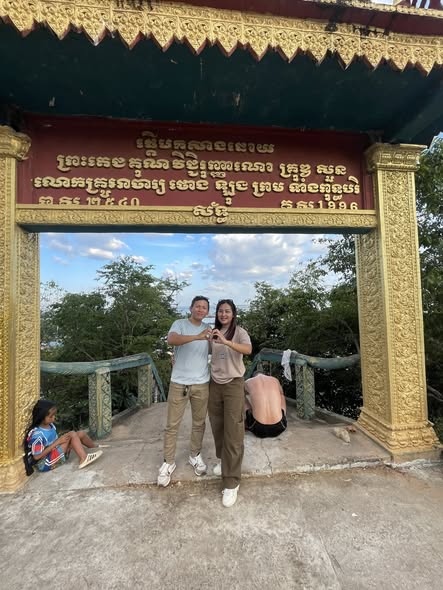
Kun Khmer Club — Coaches Kon Phanet & Ramon
Head coaches Kon Phanet and Ramon have a combined 50+ professional Kun Khmer fights in Cambodia. We coach beginners, travelers, expats, and fighters at our gym in Siem Reap.
Ready to train in Siem Reap?
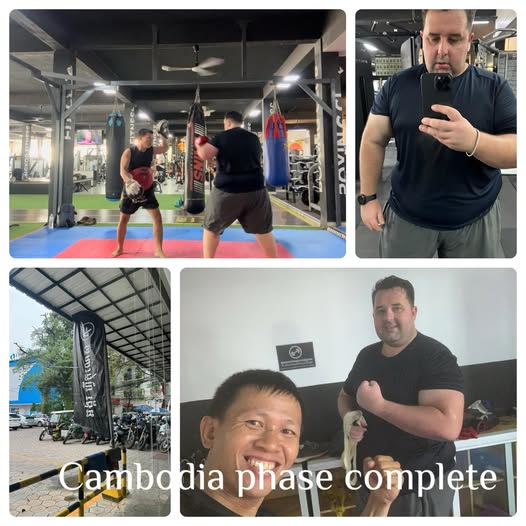
Drop in for a $9 day pass — the group class starts at 5:00 PM every day, and all gear is provided. Message us for today’s times.