What to Bring to a First Martial Arts Class
Water, a towel, and light workout clothes are all you bring to your first martial arts class — hand wraps, gloves, and pads are provided at our Siem Reap gym, and training is barefoot on mats. Here is the full checklist, when to arrive, when to eat, and exactly what happens in your first 15 minutes.
On this page
- What Should You Bring to Your First Martial Arts Class?
- What Do You Wear — and What Does the Gym Provide?
- How Much Water Should You Bring to Class in Siem Reap?
- Do You Need a Towel — and What About Nails and Jewelry?
- What Time Should You Arrive for the 5:00 PM Class?
- Do You Need to Book Ahead — and How Do You Pay?
- When Should You Eat Before a Martial Arts Class?
- What Happens in Your First 15 Minutes?
- What Should You Leave at the Hotel?
- Do You Need to Get Fit Before Your First Class?
- What If You're Nervous About Your First Class?
- What Should You Do the Night Before Your First Class?
- Is One Class Enough to Decide if Kun Khmer Is for You?
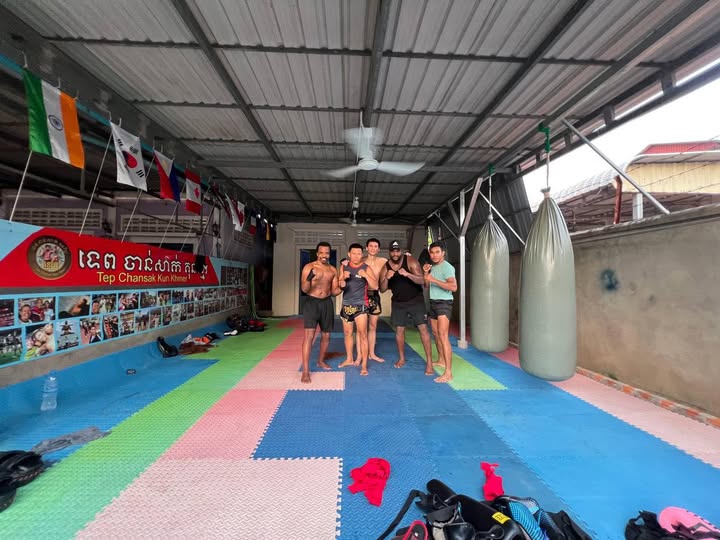
What to bring to your first martial arts class comes down to three things — water, a small towel, and light workout clothes — because at our Siem Reap gym the hand wraps, gloves, and pads are provided and you train barefoot on mats. Plan to arrive about 15 minutes before the daily 5:00 PM class to check in, pay the $9 day pass, and get your hands wrapped, and eat a light meal an hour or two beforehand rather than training stuffed or starving. That is the entire list; nothing needs buying before your first session.
What Should You Bring to Your First Martial Arts Class?
You bring three things and wear a fourth: a bottle of water, a small towel, and whatever is already in your gym bag — everything else a first session needs is issued at the door. The full inventory fits the table below, and the reason the list is this short is simple: a beginner class runs on coaching and provided gear, not on equipment you own. The one item people expect and do not need is footwear — the mats are barefoot-only, so leave the trainers packed. How each item works in practice is covered section by section below, starting with the clothes question in what to wear to a Kun Khmer class and the buy-nothing question in the beginner gear guide.
The complete first-class checklist
| Item | Why it is on the list | Bring or provided? |
|---|---|---|
| Water bottle | You will sweat — Siem Reap is hot year-round | Bring |
| Small towel | Sweat management during and after the session | Bring |
| Sports clothes | Shorts and a t-shirt you don't mind sweating through | Wear, don't pack |
| Hand wraps | Protect wrists and knuckles once pad work starts | Provided, coach-fitted |
| Gloves | Pad work from the first session | Provided |
| Pads | Held by coaches — not student equipment | Provided |
| Shoes | Nothing to train in — mats are barefoot-only | Skip entirely |
What Do You Wear — and What Does the Gym Provide?
You wear light workout clothes you are happy to sweat through, and the gym provides every piece of actual equipment. That split surprises first-timers who budget for gloves before ever seeing a gym, so it is worth stating plainly: shorts, a t-shirt, or leggings are the whole wardrobe, wraps and gloves come from the gym's kit, and the mat floor sets the dress code from the ankles down. Everything sits in your bag for an evening, then goes back in the wash — no uniform, no belt, no purchases. The dress-code details live in the clothing guide linked above, the month-one training map is in the Khmer boxing training guide for beginners, and this page with every other first-timer question sits in the beginner-training hub.
- Wear: shorts and a t-shirt, or leggings — clothes you can lunge, squat, and sweat in
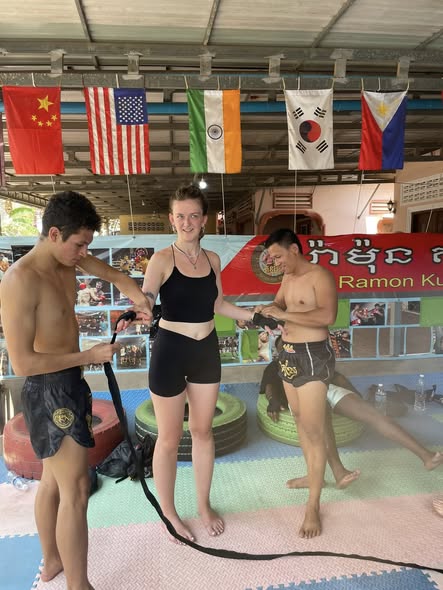
- Provided: hand wraps, gloves, and pads — a coach fits your wraps before the warm-up
- Barefoot: no shoes, no socks, no special footwear to buy
- Buy nothing for day one: gear only becomes worth owning once training is a habit
How Much Water Should You Bring to Class in Siem Reap?
Bring more water than you think you need and start drinking long before the warm-up, because this city makes hydration a preparation question rather than a during-class one. Siem Reap is hot year-round — average high temperatures never fall below 30 °C in any month, with the mean daily maximum running from 30.6 °C in December to 35.8 °C in April — and a 5:00 PM class lands after the hottest part of the day, not after the heat is gone. The CDC's guidance for athletes in heat is to drink more water than usual and not wait until you're thirsty to drink more, which in practice means a bottle in your bag and water through the afternoon, not a single sip at the gym door. Why the 5:00 PM slot exists at all — and how it compares with mornings — is in the best time of day to train in Siem Reap.
The one hydration rule
Hydration starts in the afternoon, not at the gym. Carry a bottle from lunchtime, drink steadily, and bring it with you — thirst is a late signal in this heat, per the CDC.
Do You Need a Towel — and What About Nails and Jewelry?
Yes to the towel, trim the toenails, and leave the jewelry at your accommodation — three small preparations that all come from the same fact: martial arts training is close-quarters and barefoot. You will sweat onto shared mats and work near partners during drills, so a small towel earns its place in the bag; Muay Thai gyms tell their first-timers the same two-item rule — Chonburi Muay Thai's FAQ advises, “It is recommended that you bring water and a towel, as well.”. Nails are partner protection: Fairtex's first-class guide puts it directly — “Trim your toenails. Muay Thai is barefoot, and partner drilling involves checks, footwork, and clinch…” — and rings, necklaces, and bracelets, in Fairtex's words, “scratch partners and get caught during clinch.”. The clinch is a signature part of Kun Khmer, so that jewelry advice is not decorative — how the clinch actually works shows why anything loose on your hands ends up in the wrong place.
- Towel: small, one is enough — sweat on the mats and a dry-off afterward
- Nails: trim fingernails and toenails before class — barefoot partner drills are the reason
- Jewelry: rings, necklaces, and bracelets stay home — they scratch partners and catch in the clinch
- Glasses: if you train in them, a sports strap helps — mention them to the coach when you arrive
What Time Should You Arrive for the 5:00 PM Class?
Arrive about 15 minutes before 5:00 PM — early enough to check in, pay, and get your hands wrapped without eating into the warm-up, and late enough that you are not standing around wondering what to do. The class runs once a day at 5:00 PM, every day, and lasts about 60–90 minutes, so the whole commitment is one evening hour; other Muay Thai gyms publish the same advice with a number attached — Chonburi's FAQ tells first-timers, “For your first class, it is recommended that you arrive 20 minutes prior to the start time.”. Fifteen minutes is our version of the same rule, and the timeline below shows where those minutes go. If you are still working out where the gym is, finding a Kun Khmer gym near you covers the location question.
- 4:40 PM — leave with time to spare; the gym is easy to find but the city is not
- 4:45 PM — arrive, check in, and pay the $9 day pass
- 4:50 PM — a coach fits your hand wraps and gets a quick read on your experience
- 5:00 PM — the group warm-up opens the class; from here you just follow along
- 6:00–6:30 PM — cooldown, done; about 60–90 minutes door to door
Do You Need to Book Ahead — and How Do You Pay?
No booking is needed and you pay on arrival: the daily class has no booking system behind it, there is no form, no deposit, and no contract, and the $9 day pass settles the whole transaction at the door. A WhatsApp message to +855 96 228 8585 during the day is a courtesy so a coach knows to expect you — walking in works exactly the same. The one detail we do not publish is payment method — how the gym takes payment is a question to ask when you message, and we would rather you ask than guess. What your money buys at each level is on the full cost breakdown for Kun Khmer classes, the advance-booking question in detail is in whether to book a class in advance, and the mechanics of a single visit are in the drop-in martial arts class guide.
Nothing to pay or book before you arrive
Walk in, pay the $9 day pass at the door, train. The only things that need arranging ahead are private lessons ($25 per hour) and off-schedule times — message the coaches for those. Every published price: the full price card.
When Should You Eat Before a Martial Arts Class?
Eat a light meal an hour or two before class — our standard advice, and it lands inside the mainstream guidance: the Mayo Clinic tells exercisers that “Large meals. Eat these at least 3 to 4 hours before exercising. Small meals or snacks. Eat these about 1 to 3 hours before exercising.”. The conditioning block at the end of a session punishes both extremes — a completely empty stomach runs out halfway through pad work, and a full one argues with footwork — which is why the 5:00 PM class pairs naturally with a late-light lunch and an honest dinner after. The table below puts the timings in one place. Where the energy actually goes once you are on the mats is in how many calories a Kun Khmer class burns.
Eating timeline for the 5:00 PM class
| Before class | What works | Whose guidance |
|---|---|---|
| 3–4 hours | Large or main meal finishes here | Mayo Clinic |
| 1–2 hours | Light meal — our standing advice for this class | Kun Khmer Club coaches |
| Under 1 hour | Water; a small snack only if you need it | Mayo Clinic |
| During class | Water breaks, set by the session | Kun Khmer Club coaches |
What Happens in Your First 15 Minutes?
The first 15 minutes run on rails: check in, pay, get wrapped, meet the coach, and start moving with the group — by the time the warm-up opens, the awkward new-person part is already over. A coach fits your hand wraps and shows you how they work, then takes a quick read on your experience so the session is pitched at you rather than at the room's average; first-timers describe exactly this on-ramp in the gym's reviews. One reviewer wrote: “We took the trial boxing class with My Phanith, it was great! He explained all the basic techniques for our first class, it was awesome!” (Margaux, Google review, 2026-09-26 — the gym's listing shows 5.0 from 8 reviews). After that comes the group warm-up and the full session arc, mapped in what to expect from beginner Kun Khmer classes and the safety picture behind it in how safe Kun Khmer is for beginners.
- Check in and pay the $9 day pass — no form, no contract
- Hand-wrap fitting — a coach wraps your hands or shows you how
- Meet the coach — a quick word about your experience level so the class is pitched right
- Gear sorted — gloves issued, barefoot on the mats
- Warm-up opens at 5:00 PM — footwork, mobility, light cardio, at the group's pace
What Should You Leave at the Hotel?
Leave anything you would hate to sweat on, trip over, or lose track of — a first class needs pockets for nothing. Trainers, thick socks, shin guards, and your own gloves all stay packed: the first session uses none of them, and gear you do not yet need is just weight across town. Valuables stay in your room safe; a small bag with your bottle, towel, and a payment card or whatever you will settle the pass with is the entire loadout. Packing this light has a second benefit — you can try a gym on the same evening you decide to, which matters if you are still comparing options across the city: training Kun Khmer in Siem Reap as a tourist covers the same-day decision, how general gym day passes work in Siem Reap covers the non-martial-arts market, and what makes a good boxing gym in Siem Reap gives you the checklist to judge any gym before you carry anything to it.
- Leave: trainers and socks — barefoot mats, no exceptions to pack for
- Leave: your own gloves, wraps, and shin guards — provided gear covers day one
- Leave: valuables you would hate to sweat on — a class needs nothing in your pockets
- Bring instead: one small bag — bottle, towel, clothes, and whatever you will pay with
Do You Need to Get Fit Before Your First Class?
No — you build the fitness by training, and the class is built for a full room of mixed abilities rather than for people who are already in shape. Beginners work at the pace the coaches set, the conditioning block scales to the room, and nobody's first evening is graded against anyone else's; the honest expectation is tired-but-not-wrecked. Regulars describe the same balance from the student side, as this verified review does: “The classes are also a good combination of cardio, strength, and technique, where you learn a lot right from lesson 1!” (Sanne Van den brink, Google review, 2026-09-29). Starting later in life is its own answered question in can older beginners try Kun Khmer, and if you would rather build general fitness on your own schedule first, hiring a personal trainer in Siem Reap maps that separate market.
Great coach! Explains everything very well and really takes the time for you! The classes are also a good combination of cardio, strength, and technique, where you learn a lot right from lesson 1! Highly recommended!
What If You're Nervous About Your First Class?
Being nervous before a first class is the norm, not a signal that something is wrong — entire forum threads are titled things like “Nervous about starting tomorrow.”, and first-class nerves are one of the most repeated question patterns in the Muay Thai communities we surveyed. The practical cure is that this page's whole list is short: when you know what to bring, when to arrive, and what the first 15 minutes look like, there is nothing left to improvise. You will not be asked to fight, spar, or perform — a first session is technique, pads, and sweat, and total beginners are the routine customer in a tourist city. The zero-experience question gets its full answer in trying Kun Khmer with no experience, the women-specific questions in Kun Khmer for women beginners, and the contact question in the truth about sparring in Kun Khmer.
Nervous is normal — the first review on our own listing proves it
A reviewer's first-ever class, in their words: “Was the first time in my life to do any type of boxing or martial arts - will definetely do it again” (Manuel Jungwirth, Google review, 2026-10-03). Quote verbatim, including the typo — that is how it is written on the listing.
What Should You Do the Night Before Your First Class?
Five small things the evening before turn the next day's class from an ordeal into an errand, and none of them involves shopping. Hydrate through the evening — the CDC's drink-more-than-usual rule works better started early — and eat a normal dinner, because tomorrow's timing matters more than tonight's volume. Then handle the two preparations this page keeps returning to: trim the toenails and pack the small bag. Finally, one optional message to the gym's WhatsApp (+855 96 228 8585) so a coach expects you, and the route checked so 4:45 PM is realistic. If the class is part of a longer trip rather than a one-off evening, planning a Kun Khmer training trip scales this same preparation up to a whole stay.
- Drink water through the evening — start the CDC's more-than-usual rule a day early
- Eat a normal dinner — tomorrow's light meal, 1–2 hours before class, is the one that matters
- Trim fingernails and toenails — the barefoot partner-drill rule
- Pack the bag: sports clothes, bottle, small towel — nothing else
- Optionally message the gym's WhatsApp and check the route so a 4:45 PM arrival is easy
Is One Class Enough to Decide if Kun Khmer Is for You?
Yes — one $9 evening is the entire commitment, and it is enough to answer the only question that matters on day one: did you enjoy it. The exit costs nothing and the ladder upward is posted rather than negotiated, so there is no decision to defend and no contract to escape. If the answer is yes, the one-day Kun Khmer class guide shows what a single session can become, the ranked field of Siem Reap gyms is there if you want to compare, and the two fears that most often stop people before they start are answered in whether Kun Khmer is a contact workout and the sparring guide linked above. Pack the three items, show up before 5:00 PM, and the rest is the coaches' job.
Book a beginner-friendly Kun Khmer class in Siem Reap
Three things in a bag, one pass at the door: see our published pricing, message the coaches on WhatsApp (+855 96 228 8585), and join the daily 5:00 PM class.
FAQ
What Should I Bring to Class?
Water, a small towel, and light workout clothes — that is the whole list. Hand wraps, gloves, and pads are provided at the gym, training is barefoot on mats, and nothing needs buying before your first session. Arrive about 15 minutes before the 5:00 PM class and eat a light meal an hour or two beforehand.
Do you need to bring your own gear?
No — at Kun Khmer Club gloves, hand wraps, and pads are provided at every price tier, so a first-timer needs no equipment at all. Gear only becomes worth buying once training is a regular habit, and the beginner gear guide covers what to buy and when.
What time should I get to the gym?
About 15 minutes before the 5:00 PM class. That covers check-in, paying the $9 day pass, and getting your hand wraps fitted by a coach before the group warm-up opens the session. Other gyms publish similar advice — one Muay Thai gym's FAQ recommends arriving 20 minutes early for a first class.
How should I prepare for class?
Hydrate through the afternoon rather than only at the gym, eat a light meal an hour or two beforehand, trim your fingernails and toenails, and leave jewelry at your accommodation. Pack sports clothes, water, and a small towel — the gym provides everything else.
I have my first Muay Thai class this Tuesday. Any tips for a beginner?
The same tips apply in Siem Reap as anywhere: keep the bag to water, a towel, and training clothes, arrive early enough to get your wraps fitted, and expect technique and pad work rather than fighting. In this heat, start drinking water the day before and pace yourself through the conditioning block — nobody's first evening is graded against anyone else's.
Can I bring a friend?
Yes — the daily class has no minimum group size, and a friend pays the same $9 day pass on arrival. One WhatsApp message with both names is enough for the coaches to expect you together.
What to expect for first class?
About 60–90 minutes: check-in and wrap fitting, a group warm-up, technique drills from stance and basic strikes, pad rounds with a coach, and a scaled conditioning block to finish. No sparring is involved, and the pace is set for whoever is in the room — total beginners are the routine customer.
Key takeaways
- Bring three things — water, a small towel, and light workout clothes; hand wraps, gloves, and pads are provided and training is barefoot on mats.
- The class runs daily at 5:00 PM for about 60–90 minutes; arrive around 4:45 PM to check in, pay the $9 day pass, and get your hands wrapped.
- No booking system exists — walk in, or send one WhatsApp message to +855 96 228 8585 as a courtesy; payment method is the one detail to ask about when you message.
- Eat a light meal 1–2 hours before (Mayo Clinic: small meals 1–3 hours before, large meals 3–4 hours) and start hydrating the afternoon before, per the CDC.
- Trim your toenails, skip the jewelry, and leave valuables at your hotel — the night-before checklist is five steps and involves no shopping.
Sources & further reading
- CDC — Heat and Athletes — The hydration guidance quoted in this guide: "Drink more water than usual, and don't wait until you're thirsty to drink more" (live-fetched 2026-10-26). — source
- Wikipedia — Siem Reap — Siem Reap climate: average high temperatures never falling below 30 °C in any month; mean daily maximum 30.6 °C (December) to 35.8 °C (April) (live-fetched 2026-10-26). — source
- Mayo Clinic — Eating and exercise: 5 tips to maximize your workouts — Meal timing before exercise: "Large meals. Eat these at least 3 to 4 hours before exercising. Small meals or snacks. Eat these about 1 to 3 hours before exercising." (live-fetched 2026-10-26). — source
- Fairtex — What to wear to Muay Thai class — The toenail guidance ("Trim your toenails. Muay Thai is barefoot, and partner drilling involves checks, footwork, and clinch"), the jewelry warning ("Jewelry: rings, necklaces, and bracelets scratch partners and get caught during clinch"), and the small-towel-and-water packing norms (live-fetched 2026-10-26). — source
- Chonburi Muay Thai — FAQ — Cross-gym norms quoted for comparison: "It is recommended that you bring water and a towel, as well." and "For your first class, it is recommended that you arrive 20 minutes prior to the start time." (live-fetched 2026-10-26; cited as another gym's published guidance, not ours). — source
- Google Maps — Kun Khmer Club reviews — 5.0 rating from 8 reviews; the Margaux (2026-09-26), Sanne Van den brink (2026-09-29), and Manuel Jungwirth (2026-10-03) reviews quoted verbatim with author and date (evidence pulled 2026-10-25, docs/seo-evidence/google-reviews.md). — source
- Kun Khmer Club — published prices, schedule, and contact — First-party basis of every figure: $9 day pass (plus $69 / $129 / $25 per hour / $299 tiers), the daily 5:00 PM class, gear provided and barefoot mats, the light-meal-a-hour-or-two guidance, pay-on-arrival with no booking system, and the WhatsApp contact +855 96 228 8585 (lib/business.ts and lib/blogContent/booking.ts). Payment method is deliberately not stated — not published first-party. — source
- Reddit — r/MuayThai, "Nervous about starting tomorrow." — First-class nerves as a real, repeated question pattern (thread title; docs/seo-evidence/phase1-community.md row 25, cluster E with 9 sightings — title-level evidence only, per that doc's method note). — source
Reviewed 2026-10-26
Written by the coaches
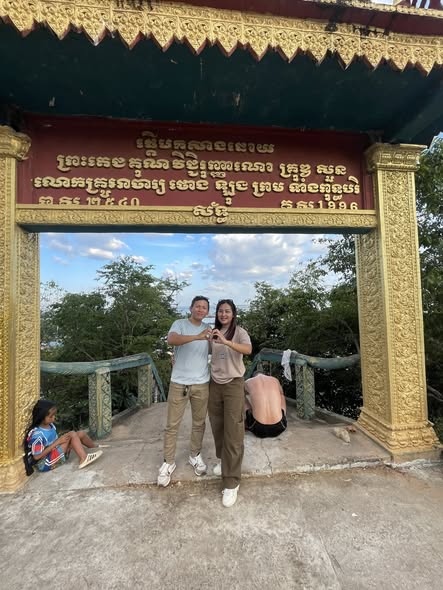
Kun Khmer Club — Coaches Kon Phanet & Ramon
Head coaches Kon Phanet and Ramon have a combined 50+ professional Kun Khmer fights in Cambodia. We coach beginners, travelers, expats, and fighters at our gym in Siem Reap.
Ready to train in Siem Reap?
Drop in for a $9 day pass — the group class starts at 5:00 PM every day, and all gear is provided. Message us for today’s times.