

Can You Start Martial Arts Over 40? Yes
Yes — you can start martial arts over 40: beginners train technique and coach-held pads, nothing hits back, and every round scales to you. What the injury data honestly shows, how intensity and recovery scale, and what real first-timers say.
On this page
- Can You Start Martial Arts at 40 or Older?
- What Does the Honest Injury Picture Look Like After 40?
- How Does a Beginner Class Remove the Riskiest Elements?
- Is Sparring Required When You Start Over 40?
- How Hard Should You Train at 40 or Older?
- How Much Recovery Does a 40-Plus Beginner Need?
- What Do Official Guidelines Say Adults Over 40 Need Each Week?
- How Often Should You Train Over 40?
- What Can You Expect in Your First Weeks?
- Do People Really Start Here for the First Time Over 40?
- Which Martial Art Makes Sense at 40-Plus?
- What Does It Cost to Start Martial Arts Over 40?
- How Do You Start This Week?
Yes — you can start martial arts over 40, and people do it here at every decade of adult life. The beginner class runs on technique and coach-held pads, so nothing hits back, every round is scaled to the person doing it, and the honest injury picture is manageable rather than mysterious. The whole first decision is a $9 day pass, gear included.
Can You Start Martial Arts at 40 or Older?
Yes — the gate on starting is medical, not chronological. The population study of martial-arts injuries used for the numbers below records these arts as taught and practiced by participants of all ages, and the CDC's instruction for anyone who struggles with the standard recommendations is simply to "be as physically active as your abilities and conditions allow". What separates students in a mixed adult class is training age, not birthday: a fit 55-year-old can drill faster than a sedentary 25-year-old, and both start from the same stance on day one. If your worry is starting from zero rather than starting late, the guide to training Kun Khmer with no experience at all covers the first steps, and our older-beginner deep dive answers whether older beginners can try Kun Khmer at greater length.
- No fitness test at the door — the first class meets you where you are
- Medical clearance is the sensible prerequisite for anyone managing a condition, at any age
- Progress tracks consistency, not the year you were born
- Technique starts in the air, then on pads — nothing is thrown at you
What Does the Honest Injury Picture Look Like After 40?
Real — striking is a contact sport, and the published data shows what actually gets hurt. In a Canadian study of 920 martial-arts injuries treated in emergency departments, 74% of the recorded injuries were rated mild while 26% required admission or follow-up; fractures were the most frequent type (20%), the lower limb the most common site (41%), and falls, throws, and jumps the top mechanism (33%) — a profile built largely by partner work, takedowns, and sparring. That is a description of where risk lives, not a guarantee of safety in either direction, and it is general information rather than medical advice. The useful takeaway is the next section: the beginner format here is designed around exactly those mechanisms, and training with injuries you already carry is its own guide.
What the published injury data records — 920 martial-arts injuries, Canadian emergency-department study (McPherson et al., BMC Public Health, 2010)
| Published finding | Number | What it means for a 40+ beginner |
|---|---|---|
| Injuries rated mild | 74% | Most recorded injuries were minor — not a promise about any session |
| Required admission or follow-up | 26% | Serious injuries happen; sharp pain is a stop signal, not something to push through |
| Most frequent injury type | Fractures (20%) | Technique before power; wraps and gloves are fitted for you |
| Most common injury site | Lower limb (41%) | Kicks and footwork are coached slowly, from zero |
| Top mechanism | Falls, throws, jumps (33%) | Pad work has no throws and no falling partner |
How Does a Beginner Class Remove the Riskiest Elements?
By design: the beginner hour runs on air drills and coach-held pads — no throws, no incoming strikes, no partner resistance. You learn stance and single strikes in the air, then hit pads the coach holds, so tempo and power are set for you round by round, and what a typical class is like walks the hour minute by minute. That removes precisely the mechanisms the injury data names — there is nothing to fall off, nobody throwing you, nothing hitting back — and the study itself notes that over 70% of injuries were reported at a training site or at a competition, meaning supervision is exactly where prevention happens. How contact is staged for new students is covered in how safe Kun Khmer is for beginners, and the full sparring picture is in how sparring actually works here.
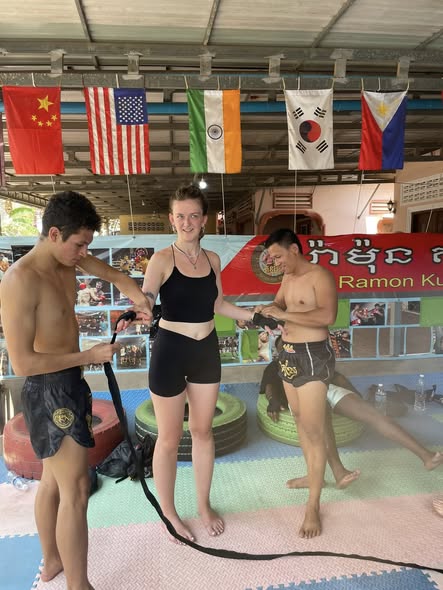
- Check-in and wrapped hands — wraps and gloves provided, fitted by a coach
- Guided warm-up, long enough for joints that need it
- Technique in the air — stance, guard, single strikes, corrected individually
- Pad rounds — the coach holds, sets the tempo, and absorbs every strike
- Cool down, water, and questions answered before you leave
Is Sparring Required When You Start Over 40?
No — sparring is opt-in at every age, and most students who start past 40 never spar at all. Beginners train technique and pads; nothing strikes back, and sparring only ever happens if you ask for it, in stages, with supervision and protective gear, long after your basics are consistent. The format question — whether a class counts as a contact workout — and the gear that exists for the day you ever want contact are worth reading before you decide anything.
Sparring is a choice, not a syllabus item
Nobody is marched toward sparring, at any age. Your training is complete without it: pads deliver the full sport — timing, distance, honest effort — with zero incoming contact. If you ever want it, it arrives in stages, supervised, with gear.
How Hard Should You Train at 40 or Older?
Hard enough to sweat and think — on a dial you control, because intensity in this class is scaled, not imposed. The CDC's own heat-safety guidance is to "pace activity — start activities slow and pick up the pace gradually", which is the whole method here: rounds run at your tempo and sitting one out is unremarkable. The climate is part of the load — Siem Reap sits in the Tonlé Sap basin, where maximum temperatures above 32 °C are common, and the WHO advises avoiding strenuous activity during the hottest time of day, which is why the class starts at 5:00 PM; the best time of day to train in Siem Reap explains that slot, and practical training tips cover pacing week to week.
The intensity dial — every session element has a scaled version, and the coach sets it with you
| Session element | Where it tops out | Where a first month sits |
|---|---|---|
| Warm-up | Skipping, dynamic mobility | Low-impact alternatives are normal |
| Pad rounds | Full power, full tempo | Technique first; power grows with form |
| Conditioning finisher | High-rep bodyweight circuit | Trimmed set counts, same movements |
| Sparring | Supervised, geared, opt-in | Not in the beginner format at all |
How Much Recovery Does a 40-Plus Beginner Need?
More than a 20-year-old's, in practice: a rest day between early sessions, real sleep, and water ahead of the heat. Delayed-onset muscle soreness reliably peaks one to three days after new or harder work and should go away in a few days — that clock is why rest days sit between early classes. Sleep is the biggest lever you control: the CDC's table sets 7 or more hours for adults aged 18–60, and the textbook sign you have exceeded recovery is performance that drops or plateaus rather than rises (Wikipedia — Overtraining). Hydration is recovery too in this climate — the WHO's heat guidance is at least 2–3 litres of water per day — and what to expect after your first class covers the day-after question, while the training-frequency guide covers the weekly one.
- Spacing — one full rest day between hard sessions until soreness fades within a day or two
- Sleep — 7 or more hours for adults 18–60 (CDC); adaptation happens between sessions, not during them
- Water — 2–3 litres across the day (WHO heat guidance), not gulped at the door
- Signals — lingering soreness, worsening sleep, dreading sessions: add rest, not willpower
What Do Official Guidelines Say Adults Over 40 Need Each Week?
The CDC's targets for adults 65 and older — and the sensible reference point for anyone starting at 40-plus — are exactly what this class trains. Its older-adult guidelines ask for "at least 150 minutes at moderate intensity" a week, "at least 2 days of activities that strengthen muscles", and "activities to improve balance" — three boxes most people have to assemble from separate hobbies. The WHO phrases the adult benchmark as at least 150 minutes of moderate-intensity physical activity per week, and a striking class covers all three pillars in one hour: rounds are the cardio, kicks and knees under tension are the strength work, and every weight shift and recovery is balance training in disguise. How the city's fitness options compare shows how rare that combination is.
At least 150 minutes at moderate intensity. … At least 2 days of activities that strengthen muscles. … Activities to improve balance. … If you have trouble meeting these recommendations, be as physically active as your abilities and conditions allow.
How Often Should You Train Over 40?
Two to three classes a week is the honest sweet spot: enough stimulus to progress, enough rest between sessions for joints to adapt. The weekly math works cleanly — two 60-minute classes are 120 coached minutes before wrap-up and conditioning time, at or near the WHO's 150-minute line, and three clear it outright, the same arithmetic our frequency guide works through for beginners of every age. Add a third session only when next-day soreness resolves quickly; the cadence that survives a bad week is the one that compounds over a year. The same logic scales one decade up, which is why the over-50 guide exists, and pass tiers map onto trip lengths in planning a training trip.
The cadence ladder for a 40-plus beginner, built on the daily 5:00 PM class
| Approach | Weekly load | Who it suits |
|---|---|---|
| 2 classes | ~2 hours, full rest between | Returning after a long break from exercise |
| 3 classes | ~3 hours across the week | The sweet spot — progress with recovery |
| 2 classes + 1 private | Group sessions plus a $25 private hour | Anyone wanting corrections accelerated |
What Can You Expect in Your First Weeks?
Immediately: better sleep and mood. The CDC states plainly that physical activity helps you immediately feel better, function better, and sleep better, and its benefits list extends with age — helping keep thinking, learning, and judgment skills sharp as you age. Expect soreness after the first sessions, stance and guard stopping their conscious effort within weeks, and real technical progress on a months scale that varies by person and effort — a structure and a pace, never a promised result, because no honest gym sells one. Why the routine itself is the win is the subject of how training builds discipline, and the weight side of the ledger is handled honestly in whether Kun Khmer helps weight loss.
- Sessions 1–2 — better mood and sleep the same week; soreness peaks one to three days after class (Cleveland Clinic)
- Weeks 1–2 — wraps feel routine; stance and guard stop needing conscious thought
- Weeks 3–4 — combinations link on the pads; soreness resolves inside a day
- Month 2 and beyond — training is a habit; progress continues at its own, personal pace
Do People Really Start Here for the First Time Over 40?
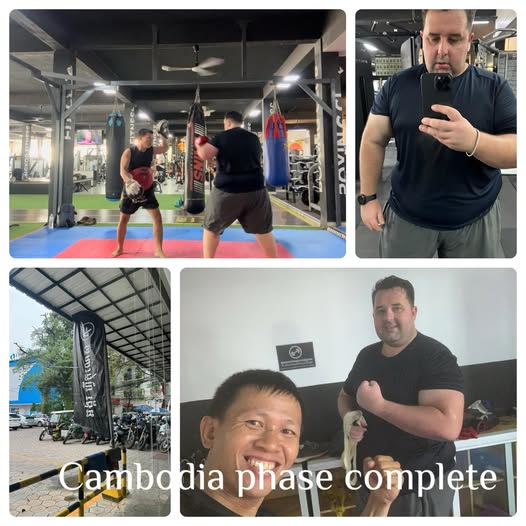
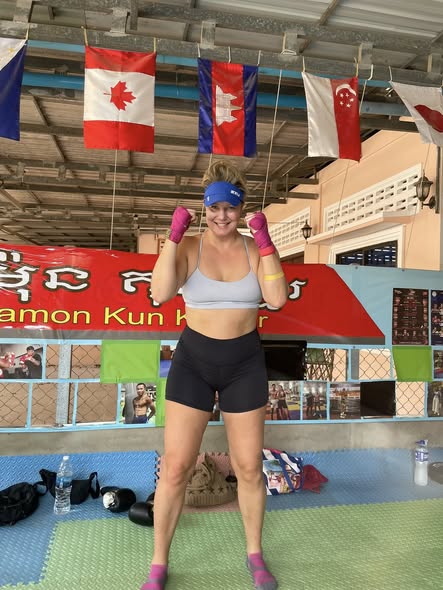
Yes — the club's review record is almost entirely complete first-timers, and they say so themselves. The listing holds a 5.0 rating from 8 reviews (count and quotes verified in the review record pulled 2026-10-25), and the reviewers describe first-ever martial arts lessons rather than transfers from other gyms: one wrote the lesson "was the first time in my life to do any type of boxing or martial arts", another praised coaching that "really takes the time for you" with classes that are "a good combination of cardio, strength, and technique". The honest caveat: Google reviewers do not state their ages, so this is evidence that total beginners train and re-book here — not an age-specific statistic. The framework for judging any club on verifiable signals is in how to choose between Siem Reap clubs, and messaging ahead to confirm a session is how most first visits start.
Had a great lesson and experience with Kun Phaneth. Was the first time in my life to do any type of boxing or martial arts - will definetely do it again
Which Martial Art Makes Sense at 40-Plus?
Whichever one you will actually do twice a week for a year — and a pad-first striking class is the format whose risk profile matches an older beginner's priorities. The injury data above names falls, throws, and jumps as the top recorded mechanism, so if you want striking's fitness without grappling's takedowns, a pad-based striking class removes them by design; grappling arts remain excellent for many people, and the honest answer on training BJJ in Siem Reap says exactly what is and is not available. What matters more than style: a real beginner program, coaching that corrects you individually, gear provided, and no mandatory sparring — the criteria ranked in the best martial arts for beginners, with what women should weigh when choosing covered separately.
- Pad-first format — full sport, no incoming strikes, tempo set by a coach
- No mandatory sparring — opt-in only, staged, geared, at every age
- Gear provided — wraps and gloves fitted for you, nothing to buy first
- A real beginner syllabus — the same drills everyone else in the room runs
- Coaches with receipts — head coaches Kon Phanet and Ramon, 50+ combined professional Kun Khmer fights
What Does It Cost to Start Martial Arts Over 40?
Exactly what it costs anyone, because the price list does not check your birth year: a $9 day pass covers one group class, gear included, which makes the first decision a nine-dollar one. From there, a weekly pass is $69, a month of training is $129, private lessons are $25 per hour per person, and the 6-week fight camp is $299 — every tier compared in the full cost breakdown, and the complete price list is one click away. Nothing behind these numbers is a subscription with a contract; the day pass is the whole experiment, and the only thing it commits you to is one evening.
Training options and exact prices, per our published price list
| Option | Price | What it includes |
|---|---|---|
| Day pass | $9 | One daily group class, gear included |
| Weekly pass | $69 | The daily 5:00 PM class for seven days |
| Monthly pass | $129 | Group classes for a month |
| Private lesson | $25 per hour, per person | 1-on-1, paced entirely to you |
| 6-week fight camp | $299 | Structured camp for committed students |
How Do You Start This Week?
Message the coaches, turn up before 5:00 PM any day, and let the $9 pass be the whole decision. Mention your age, your goals, and any injuries in the first message — pacing a session to a returning beginner is routine work, and head coaches Kon Phanet and Ramon bring a combined 50+ professional Kun Khmer fights in Cambodia to those hours. Declare injuries before the warm-up so drills adjust around them, get medical clearance first if you manage a heart condition, uncontrolled blood pressure, or anything similar, and treat sharp or joint pain as a stop signal on the day. Bringing someone helps the habit stick — training with a friend works the same way — and every first-timer question on this site is collected in the beginner-training hub. You would also be joining a sport with weight to it: nearly destroyed under the Khmer Rouge, Kun Khmer has since rebuilt to roughly 70 boxing clubs nationwide (Kun Khmer — Wikipedia).
- Message the coaches on WhatsApp — say it is your first time, and name any injuries or conditions
- Arrive before 5:00 PM on any day; the $9 day pass covers the session and the gear
- Train at your tempo, ask questions, and decide afterward — nothing to cancel, nothing owed
FAQ
Do I Need to Be in Shape?
No — fitness is an outcome of training, not a prerequisite. Coaches scale every round to the individual, so a first class meets you where you are, and the CDC's line for anyone short of the recommendations is to be as physically active as your abilities and conditions allow.
Is There Risk of Injury?
Yes, honestly — striking is a contact sport, so risk cannot be zero. The published data records 74% of martial-arts injuries as mild, with fractures and the lower limb most common, and the beginner format removes the top mechanisms: pad work instead of partner resistance, no throws, and sparring only ever opt-in.
Is Sparring Required?
No. Beginners train technique and pads, nothing strikes back, and sparring only happens if you ask for it — in stages, supervised, with gear, long after your basics are consistent. Most students who start past 40 never spar at all.
What if I have an injury or medical condition?
Tell the coach before class so pace and drills can be adjusted — it is a normal request handled without ceremony. If you manage a heart condition, uncontrolled blood pressure, or anything similar, get medical clearance before starting any contact sport.
How often should I come?
Two to three classes a week is the sweet spot for a 40-plus beginner: enough stimulus to progress, enough rest between sessions for joints to adapt. Two classes land at or near the WHO's 150-minute weekly activity line; three clear it.
What can I expect the following day(s)?
Delayed-onset muscle soreness, most likely after your first sessions: the Cleveland Clinic says muscle pain sets in one to three days after intense exercise, is usually nothing to worry about, and should go away in a few days. Train through fading soreness; take a rest day when it lingers.
I'm new to Muay Thai – will I be okay?
Yes — starting from zero is the standard case here, not the exception. Coaches walk every newcomer through wraps, stance, and first strikes at beginner pace, and the club's review record is full of students whose lesson was the first martial art of their lives.
What if I can't keep up in fitness classes?
The class scales rather than sorts — rounds, intensity, and even whole drills adjust to the student. Sitting out a round is normal and barely noticed, and pad work lets you train honestly hard at whatever tempo your body allows that day.
Key takeaways
- Yes — you can start martial arts over 40: the gate is medical, not chronological, and the class scales every round to the individual.
- The honest injury picture: 74% of recorded martial-arts injuries were mild, and the top mechanisms (falls, throws, jumps) are absent from a pad-first beginner class.
- Intensity is a dial — pace up gradually (CDC), train in the 5:00 PM slot outside the hottest hours, and rest a day between early sessions.
- Recovery decides progress: soreness peaks one to three days after new work, 7+ hours of sleep for adults 18–60 (CDC), 2–3 litres of water a day in this heat (WHO).
- A $9 day pass is the whole decision — gear included; $69 weekly, $129 monthly, $25/hour/person privates, $299 6-week fight camp.
Sources & further reading
- McPherson et al. — Characteristics of martial art injuries in a defined Canadian population (BMC Public Health, 2010) — "taught and practiced by participants of all ages"; 920 ED-recorded injuries; "Fractures (20%) were the most frequently reported type of injury and the lower limb was the most common site of injury (41%)"; "The most common mechanisms of injury were falls, throws and jumps (33%)"; severity split 74% mild / 26% admitted-or-follow-up; "Over 70% of injuries were reported at a training site or at a competition" (fetched curl-200 2026-10-27, quotes in docs/seo-evidence/w4-martial-arts-over-40-fresh-fetch.md). — source
- CDC — Physical Activity Guidelines for Adults 65 and Older — "At least 150 minutes at moderate intensity"; "At least 2 days of activities that strengthen muscles"; "Activities to improve balance"; "be as physically active as your abilities and conditions allow"; "some physical activity is better than none at all" (WebFetch 200, 2026-10-27, same fresh-fetch file; page previously audited in docs/seo-evidence/phase3b4-citations.md:46). — source
- WHO — Physical activity fact sheet — "…they do not meet the global recommendations of at least 150 minutes of moderate-intensity physical activity per week" — the ONLY dose wording this page carries (docs/seo-evidence/phase3b3-citations.md:27; phase3b2-citations.md). — source
- CDC — Benefits of Physical Activity — "Physical activity helps you immediately feel better, function better, and sleep better." (docs/seo-evidence/phase3b1-citations.md:35); "keep your thinking, learning, and judgment skills sharp as you age" (docs/seo-evidence/phase3b4-citations.md:164-167). — source
- Cleveland Clinic — Delayed Onset Muscle Soreness (DOMS) — "Muscle pain sets in one to three days after intense exercise"; "usually happens after you try a new activity…"; "It's usually nothing to worry about"; "DOMS should go away in a few days." (docs/seo-evidence/phase3b2-citations.md:28). — source
- CDC — About Sleep — Sleep-duration table: "Adult | 18–60 years | 7 or more hours" (docs/seo-evidence/phase3b1-citations.md:36). — source
- Wikipedia — Overtraining — "Overtraining occurs when a person exceeds their body's ability to recover from strenuous exercise … a person may have a decrease in performance or plateau" (docs/seo-evidence/phase3b1-citations.md:31). — source
- CDC — Heat and Athletes — "Pace activity. Start activities slow and pick up the pace gradually." (docs/seo-evidence/phase3b5-citations.md CDC table); "If you feel faint or weak, STOP all activity and get to a cool place." (docs/seo-evidence/phase3b2-citations.md:24). — source
- WHO — Climate change, heat and health fact sheet — "Drink water regularly (1 cup of water per hour and at least 2–3 litres per day)"; "Avoid going outside and doing strenuous activity during the hottest time of day." (docs/seo-evidence/phase3b2-citations.md:23). — source
- Wikipedia — Geography of Cambodia (climate) — "Maximum temperatures of higher than 32 °C (90 °F), however, are common" — scoped to the Tonlé Sap basin, where Siem Reap sits (attribution audited, docs/seo-evidence/phase3b3-citations.md). — source
- Wikipedia — Kun Khmer — Four strike types (punches, kicks, elbows, knees); nearly destroyed under the Khmer Rouge; "There are currently approximately 70 boxing clubs nationwide." (docs/seo-evidence/phase3b4-citations.md §5). — source
- Google Maps — Kun Khmer Club listing — 5.0 rating from 8 reviews; first-timer review quotes verbatim (docs/seo-evidence/google-reviews.md, pulled 2026-10-25; count never inflated). — source
- Kun Khmer Club — price list and schedule — $9 day pass, $69 weekly, $129 monthly, $25 per hour per person privates, $299 6-week fight camp, daily 5:00 PM class, coaches Kon Phanet and Ramon with a combined 50+ professional Kun Khmer fights (lib/business.ts:18-36). — source
Reviewed 2026-10-27

Written by the coaches
Kun Khmer Club — Coaches Kon Phanet & Ramon
Head coaches Kon Phanet and Ramon have a combined 50+ professional Kun Khmer fights in Cambodia. We coach beginners, travelers, expats, and fighters at our gym in Siem Reap.
Ready to train in Siem Reap?
Drop in for a $9 day pass — the group class starts at 5:00 PM every day, and all gear is provided. Message us for today’s times.